Sponsored

How difference between H/O and Regular Ecoboost?

robvas

Well-Known Member
Joined
Nov 18, 2023
Threads
15
Messages
3,485
Reaction score
3,276
Location
MI
Vehicle(s)
2011 GT
Obviously the ECU tune is also more aggressive so you ended up with a 40% wider usable torque curve in the 2.3 High Performance Package engines, this works perfect with the 10 speed automatic as every shift keeps you in the meat of the torque curve.


I look at it this way, the 2020 Mustang 2.3 High Performance Package was taken to Virginia International Raceway by Car & Driver for their road testing review of the car, they were able to run a faster lap time than the 2015 Mustang GT they tested at the same track just five years earlier, while the GT was 10 MPH faster down he long straight it was not able to make up all the time it lost in the twisty sections of the track to the lighter more nimble Mustang 2.3 High Performance Package.
let's not get too excited comparing the EcoBoost to a base GT around VIR. It also only was faster by eight tenths of a second, and that was ten years apart. The 2015 was a non PP car (which the EcoBoost basically is, minus the engine). The p zeros stink and the suspension is floaty. The 2018 PP2 GT beat the HipO EcoBoost by over ten seconds. Much better scenario where you're comparing the engine (and still have the weight penalty of the v8) and not just the chassis. It's on equally as sticky Sport Cup 2's.

most of the speed of the HPP eco came from the Pirelli Corsa tires. They are 80 treadwear and might as well be race tires! The base EcoBoost is ten seconds slower around the track.

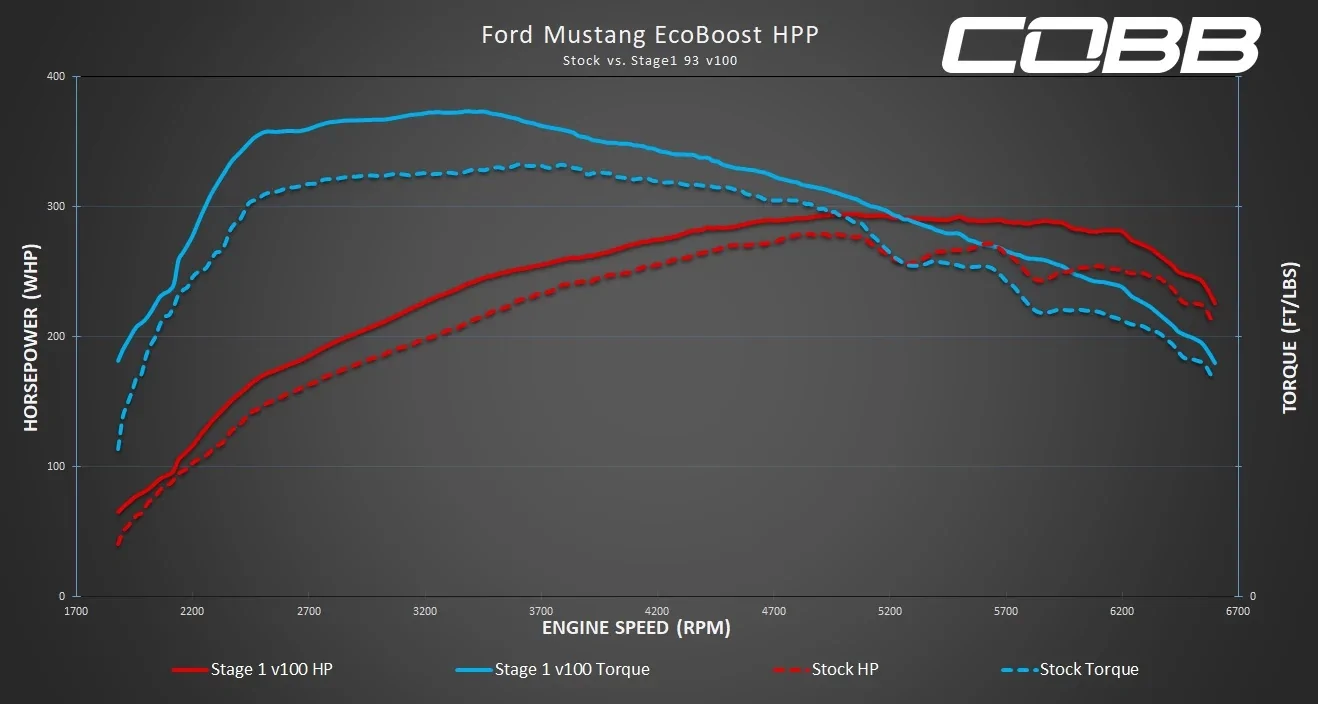
and even with a tune the HPP EcoBoost engine is very...tractor like in its powerband.
IMG_1303.webp
Sponsored

 
Last edited:

Boosted Pony

Well-Known Member
Joined
May 5, 2022
Threads
27
Messages
231
Reaction score
333
Location
Florida
First Name
Bill
Vehicle(s)
2021 Mustang Ecoboost 2.3 High Performance Package
At least one person has said that after the 3/2020 build date all of the 2.3 blocks got the between cylinder cross drilling. That might explain the block part number. Would not account for liner difference. Would like to see part number difference. Head number as well.
I believe that the RS got the 63mm turbo compressor as well. The RS and the HPP got the thicker head gasket to lower the compression. My information says both are 9.37:1. There was a
problem with the head gasket during the RS build that caused an issue with the cars. Ford said wrong head gasket.
I don't remember the exact date they changed over to the cross drilling over the slits but it could have started in 2020. I do remember reading that it was in 2021 when it started being used in all the 2.3 engines. I do know the RS block had them well before Ford made the change to the rest of the blocks.

Here is one thing people need to remember, manufactures are not obligated to keep replacement parts on hand when a product goes out of production, many people think there is a law that requires a manufacture to continue to make replacement parts for 10 years, that is not true at all, there is no law requiring a manufacture to continue to make replacement parts at all.

Ford clearly had upgrades to the RS engine block itself or Ford would not have spent money retooling it to fit the Mustang when they already had a 2.3 block that fit the Mustang.

The turbo was larger on the Focus RS as well but the Mustang is not using the same turbo from the RS because the RS turbo was designed for the front wheel drive layout so it would not fit the Mustang in a rear wheel drive lay out. That is why it was redesigned and is sold as the Ford Performance Turbo as a stand alone part.

Another thing I have found is everyone who has pulled part numbers has pulled them for a Mustang, I wonder what the part numbers for the same parts would be for the old Focus RS the engine came from. We do know from Ford and some of the automotive press that the head is different because it does use a stronger alloy, we also know the block is different because it uses high strength cylinder liners and a stronger alloy when cast. Both make sense because the 2.3 HPP is billed as a performance version so they would have beefed it up expecting it to be run harder than the base model Mustang with the 2.3.

Even doing that might not reveal a different part number as the Mustang 2.3 High Performance Package engines were all cast and assembled in Valencia, Spain and they were a limited production run as I believe at most there were only about 30,000 2.3 High Performance Package Mustangs built over the 4 year production run from 2020 through 2023. So they could have just used the same part numbers. I know my Mustang has a serial number on the dash of M0998 and mine has a manufacture date of 08/2021 so for 2021 they did not make very many that year and also it was on the tail end of covid when cars were almost impossible to find on a dealer lot.

The Mustang 2.3 head design is the same on all the 2.3 engines in the Mustang, the 2.3 HPP just used a stronger alloy for the head but they are both high flow designs likely from the same development work, just different alloys which makes sense because the standard 2.3 used a smaller turbo and was not sold as a High Performance Package.

All in all the 2.3 HPP is a fun car to drive that came from the factory with more power and a wider power band than the standard 2.3 did.
 

Boosted Pony

Well-Known Member
Joined
May 5, 2022
Threads
27
Messages
231
Reaction score
333
Location
Florida
First Name
Bill
Vehicle(s)
2021 Mustang Ecoboost 2.3 High Performance Package
let's not get too excited comparing the EcoBoost to a base GT around VIR. It also only was faster by eight tenths of a second, and that was ten years apart. The 2015 was a non PP car (which the EcoBoost basically is, minus the engine). The p zeros stink and the suspension is floaty. The 2018 PP2 GT beat the HipO EcoBoost by over ten seconds. Much better scenario where you're comparing the engine (and still have the weight penalty of the v8) and not just the chassis. It's on equally as sticky Sport Cup 2's.

most of the speed of the HPP eco came from the Pirelli Corsa tires. They are 80 treadwear and might as well be race tires! The base EcoBoost is ten seconds slower around the track.

and even with a tune the HPP EcoBoost engine is very...tractor like in its powerband.

IMG_1303.webp
My 2.3 HPP came with the P Zero tires not all of them came with the upgraded tires. Also mine makes a lot more power than the stock 2.3 HPP with a pro tune. The COBB off the shelf tunes are fun but they are also on the conservative side, there is more power to be had from the 2.3 over the COBB tunes. COBB also never did do much with the 2.3 HPP tune as they only had one car loaned to them and these were the tunes they came up with, they never did refine the HPP package tunes. They actually have more refined tunes for the standard 2.3 Mustang where they had more access to the car.

My tune is not a conservative tune and my tuner told me that we where approaching the limit on mine, my final results ended up producing 370 rear wheel horsepower and 429 lb ft torque at the rear wheels. At the Crankshaft mine is putting out 436 HP and 494 Lb Ft. My tuning was also tuned in the 90 degrees range for temperatures so it was hot and muggy as I live in Southwest Florida.

There is only a 5 year difference by the way not 10 years. Ten years before would have been a 2010 Mustang GT. Also Car & Driver in the article said Ford had since the 2015 model built faster GT's.

Still impressive that a 2.3 could turn a faster lap than a GT 5.0 just five years prior.

With the power upgrades and suspension up grades on my Mustang I bet mine would give that 2018 a run for its money at Virginia International Raceway. My current rim and tire package is SVE DHP1 Forged rims in 19x10 with Firestone Firehawk Indy 500 285/35/R19 tires on the front and 19x11 with Firestone Firehawk Indy 500 325/30/R19 tires on the rear.
 
Last edited:

robvas

Well-Known Member
Joined
Nov 18, 2023
Threads
15
Messages
3,485
Reaction score
3,276
Location
MI
Vehicle(s)
2011 GT
My 2.3 HPP came with the P Zero tires not all of them came with the upgraded tires.
The one you're quoting track times from did.

My tune is not a conservative tune and my tuner told me that we where approaching the limit on mine, my final results ended up producing 370 rear wheel horsepower and 429 lb ft torque at the rear wheels. At the Crankshaft mine is putting out 436 HP and 494 Lb Ft. My tuning was also tuned in the 90 degrees range for temperatures so it was hot and muggy as I live in Southwest Florida.
You made 80 more hp than the cobb tune on a stock engine? 370 from an eco usually involves upgrades, e85, etc etc and is still pretty rare.

Still impressive that a 2.3 could turn a faster lap than a GT 5.0 just five years prior.
Again, it's the tires.
With the power upgrades and suspension up grades on my Mustang I bet mine would give that 2018 a run for its money at Virginia International Raceway. My current rim and tire package is SVE DHP1 Forged rims in 19x10 with Firestone Firehawk Indy 500 285/35/R19 tires on the front and 19x11 with Firestone Firehawk Indy 500 325/30/R19 tires on the rear.
Nope. Those Indys are junk by comparison.
 

Boosted Pony

Well-Known Member
Joined
May 5, 2022
Threads
27
Messages
231
Reaction score
333
Location
Florida
First Name
Bill
Vehicle(s)
2021 Mustang Ecoboost 2.3 High Performance Package
The one you're quoting track times from did.


You made 80 more hp than the cobb tune on a stock engine? 370 from an eco usually involves upgrades, e85, etc etc and is still pretty rare.


Again, it's the tires.

Nope. Those Indys are junk by comparison.
Sounds like you feel a little threatened by the ecoboosts.
 

Sponsored

MD18EcoStang

Well-Known Member
Joined
Sep 27, 2019
Threads
23
Messages
626
Reaction score
745
Location
MD
Vehicle(s)
2018 Mustang Ecoboost
Definitely not. You're just the typical delusional eco owner.
Oh come on, let a guy have his fun. I don't think he ever said it was completely apples to apples. And if he thinks it's impressive that a 2.3 powered Mustang outran a 5 yr older 5.0 Mustang, despite there being some other differences, who are you to tell him it's not?
 

robvas

Well-Known Member
Joined
Nov 18, 2023
Threads
15
Messages
3,485
Reaction score
3,276
Location
MI
Vehicle(s)
2011 GT
Oh come on, let a guy have his fun. I don't think he ever said it was completely apples to apples. And if he thinks it's impressive that a 2.3 powered Mustang outran a 5 yr older 5.0 Mustang, despite there being some other differences, who are you to tell him it's not?
I'm just saying the reason the car is quick is the wizard tires and Magneride. And those tires aren't comparable.

IMG_1350.webp
 

BlueHPP

Well-Known Member
Joined
Aug 13, 2020
Threads
1
Messages
76
Reaction score
34
Location
95628
First Name
Lloyd
Vehicle(s)
2020 Mustang HPP/HP 6MT, 2013 Boxster S, 2026 Chevy Equinox EV
As to the Car and Driver VIR test they said most of the improvement was the Pirelli Corsa tires. Also I believe the standard GT has 8 or 8.5 inch wide front wheels versus 9.5 on the HPP/HP. I believe the Cup2 is a much better tire than the Corsa. I autocrossed the Corsa when my car was new and they have way less performance then a 200TW tire (BFG ,Falken, RE-71).

My research shows around 6500 total HPP cars over four years. 2800 or so in the first year (L), then about 1600 (M), 1200 (N) next two and less than 800 in the last (P). Letter is on the dash plaque. See HPP registry - https://www.mustang6g.com/forums/threads/high-performance-ecoboost-registry.130009/page-6. More information at mustangecoboost.net.

Its great to think that the block and head are improved over the base and since Ford did go to the effort to get the Valencia built engines. Just cannot find any solid proof.

I really like the car especially with the Handling package but it hard to find and verify the engine differences.
 

MD18EcoStang

Well-Known Member
Joined
Sep 27, 2019
Threads
23
Messages
626
Reaction score
745
Location
MD
Vehicle(s)
2018 Mustang Ecoboost
Its great to think that the block and head are improved over the base and since Ford did go to the effort to get the Valencia built engines. Just cannot find any solid proof.
Exactly. Ford just hasn't published definitive information. A lot of people just take the speculation, accept it as fact, and repeat it...
 

Sponsored

Boosted Pony

Well-Known Member
Joined
May 5, 2022
Threads
27
Messages
231
Reaction score
333
Location
Florida
First Name
Bill
Vehicle(s)
2021 Mustang Ecoboost 2.3 High Performance Package
Exactly. Ford just hasn't published definitive information. A lot of people just take the speculation, accept it as fact, and repeat it...
The Ford R&D team that put together the HPP package spells it out that they took the engine from the Focus RS and had the Valencia Engine Plant retool the block to fit the rear wheel drive Mustang, if there really was no difference in the blocks as many say then why would Ford spend the money to retool to produce the RS block for the Mustang when they already as noted had a 2.3 block that fit the mustang.

That is the one question those who say there is no difference can't answer.

If there really was no difference in the block Ford would have just bolted on the RS head using the RS head gasket and bolted on the Ford Performance Turbo, but that is not what they did, they spent the money to retool to cast the RS block to fit the rear wheel drive Mustang.

When Ford was developing the 2.3 Focus RS engine they kept blowing them up at the 400 HP mark, that is why they settled on the 350 HP rating, remember also the Focus RS was an all wheel drive car which put some extra strain on the power unit.

Also most of the bolt on and tuned 2.3 engines that have been blown up are the standard 2.3 that output 310 HP, that makes sense for two reasons 1. they do not have the upgrades the 2.3 HPP has and 2 there were more of them produced. The few 2.3 HPP engines that were blown up were pushed to limit and drove hard, in fact the most publicized one with videos was doing his own tuning from videos I have seen, he is also one pushing there is no difference in the engines at all but clearly even ford has released some information that contradicts his claims.

If there truly was no difference Ford sure went to an awful lot of expense and trouble to retool and produce the 2.3 HPP engine in Valencia Spain when they already had a foundry up and running in Cleveland producing 2.3 blocks.

I don't think your 2021 production numbers are correct, I might be wrong but my 2.3 High Performance Package was built in August 8 months into the production run if you go from January and they normally start production runs before January, used to be back in the day September but lets say it was November just for giggles, that would be 10 months into the 2021 model year production run and my serial number is M0998 they have to push out another 602 2.3 HPP units in just 2 to 4 months, I don't see them doing that when dealer lots were pretty much empty, I bought mine in April of 2022 and they only had 5 Mustangs on their lot, a GT, two ecoboosts, my 2.3 HPP ecoboost and a MACH 1 they inflated the price to damn near $90,000 dollars on. 2021 and into 2022 was during covid when dealer stock was down to nothing after they sold off what they had. We had a hard time finding any manufactures with cars on their lots, when we bought the Mustang.
 

robvas

Well-Known Member
Joined
Nov 18, 2023
Threads
15
Messages
3,485
Reaction score
3,276
Location
MI
Vehicle(s)
2011 GT
Seems like if it was a cylinder head upgrade AND a turbo upgrade they would advertise more than a 20hp gain? Should be a part number out there somewhere in Ford's catalog right?
 

MD18EcoStang

Well-Known Member
Joined
Sep 27, 2019
Threads
23
Messages
626
Reaction score
745
Location
MD
Vehicle(s)
2018 Mustang Ecoboost
Blah, blah, blah...
I'm sorry, but I missed the part where you explained exactly what all the differences are and where one can find that documented. You saying that there must be differences is meaningless. Yes, we know there are differences. It's just that Ford has never really spelled them out, to the best of my knowledge. They've mainly just implied the differences (improvements) in their marketing, with no real technical descriptions.

PS - You also seem to be attributing way too much of your post at me. I never said once that there was no difference, and I certainly have never posted about production numbers.
 

BlueHPP

Well-Known Member
Joined
Aug 13, 2020
Threads
1
Messages
76
Reaction score
34
Location
95628
First Name
Lloyd
Vehicle(s)
2020 Mustang HPP/HP 6MT, 2013 Boxster S, 2026 Chevy Equinox EV
Highest plaque numbers from ecoboost hpp registry
L2711
M1655
N1043
P215
Most probably do not have all of the highest numbers but that is whats posted. I have L1088 , ordered and built in January 2020.
 
Last edited:

Boosted Pony

Well-Known Member
Joined
May 5, 2022
Threads
27
Messages
231
Reaction score
333
Location
Florida
First Name
Bill
Vehicle(s)
2021 Mustang Ecoboost 2.3 High Performance Package
Seems like if it was a cylinder head upgrade AND a turbo upgrade they would advertise more than a 20hp gain? Should be a part number out there somewhere in Ford's catalog right?
I'm sorry, but I missed the part where you explained exactly what all the differences are and where one can find that documented. You saying that there must be differences is meaningless. Yes, we know there are differences. It's just that Ford has never really spelled them out, to the best of my knowledge. They've mainly just implied the differences (improvements) in their marketing, with no real technical descriptions.

PS - You also seem to be attributing way too much of your post at me. I never said once that there was no difference, and I certainly have never posted about production numbers.
Here is a piece from Car & Driver on the 2.3 HPP:

With the development of the Ford Mustang Shelby GT500 in the bag and its official on-sale date on the horizon, Ford has turned its attention to the base 2.3-liter EcoBoost Mustang and cooked up the new High-Performance package for the 2020 model year. It was inspired by an in-house one-off Mustang build featuring a Focus RS engine, and the build proved to be so entertaining that the Mustang team submitted a formal plan to migrate it into the production lineup.

To get things started, Ford confirmed production availability of the Valencia, Spain-built turbocharged 2.3-liter engine from the Focus RS. Desirable for its die-cast alloy block and high-performance extra-strength cylinder head, it required a bit of engineering to utilize it for a rear-wheel-drive-only setting. While they were at it, Ford tweaked the head gasket, specified a 5 percent larger 63-mm twin-scroll turbo compressor and a larger radiator. Completed, the engine is rated for 330 horsepower; that’s 20 ponies shy of the 350-hp tune as utilized in the Focus RS application but 20 more than the 310-hp version of the 2.3-liter EcoBoost in the 2019 Mustang. Torque is unchanged at 350 lb-ft, the same in all three cars.

______________________________________________

I doubt Car & Driver was just making stuff up for the article, while Ford itself in its own marketing releases has been more subdued as far as information they have talked to these magazines giving them more information.

Again why would any company spend the money to retool the Focus RS 2.3 block if the standard Mustang 2.3 Block was the same. We know from other pieces of information added to this Car & Driver piece the 2.3 HPP was retooled to fit the Mustang including from Ford own admissions. The Focus RS block was desired for its die-cast alloy block which from other pieces of information also contains high tensile strength cylinder liners and the head is well known to be cast from a stronger alloy to cope with the higher pressures of the larger turbo charger and the more aggressive ECU tune and the head is a high flow design.

As for part numbers who knows why Ford does what it does in that regard, maybe they felt the production numbers were going to be low enough on the 2.3 HPP that they felt they would not need extra parts for these cars, before anyone brushes that aside as BS just remember Ford is the same company that made a finical decision not to add a simple low cost shield that would have fixed the problem with Pinto fuel tanks exploding in rear end collisions.

Car manufactures make decisions all the time based on cost rather than stocking parts.

Also the 2.3 HPP package has a lower compression ratio of 9.37 to 1.
Sponsored

 
Last edited:


Top