

Sponsored

FBO, Non-Cobrajet Intake Optimal Shift Points, A10

markmurfie

Well-Known Member
Joined
Jun 6, 2015
Threads
15
Messages
1,320
Reaction score
625
Location
Hawaii
First Name
Mark
Vehicle(s)
2015 Ford Mustang GT
Holy cow, he is explaining EXACTLY what I've been trying to explain. "with the flywheel, it could be as high as 8 lb, depending on what gear you are in....the engine components depend on what gear you are in....the effects of moment of inertia are greater in your lower gears". And there we have it, folks, it turns out that Engineering Explained, Dr. Thomas Gillespie, SAE publications, Stephen Mason's site (HPWizard), and countless others all agree with me. If something affects acceleration as a function of the gear you are in, then it will affect optimal shift points. Yet according to markmurfie, we are all wrong.

You are saying the relative accelerations of each gear needs to be accounted for. You are using the wrong physics, I'm even telling you the physics to use here, and yet you are saying I'm wrong. This isn't going anywhere, stay stuck pretending to calculate shift points.
Sponsored

 

engineermike

Well-Known Member
Joined
Jul 15, 2018
Threads
31
Messages
6,196
Reaction score
6,472
Location
La
Vehicle(s)
2018 GTPP A10
...there's external forces acting on it up in space, and what they are. I just know they would be in significant for my life time so I don't care. ....
You said you spin something in space 100 rpm then leave it alone. That's not even remotely the same case as rotational inertia's effects on an engine accelerating. So no, I'm not arguing that the space gyroscope won't stay the same speed. This is just another one of your rabbit-holes intended to distract from the actual issue at hand.

......You are arguing these forces are significant and need to be put into math, I am not.
I did put them into math and they are significant, to the tune of a 10% effect on acceleration in 1st gear, which changes the optimal shift speed by a couple hundred rpm in the direction that matches what racers already knew.

I am saying it's friction that needs to be accounted for..
Not when determining shift points. Friction is a function of speed, not acceleration. You want to apply friction, that's fine. I just know it won't affect shift points. And when you can't seem to get your head around how rotational inertia affects acceleration and, thus, shift points, why complicate the issue talking about something that won't?

I just remembered....you STILL haven't answered the oh-so-simple questions about how a flywheel works. I'll remind you:

What about a flywheel? Do you believe that it takes energy to spin up a flywheel from, say, 0 rpm to 100 rpm? Do you believe that if you want to spin it up in 1 second vs 2 seconds, that the energy needs to be applied twice as fast? Neglect friction.

it takes energy to spin up a flywheel, and that energy/time = power... Do you seriously not agree with that?


Why are you struggling so hard to answer such a simple question, and rather take us down a dozen different rabbit-holes instead? I think I know....
 

engineermike

Well-Known Member
Joined
Jul 15, 2018
Threads
31
Messages
6,196
Reaction score
6,472
Location
La
Vehicle(s)
2018 GTPP A10
...video of a guy demonstrating the mass equivalent is BS. He spins up a round weight and gets on a scale. It shows the same weight as it did when it wasn't spinning.
This is like your space-gyroscope example; not even remotely related to rotational inertia that must accelerate in a rotating fashion in order for the car to accelerate in a linear fashion. It's a ridiculous comparison.

I know I'm arguing against automotive common knowledge, but its really a common misconception. 2lb of rotating mass being equivalent to 1lb of non rotating mass, is grossly simplifying it and ignoring all modern day physics.
You're right, that it's a gross oversimplification. Heck, if the 2 lb is situated to have a very low moment of inertia, it might only add 2.0001 lb. The geometry and speed ratio (e.g. gear ratio) also matter.

Heck I even shared a video that shows if an object breaks free of it's rotation, it can be thrown up damn near into space.
No one is arguing against this either. It's another rabbit-hole that has nothing to do with shift points.
 

engineermike

Well-Known Member
Joined
Jul 15, 2018
Threads
31
Messages
6,196
Reaction score
6,472
Location
La
Vehicle(s)
2018 GTPP A10
So when I turn right or left in my car, it's friction resisting me doing that, not friction allowing me to do that? Nope, wrong.
The car intends to go straight due to momentum in that direction. Friction acts against intended motion, causing the car to turn.

What does this have to do with anything? It's you trying to avoid answering the flywheel question by taking us down yet another rabbit-hole.

I said frictionless and you said that meant stationary. I revised the questions to say to neglect friction. Problem solved. You may proceed to answer the simple flywheel question without the friction issue getting in the way.
 

engineermike

Well-Known Member
Joined
Jul 15, 2018
Threads
31
Messages
6,196
Reaction score
6,472
Location
La
Vehicle(s)
2018 GTPP A10
Look, I understand that energy is going into the rotating mass, therefore increasing it's mass. But I also understand we are not talking about anywhere near light speeds, so who cares?
Holy moly, that's not what he's talking about in the least. When he says mass-equivalent he's talking about the car's resistance to accelerate due to the flywheel effect of the engine's rotating parts. The mass doesn't increase, but the resistance to acceleration does in low gears. Energy is going into the rotating mass, which increases its kinetic energy. That simple. Increasing the KE quickly (low gears) takes more power than increasing it slowly (high gears).
 

Sponsored

engineermike

Well-Known Member
Joined
Jul 15, 2018
Threads
31
Messages
6,196
Reaction score
6,472
Location
La
Vehicle(s)
2018 GTPP A10


There's so much to this its a good video.
Yep, a good 2nd year college physics demonstration. Nothing in there counters anything I've posted. Since you posted the video, am I to assume that you don't disagree with it? Did you notice in Demo 3 (4:30) that reducing torque input resulted in slower acceleration of the rotor? One might conclude that increased torque would result in faster acceleration of the rotor. Taking it one step further leads you to...accelerating a constant-I rotor faster requires more torque input. I don't think anyone would disagree with this. Now apply that exact concept to the crankshaft and torque converter of a car engine, and you see that it requires more torque input to that rotor in order to accelerate it faster. The crankshaft accelerates faster in 1st gear than 2nd, therefore it takes more of the engine's torque to spin it up in 1st than 2nd, and that is torque that can not also be used to accelerate the car.

So yea, it's a good video.


Then this one is good for thinking about friction in 0 gravity.
Yep, friction force = coefficient of friction x normal force. With near-zero gravity, there wasn't much normal force there, so there wasn't much friction force. It makes perfect sense. This is still just a distraction so you can avoid answering the simple flywheel question I posed.

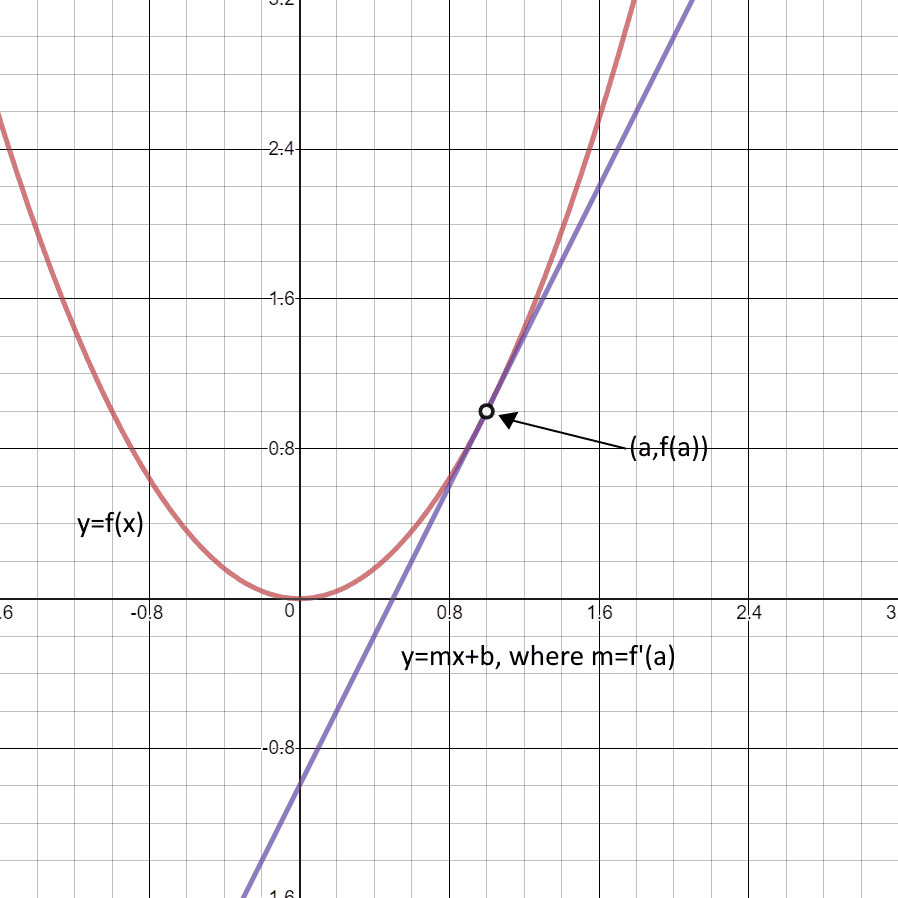
The slope of a point.

Slope.png
I never said there can't be a slope at a point. I just said it's not what your VCMScanner math is doing, or even what you thought it was doing. Yours is looking at average acceleration over the prior 1 second and timestamping it 1/2 second offset.
 

engineermike

Well-Known Member
Joined
Jul 15, 2018
Threads
31
Messages
6,196
Reaction score
6,472
Location
La
Vehicle(s)
2018 GTPP A10
I'm even telling you the physics to use here, and yet you are saying I'm wrong.
Direct me to the post where you said how to account for the acceleration difference that gear ratio makes on engine moment of inertia.
 

WildHorse

N/A or GO HOME
Joined
Jun 28, 2017
Threads
270
Messages
10,297
Reaction score
8,350
Location
Home World: CLASSIFIED
First Name
Puddintane
Vehicle(s)
'17 S550
Vehicle Showcase
1
Holy moly, that's not what he's talking about in the least. When he says mass-equivalent he's talking about the car's resistance to accelerate due to the flywheel effect of the engine's rotating parts. The mass doesn't increase, but the resistance to acceleration does in low gears. Energy is going into the rotating mass, which increases its kinetic energy. That simple. Increasing the KE quickly (low gears) takes more power than increasing it slowly (high gears).
That's my takeaway too. He's not saying it adds weight, he's saying it equivalent too. Like fighter pilots during a 9g maneuver. You're mass is still 200lbs, but the effects of said mass are 9 times that.
 

engineermike

Well-Known Member
Joined
Jul 15, 2018
Threads
31
Messages
6,196
Reaction score
6,472
Location
La
Vehicle(s)
2018 GTPP A10
Since we're posting youtube videos, this guy explains how much power it takes to accelerate a spinning disk:

Work Done By a Constant Torque - Power & Moment of Inertia - Rotational Motion Physics Problems - YouTube

6:40 is where the relevant problem is demonstrated. Consider the crankshaft to be this a spinning disk and it should make sense how it applies.

1. His math is identical to what I demonstrated in post #54. In fact, if you pause it at 9:13 and compare to post 54 you'll see the same equations used. BTW, in post 54, the math yielded 64 hp "diverted" from linear to angular acceleration in 1st gear and 40 hp in second gear. Less with each gear just like dynojet graphs show.

2. He divides by time. I think we can all agree the engine accelerates from rpm x to rpm y in less time in first gear vs second, no? Less time means more power required to accelerate the spinning mass, and less available to increase the linear velocity of the car.
Sponsored


Top