Sponsored

Cat converter option

Robottrainer

Well-Known Member
Joined
Apr 25, 2021
Threads
79
Messages
992
Reaction score
422
Location
Canada
First Name
John
Vehicle(s)
2018 Ford Escape. 2020 Jeep Cherokee. 2021 Ford Mustang GT Stage 2 Roush
So after reading many posts regarding cat failures on boosted cars, I started to lookalike alternatives and the operating characteristics on the Gen3 coyotes.

We don't have emissions validation inspections in Ontario Canada, but you have to run cats or it's a hefty fine, possible plate confiscating. Running cables on the street isn't really an option.

The first obstacle is the drivers side cat. It's welded to the header. The pass side has a flange. Why? It's beyond me. And it not welded to a pipe. It's literally right on the end. Zero margins of error if you cut it wrong or weld the flange on wrong.

The next problem is what to replace the oems with and are the aftermarket ones any better. There are also the GT500 cats which are expensive and need pipe fabricating. Mak Performance has a kit with GENSi green cats. Its a direct fit with some minor fabricating on the drivers side. They claim the UHO version is good for forced induction. I tried contacting them to get more info on them, but got zero response. Doesn't inspire confidence.

I read something interesting in the service manual. Apparent the 2021 at least (maybe all gen 3s), use the cats as a particulate filter and relies on the heat generated by the cat to burn it off. It sounds like some areas of the cat are blocked to act as a trap. The system monitors the flow somehow through the cat. Too little or too much will trip a code. This could spell bad news for cats like the GENSi UHO. I don't think they have a particulate trap and probably flow better than the OEMS. Enough to trip a code? Who knows.

So the question is...has anyone done a cat swap on a 20 and up and if so what did you use?
Sponsored


 

Angrey

Well-Known Member
Joined
Jun 21, 2020
Threads
104
Messages
2,794
Reaction score
2,984
Location
Coral Gables
Vehicle(s)
2016 GT350
The most solid option is going to be the GT500's. They've been tuned, tested and verified on numerous cars.

The performance of aftermarket cats is spotty. Some guys have no issues or troubles, others have issues. I suspect much of whether you're going to get "codes" has to do with the features your tuner is willing to turn off or tune around.

Tuners can and do turn of MIL and codes.

If you want the most risk free or greatest chance of not having further issues, the GT500 cats are probably the best option.

If you don't have inspections, how exactly would you get caught? Seems like if there's no inspections unless you give someone access underneath the vehicle or if you get into a major wreck, that's the only way anyone would discover you're not running cats.
 

engineermike

Well-Known Member
Joined
Jul 15, 2018
Threads
31
Messages
6,183
Reaction score
6,442
Location
La
Vehicle(s)
2018 GTPP A10
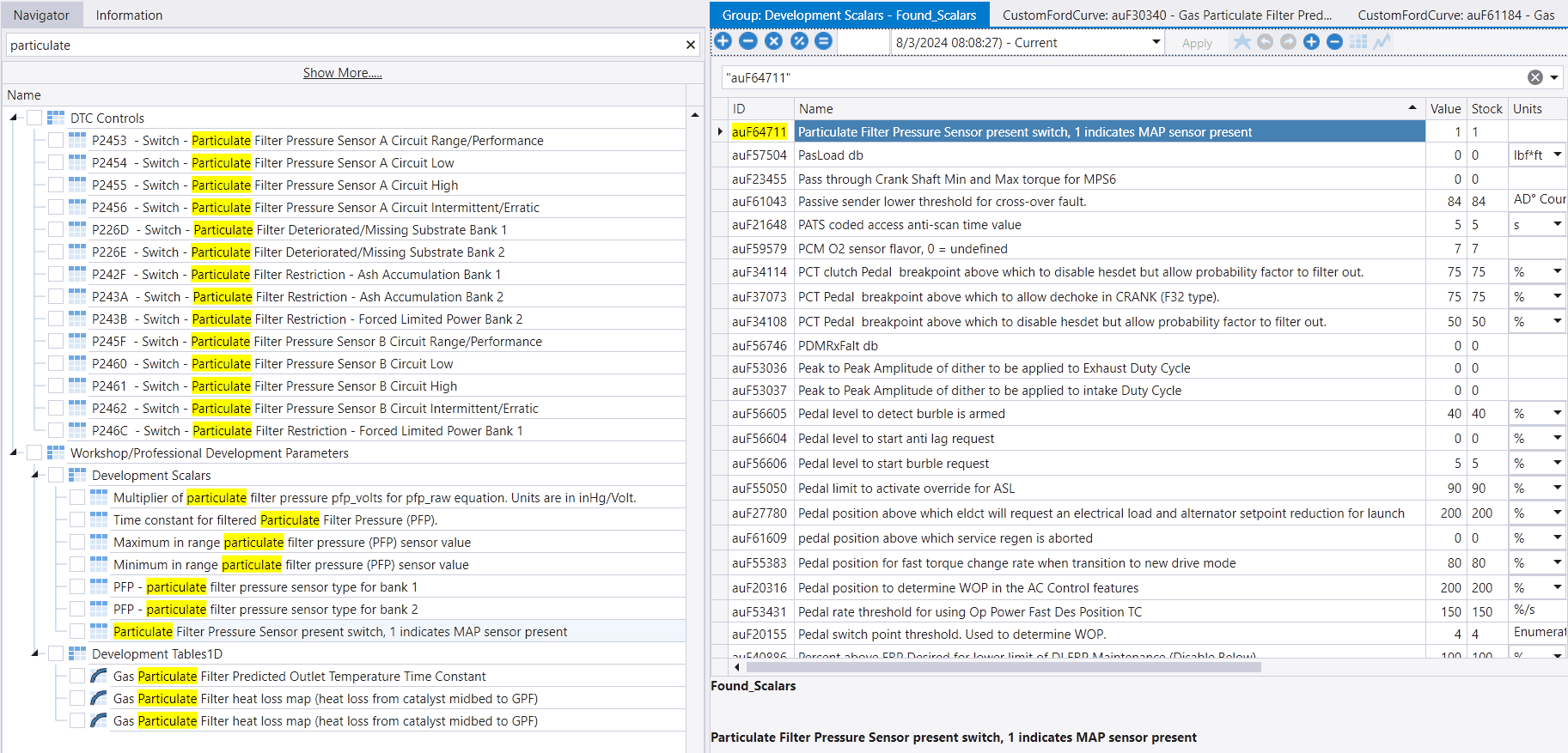
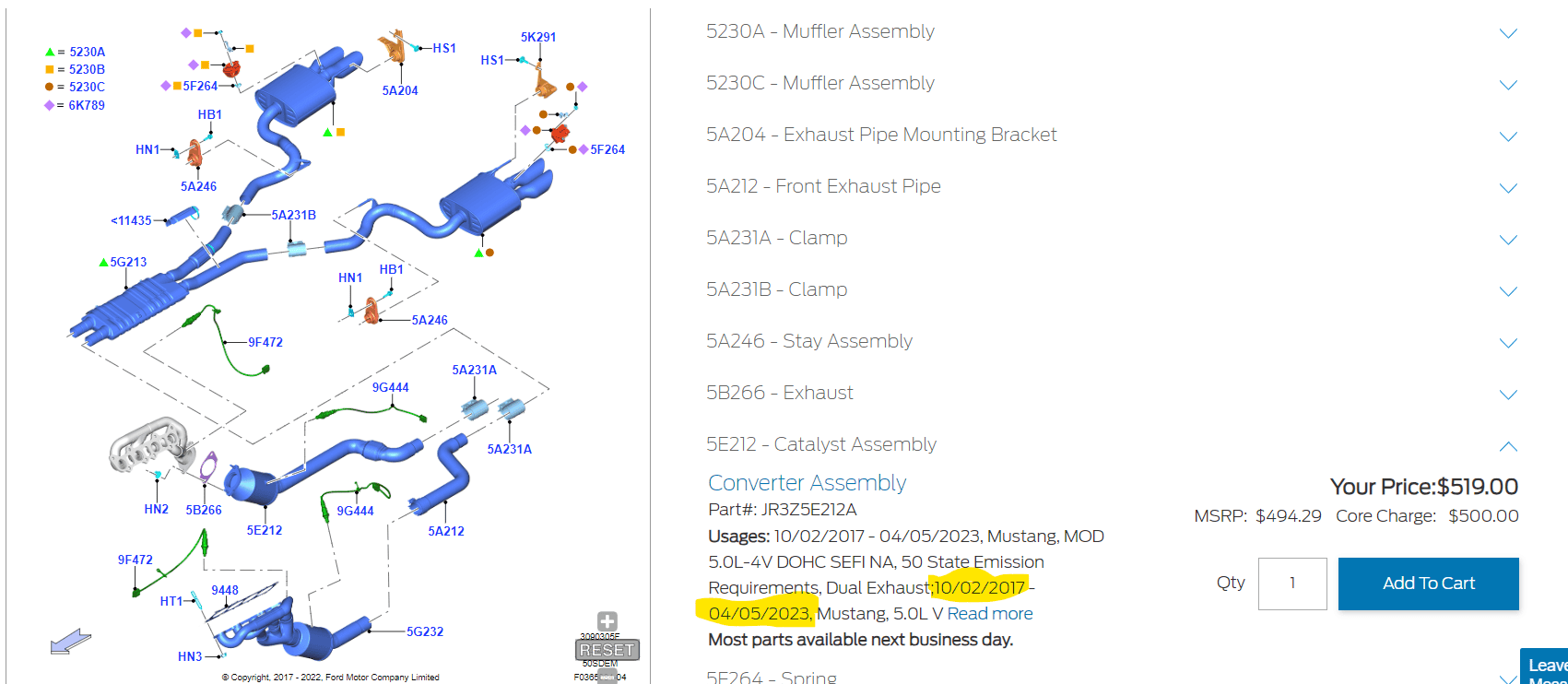
I had not heard that the 2021+ has GPF's. I thought that was just a Euro thing. So, I checked in PCMTec to see what parameters are there in a random 2022, as compared to a random 2020. Keep in mind there are seemingly thousands of parameters so searching for terms is how you generally find there. I searched for "particulate" and here's what I found:

2020:
1722693602313-25.png

That's it, just one and it shows hardware present to be "0", or no.

2022:
1722693649748-74.png

Clearly, the GPF is installed on this 2022.

Then I started thinking....what if I randomly selected a Euro cal from the PCMTec library? So I pulled 2 more 2022's and the particulate filter shows only 1 hit just like the 2020.

In conclusion, I have real doubts that the US 2021+ have GPF's...but no proof.

If someone wants to give me their OSID for a US 2021-2, I'll pull it from the library and check.
 

engineermike

Well-Known Member
Joined
Jul 15, 2018
Threads
31
Messages
6,183
Reaction score
6,442
Location
La
Vehicle(s)
2018 GTPP A10
Furthermore, I pulled up the parts diagram and the DS cat converter JR3Z-5G232-C is the same for 2018 to 2023. I'm certain the they don't have a GPF at least up through 2023.
 
OP
OP
Robottrainer

Robottrainer

Well-Known Member
Joined
Apr 25, 2021
Threads
79
Messages
992
Reaction score
422
Location
Canada
First Name
John
Vehicle(s)
2018 Ford Escape. 2020 Jeep Cherokee. 2021 Ford Mustang GT Stage 2 Roush
Furthermore, I pulled up the parts diagram and the DS cat converter JR3Z-5G232-C is the same for 2018 to 2023. I'm certain the they don't have a GPF at least up through 2023.
I'll see if I can attach the pdf from the manual
 

Sponsored

OP
OP
Robottrainer

Robottrainer

Well-Known Member
Joined
Apr 25, 2021
Threads
79
Messages
992
Reaction score
422
Location
Canada
First Name
John
Vehicle(s)
2018 Ford Escape. 2020 Jeep Cherokee. 2021 Ford Mustang GT Stage 2 Roush
Could it be that the Canadian models have GPF's?
I don't think it's that specific. I got the manual straight from Helm and just used 2021 mustang as the search criteria for the manual. The description does not distinguish US vs Can vs Euro.
 
OP
OP
Robottrainer

Robottrainer

Well-Known Member
Joined
Apr 25, 2021
Threads
79
Messages
992
Reaction score
422
Location
Canada
First Name
John
Vehicle(s)
2018 Ford Escape. 2020 Jeep Cherokee. 2021 Ford Mustang GT Stage 2 Roush
I don't think it's that specific. I got the manual straight from Helm and just used 2021 mustang as the search criteria for the manual. The description does not distinguish US vs Can vs Euro.
Here is the description:
Particulate Filter Monitor
The PCM monitors the particulate filter for leaks in the filter substrate, as well as for a filter substrate that has been
removed. The particulate filter requires preconditioning before the monitor is enabled. There are three tests that are
carried out by the particulate filter monitor. The first test is a clog monitor comparing the restriction of the particulate
filter to the expected restriction values, which are a function of exhaust flow. The second test is a severely clogged
monitor that uses the same monitoring method as the clog monitor, but uses a higher restriction threshold. The third
test is a missing substrate monitor that ensures the particulate filter has not been removed.
The particulate filter monitor is enabled and runs continuously when certain base engine conditions are met. The typical
monitoring duration for this monitor is 10 seconds. Inputs from the CKP sensor, ECT sensor, exhaust gas temperature
(EGT) sensor, MAF sensor (if equipped), and particulate filter pressure sensor is required to enable the monitor. The
monitor entry conditions include:
Exhaust flow between 300 - 850 m3/hour (14,126 - 40,023 ft3/hour)
No fuel injector concerns
For the clog monitor test, the PCM determines a pressure threshold value for the amount of pressure that should be
present in the filter for a calibrated exhaust flow rate. The PCM compares the measured pressure to the pressure
threshold value. A fault filtering metric starts when the clog monitor begins to run. When the measured pressure is
greater than the pressure threshold, the metric value increases. When the measured pressure is less than the pressure
threshold, the metric value decreases. If the metric value at the end of the clog monitor exceeds a calibrated limit, a
DTC sets, and the MIL illuminates.
Firefox https://www.fordtechservice.dealerconnection.com/publication/proc?li...
3 of 5 2024-07-29, 9:29 a.m.
The severely clogged monitor test works the same way same way as the clog monitor test, but uses a higher restriction
threshold.
For the missing substrate monitor test, the PCM determines a pressure threshold for the amount of pressure that
should be measured by the particulate filter pressure sensor, for a calibrated exhaust flow rate. The PCM compares the
measured pressure value to the pressure threshold value. A fault filtering metric starts when the missing substrate
monitor begins to run. When the measured pressure is less than the threshold value, the metric value increases. When
the measured pressure is greater than the threshold value, the metric value decreases. If the metric value at the end of
the missing substrate monitor exceeds calibrated limit, a DTC sets, and the MIL illuminates.
Particulate Filter Regeneration
Particulates in the exhaust are trapped by the particulate filter. Regeneration is the process by which the exhaust gas
temperatures are increased and the higher exhaust temperatures burn off the particulates in the filter. Under normal
driving conditions, regeneration is an ongoing passive process. When necessary, the PCM may initiate regeneration by
creating a lean condition along with retarding the spark advance, raising the exhaust temperature to regeneration
conditions.
During normal vehicle operation, the PCM estimates the amount of particulates that accumulate in the particulate filter.
The estimated amount of particulates is based on a number of different vehicle operating conditions, including vehicle
speed, engine run time, and load. Additionally the PCM monitors the following:
Battery voltage.
Engine coolant temperature.
Engine speed.
Exhaust gas temperature (EGT) sensors.
Fuel level.
Fuel temperature.
Intake air temperature.
Turbocharger condition.
Particulate filter regeneration may be initiated by the PCM or manually initiated using a scan tool.
When the appropriate conditions are met, the PCM initiates a particulate filter regeneration. Regeneration is carried out
when the PCM calculates the particulate level in the filter has reached a level that requires cleaning.
The regeneration process initiates while the vehicle is driven and may continue for up to 5 minutes after the vehicle is
stationary.
The PCM may continue to initiate the regeneration process until the regeneration process completes. After the
regeneration process is completed the filter is sufficiently cleaned and continues to trap exhaust particulate matter.
The following conditions are considered normal while the vehicle is in regeneration. No repairs are necessary if they
are present:
Regeneration does not initiate until the engine coolant temperature is above 70°C (158°F)
White smoke from the tail pipe during cold ambient temperatures.
Engine responsiveness may be slightly different.
Exhaust smell may be noticed during the initiation.
Engine pitch may be different.
Intake air system sound on deceleration and engine shut down may be noticed.
Exhaust gas temperatures are elevated.
Component Description
 
OP
OP
Robottrainer

Robottrainer

Well-Known Member
Joined
Apr 25, 2021
Threads
79
Messages
992
Reaction score
422
Location
Canada
First Name
John
Vehicle(s)
2018 Ford Escape. 2020 Jeep Cherokee. 2021 Ford Mustang GT Stage 2 Roush
Here is the description:
Particulate Filter Monitor
The PCM monitors the particulate filter for leaks in the filter substrate, as well as for a filter substrate that has been
removed. The particulate filter requires preconditioning before the monitor is enabled. There are three tests that are
carried out by the particulate filter monitor. The first test is a clog monitor comparing the restriction of the particulate
filter to the expected restriction values, which are a function of exhaust flow. The second test is a severely clogged
monitor that uses the same monitoring method as the clog monitor, but uses a higher restriction threshold. The third
test is a missing substrate monitor that ensures the particulate filter has not been removed.
The particulate filter monitor is enabled and runs continuously when certain base engine conditions are met. The typical
monitoring duration for this monitor is 10 seconds. Inputs from the CKP sensor, ECT sensor, exhaust gas temperature
(EGT) sensor, MAF sensor (if equipped), and particulate filter pressure sensor is required to enable the monitor. The
monitor entry conditions include:
Exhaust flow between 300 - 850 m3/hour (14,126 - 40,023 ft3/hour)
No fuel injector concerns
For the clog monitor test, the PCM determines a pressure threshold value for the amount of pressure that should be
present in the filter for a calibrated exhaust flow rate. The PCM compares the measured pressure to the pressure
threshold value. A fault filtering metric starts when the clog monitor begins to run. When the measured pressure is
greater than the pressure threshold, the metric value increases. When the measured pressure is less than the pressure
threshold, the metric value decreases. If the metric value at the end of the clog monitor exceeds a calibrated limit, a
DTC sets, and the MIL illuminates.
Firefox https://www.fordtechservice.dealerconnection.com/publication/proc?li...
3 of 5 2024-07-29, 9:29 a.m.
The severely clogged monitor test works the same way same way as the clog monitor test, but uses a higher restriction
threshold.
For the missing substrate monitor test, the PCM determines a pressure threshold for the amount of pressure that
should be measured by the particulate filter pressure sensor, for a calibrated exhaust flow rate. The PCM compares the
measured pressure value to the pressure threshold value. A fault filtering metric starts when the missing substrate
monitor begins to run. When the measured pressure is less than the threshold value, the metric value increases. When
the measured pressure is greater than the threshold value, the metric value decreases. If the metric value at the end of
the missing substrate monitor exceeds calibrated limit, a DTC sets, and the MIL illuminates.
Particulate Filter Regeneration
Particulates in the exhaust are trapped by the particulate filter. Regeneration is the process by which the exhaust gas
temperatures are increased and the higher exhaust temperatures burn off the particulates in the filter. Under normal
driving conditions, regeneration is an ongoing passive process. When necessary, the PCM may initiate regeneration by
creating a lean condition along with retarding the spark advance, raising the exhaust temperature to regeneration
conditions.
During normal vehicle operation, the PCM estimates the amount of particulates that accumulate in the particulate filter.
The estimated amount of particulates is based on a number of different vehicle operating conditions, including vehicle
speed, engine run time, and load. Additionally the PCM monitors the following:
Battery voltage.
Engine coolant temperature.
Engine speed.
Exhaust gas temperature (EGT) sensors.
Fuel level.
Fuel temperature.
Intake air temperature.
Turbocharger condition.
Particulate filter regeneration may be initiated by the PCM or manually initiated using a scan tool.
When the appropriate conditions are met, the PCM initiates a particulate filter regeneration. Regeneration is carried out
when the PCM calculates the particulate level in the filter has reached a level that requires cleaning.
The regeneration process initiates while the vehicle is driven and may continue for up to 5 minutes after the vehicle is
stationary.
The PCM may continue to initiate the regeneration process until the regeneration process completes. After the
regeneration process is completed the filter is sufficiently cleaned and continues to trap exhaust particulate matter.
The following conditions are considered normal while the vehicle is in regeneration. No repairs are necessary if they
are present:
Regeneration does not initiate until the engine coolant temperature is above 70°C (158°F)
White smoke from the tail pipe during cold ambient temperatures.
Engine responsiveness may be slightly different.
Exhaust smell may be noticed during the initiation.
Engine pitch may be different.
Intake air system sound on deceleration and engine shut down may be noticed.
Exhaust gas temperatures are elevated.
Component Description
Now reading this again, this may be there way of describing the cat as a substrate filter and the system just monitors if its there or not. So if you turn of the COT you disable the monitor.

In Ontario Canada we have whats called the MOE (ministry of the environment). They can randomly stop you and check for any emissions device that is removed or disabled. 300 dollars for each infraction.
 

engineermike

Well-Known Member
Joined
Jul 15, 2018
Threads
31
Messages
6,183
Reaction score
6,442
Location
La
Vehicle(s)
2018 GTPP A10
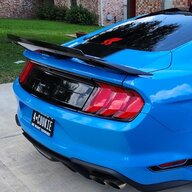
Being a Helm manual rather than OEM, I think I would trust the OEM. I wonder if Helm got mixed up with the Euro info. This diagram is from ford.com, and shows the same converter from 2017 - 2023:

1722698221085-9l.png
 

Sponsored

Angrey

Well-Known Member
Joined
Jun 21, 2020
Threads
104
Messages
2,794
Reaction score
2,984
Location
Coral Gables
Vehicle(s)
2016 GT350
Now reading this again, this may be there way of describing the cat as a substrate filter and the system just monitors if its there or not. So if you turn of the COT you disable the monitor.

In Ontario Canada we have whats called the MOE (ministry of the environment). They can randomly stop you and check for any emissions device that is removed or disabled. 300 dollars for each infraction.
Let's just say a guy I know, that looks just like me, he doesn't pay for metered parking spaces. Over the years, he's learned that every once in a blue moon, he'll be unlucky enough to get a parking ticket, but the money he saved by simply refusing to pay the parking fees is significantly more than the couple of citations (and as long as you pay them promptly).

If it were this guy, he'd ask what's the likelihood/frequency that you'll be stopped and fined? Are we talking once every 5 years or once every 3 months? Realizing it's probably not that predictable, but you could get a sense of whether you average out the costs over 10 years (let's say 3 citations) that's less than $100/year and compared to what you'll spend trying to get cats that actually work without issue as a cost alternative.........

Commiefornia has various levels of "fix" it type stuff that make it more onerous. But if it's a simple citation, I'd seriously consider just rolling the dice, especially if you're going to run on alcohol, which burns cleaner and creates less contaminants anyway.
 

ZeroTX

Well-Known Member
Joined
Nov 24, 2021
Threads
24
Messages
678
Reaction score
692
Location
Texas
First Name
ZERO
Vehicle(s)
2022 Mustang GT
We have emissions inspection here, but for about $140 I can pay a dude to get me a passing certificate without even taking the car in, hah. Not gonna narc on him here, but if ya know ya know.
 
OP
OP
Robottrainer

Robottrainer

Well-Known Member
Joined
Apr 25, 2021
Threads
79
Messages
992
Reaction score
422
Location
Canada
First Name
John
Vehicle(s)
2018 Ford Escape. 2020 Jeep Cherokee. 2021 Ford Mustang GT Stage 2 Roush
Let's just say a guy I know, that looks just like me, he doesn't pay for metered parking spaces. Over the years, he's learned that every once in a blue moon, he'll be unlucky enough to get a parking ticket, but the money he saved by simply refusing to pay the parking fees is significantly more than the couple of citations (and as long as you pay them promptly).

If it were this guy, he'd ask what's the likelihood/frequency that you'll be stopped and fined? Are we talking once every 5 years or once every 3 months? Realizing it's probably not that predictable, but you could get a sense of whether you average out the costs over 10 years (let's say 3 citations) that's less than $100/year and compared to what you'll spend trying to get cats that actually work without issue as a cost alternative.........

Commiefornia has various levels of "fix" it type stuff that make it more onerous. But if it's a simple citation, I'd seriously consider just rolling the dice, especially if you're going to run on alcohol, which burns cleaner and creates less contaminants anyway.
Chinatario is close behind. Except here they will fine you, take your plates until you fix it or both. No cats have a distinct aroma. The cops, smelling something "fish", cab do the same. Yes, you are playing the odds. There is an added bonus in having the cats. The rear sensor fine tunes the AFR when the front O2 start moving away from optimal.
 

ZeroTX

Well-Known Member
Joined
Nov 24, 2021
Threads
24
Messages
678
Reaction score
692
Location
Texas
First Name
ZERO
Vehicle(s)
2022 Mustang GT
Chinatario is close behind. Except here they will fine you, take your plates until you fix it or both. No cats have a distinct aroma. The cops, smelling something "fish", cab do the same. Yes, you are playing the odds. There is an added bonus in having the cats. The rear sensor fine tunes the AFR when the front O2 start moving away from optimal.
The smell of a well-running engine w/o cats is actually kind of pleasant to me. Not an old smoking hooptie, but a good running engine. Run race gas and it's even better. But yes, distinct. I can tell a non-cat car when driving behind it. It's not subtle.
 

dirtwarrior

Well-Known Member
Joined
Mar 22, 2021
Threads
240
Messages
1,223
Reaction score
371
Location
kentucky
First Name
Joe
Vehicle(s)
2015 3.7 mustang
No one mentioned gutting the cats in place. You mentioned all you needed was the appearance of a cat since no inspection is done. You can tune the cel out or use the O2 extension trick.
Sponsored


Top