
Sponsored
Alternator Caught on Fire
Basspro302
Well-Known Member
Just take that pos back to o oo o Rileys and go get an oem alternator.
Sponsored

Buldawg76
Well-Known Member
- Joined
- Jan 11, 2022
- Threads
- 3
- Messages
- 1,312
- Reaction score
- 1,174
- Location
- Alabama,USA
- First Name
- Mike
- Vehicle(s)
- 2020 Ecoboost Premium, 76 FXE shovel, 77 KZ1000
You need to get a cheap amp meter that can read at least 60 amps or more or a buzz box like @K4fxd mentioned to connect between the battery negative post and cable to see exactly how many amps are being drawn in the system. With all the electronics in our cars there will be a momentary spark when first connecting the negative cable to battery but if all is good the actual draw will be fairly low afterwards. Also, neither cable should start to become hot to the touch if there is no direct short to ground if it was just the alternator that failed. I used an amp meter that was capable of reading 60 amps when I was a tech to determine if there was a direct short in the system or just a few amps draw that needed to be located.
To properly test for an excessive draw that will drain the battery over time the car needs to sit with key off for 75 minutes minimum to allow all modules to go to sleep and then the draw should be 50 milliamps or less. I used my 60 amp meter to connect between the cable and the battery post while the modules went to sleep and once I saw the reading drop to almost 0 then connected my multimeter set to 10 amp range and connected it between the cable and battery before I removed the 60 amp meter so as to not disturb the connection. Then if the reading was less than 1 amp would switch meter to milliamp range to determine if there was a draw in excess of 50 milliamps that needed to be located by pulling bulbs, fuses, relays ETC.
BD
To properly test for an excessive draw that will drain the battery over time the car needs to sit with key off for 75 minutes minimum to allow all modules to go to sleep and then the draw should be 50 milliamps or less. I used my 60 amp meter to connect between the cable and the battery post while the modules went to sleep and once I saw the reading drop to almost 0 then connected my multimeter set to 10 amp range and connected it between the cable and battery before I removed the 60 amp meter so as to not disturb the connection. Then if the reading was less than 1 amp would switch meter to milliamp range to determine if there was a draw in excess of 50 milliamps that needed to be located by pulling bulbs, fuses, relays ETC.
BD
Last edited:
Ecto1
Well-Known Member
K4FXD & Garfy. I'd REALLY love to have a high quality inductive current probe for my meter. Sensitive from 100s of Amps to a few uAmps. Where can I get a "high value" probe? Most that I've come across are a few hundred bucks. They also have a VERY limited current range. I'd need to buy several to cover the current range I'd like to. Too rich for my blood.I use clamp on meters. The days of having to wire in an amp meter are long gone.

K4fxd
Well-Known Member
I got mine at Granger, does AC and DC. I really wanted a Fluke but I don't use one enough to justify the 800 bucks.
Yea looking at 100 to 200 for one. This is orange I forget the brand.
Yea looking at 100 to 200 for one. This is orange I forget the brand.
M1-Fan
Active Member
- Joined
- Feb 10, 2024
- Threads
- 1
- Messages
- 33
- Reaction score
- 28
- Location
- Mirabel, Quebec, Canada
- First Name
- Daniel
- Vehicle(s)
- 2022 Mustang Mach1, 2021 BMW X3 m40i
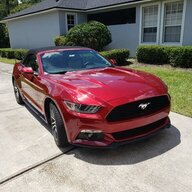
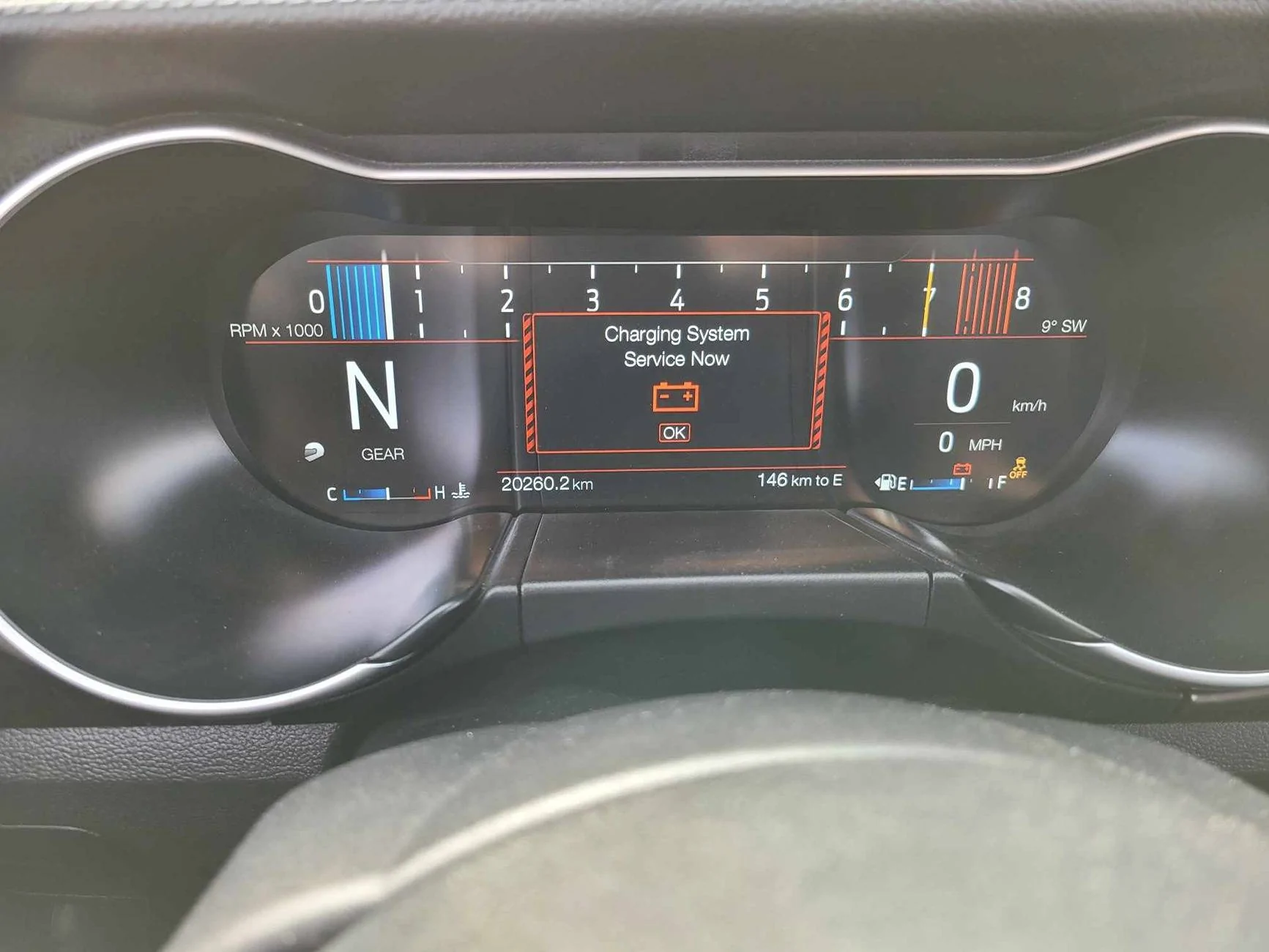
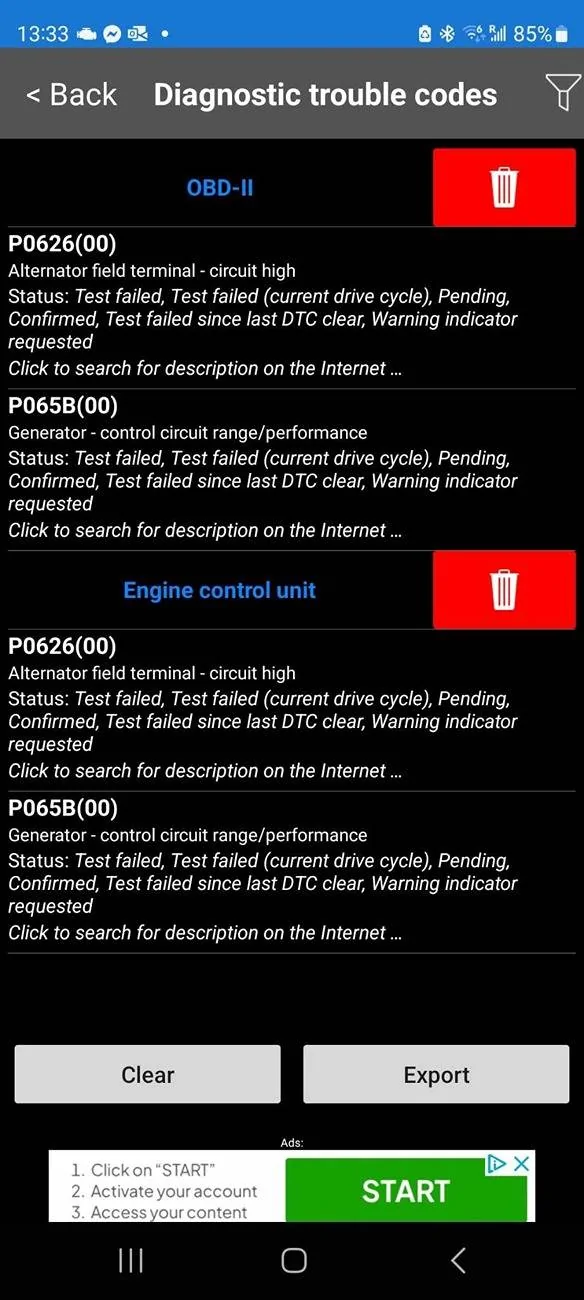
I ran my 2022 Mach1 at it"s 7500 RPM redline a few times at Watkins Glen International Track back in October 2024, because, who wouldn't at this awesome track. I ended up overloading/over-revving the OEM alternator internals. This led to a red error message popped up on the dashboard while I was still sending it on the track. In the paddcosk, I read and cleared the OBD codes, but they kept coming back. I opted not to test my faith further, ended my track day early, and headed back home. My dashboard indicated a constant 14.5V on my ride home. I apparently burnt the control module attached to the alternator (my speculative personal diagnostic). I got the alternator replaced under warranty.It’s my guess they don’t like the 8000rpm haha. I wonder what everyone else is using that is revving high. I did accidentally rev this one to 9000…
I am getting an underdrive alternator pulley custom-machined, to avoid this from happening again out on the track this year ...
Also installed a chemical Fire stick in the car ...

Last edited:
Buldawg76
Well-Known Member
- Joined
- Jan 11, 2022
- Threads
- 3
- Messages
- 1,312
- Reaction score
- 1,174
- Location
- Alabama,USA
- First Name
- Mike
- Vehicle(s)
- 2020 Ecoboost Premium, 76 FXE shovel, 77 KZ1000
I bought my fluke model 87 back in the early 80s but it was still 300+ and it's not a clamp on Fluke but it has served me very well for over 40 years so have no need to upgrade to a clamp on even though it would be far easier to test with for sure. I also have a 60 amp meter that has clamp on leads that I use to check for shorts. Not as easy or quick as a clamp on reading meters but get the job done.I got mine at Granger, does AC and DC. I really wanted a Fluke but I don't use one enough to justify the 800 bucks.
Yea looking at 100 to 200 for one. This is orange I forget the brand.
BD
Sponsored
K4fxd
Well-Known Member
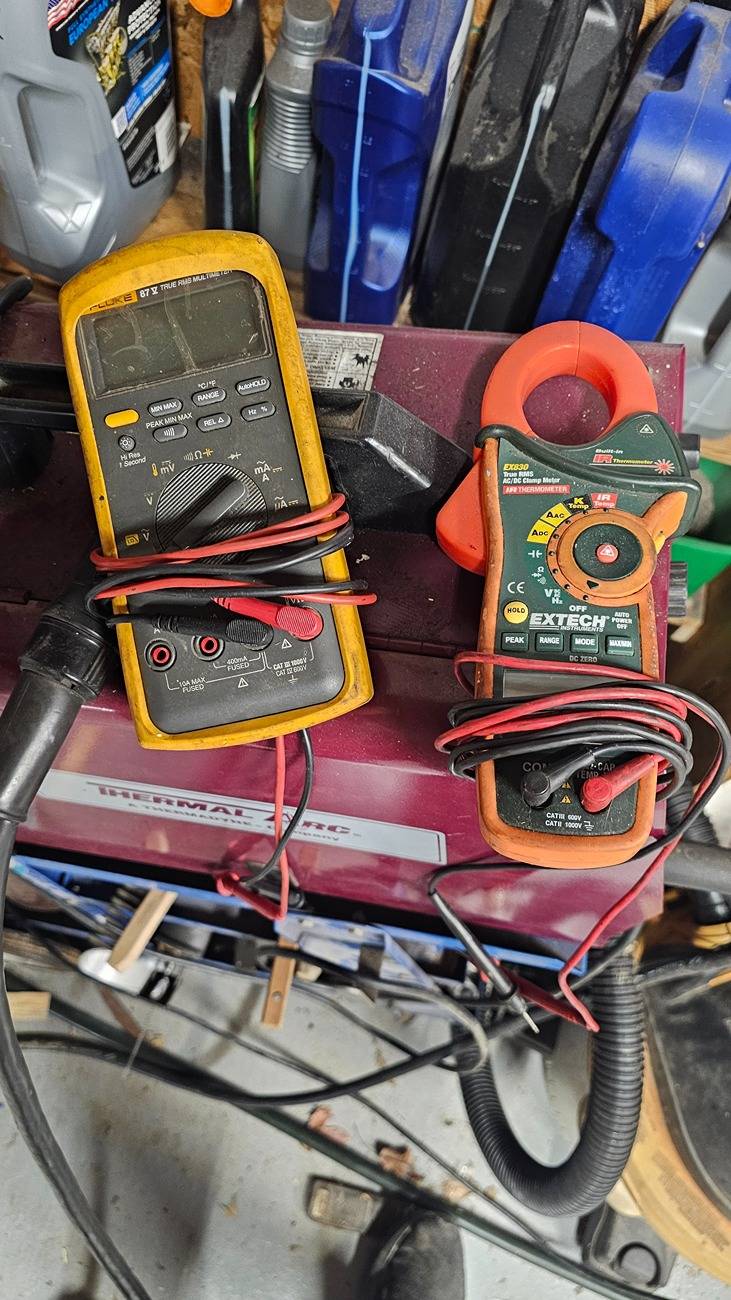
I've got a Fluke 87 plus or something. My 87 died and they gave me this as a replacement. My favorite multimeter.
The Fluke with the clamp was 800 20 years ago.

The Fluke with the clamp was 800 20 years ago.
OP
OP

tdstuart
Well-Known Member
- Thread starter
- #42
Turns out the thing I bought does microamp and amp readings not milliamps and its range is 200-0.1 micro amps, which is far to tiny for the car.You need to get a cheap amp meter that can read at least 60 amps or more or a buzz box like @K4fxd mentioned to connect between the battery negative post and cable to see exactly how many amps are being drawn in the system. With all the electronics in our cars there will be a momentary spark when first connecting the negative cable to battery but if all is good the actual draw will be fairly low afterwards. Also, neither cable should start to become hot to the touch if there is no direct short to ground if it was just the alternator that failed. I used an amp meter that was capable of reading 60 amps when I was a tech to determine if there was a direct short in the system or just a few amps draw that needed to be located.
To properly test for an excessive draw that will drain the battery over time the car needs to sit with key off for 75 minutes minimum to allow all modules to go to sleep and then the draw should be 50 milliamps or less. I used my 60 amp meter to connect between the cable and the battery post while the modules went to sleep and once I saw the reading drop to almost 0 then connected my multimeter set to 10 amp range and connected it between the cable and battery before I removed the 60 amp meter so as to not disturb the connection. Then if the reading was less than 1 amp would switch meter to milliamp range to determine if there was a draw in excess of 50 milliamps that needed to be located by pulling bulbs, fuses, relays ETC.
BD
It does have a 40-4 amp setting which will show down to 0.01 amps but its not really accurate lower than 4 amps.
I still tested it. Up to about 8 amps when first connected with the headlights on and modules powered. As things started to go to sleep it would drop eventually resting around 0.07 amps (again its not very accurate that low). I didn't leave it for as long as you suggested only about 10 minutes.
Do you think it is worth it to pickup an amp reader that can do milliamps? I think this shows that at least there is no major short or large draw on the system. Opinions are appreciated thanks!
Buldawg76
Well-Known Member
- Joined
- Jan 11, 2022
- Threads
- 3
- Messages
- 1,312
- Reaction score
- 1,174
- Location
- Alabama,USA
- First Name
- Mike
- Vehicle(s)
- 2020 Ecoboost Premium, 76 FXE shovel, 77 KZ1000
Turns out the thing I bought does microamp and amp readings not milliamps and its range is 200-0.1 micro amps, which is far to tiny for the car.
It does have a 40-4 amp setting which will show down to 0.01 amps but its not really accurate lower than 4 amps.
I still tested it. Up to about 8 amps when first connected with the headlights on and modules powered. As things started to go to sleep it would drop eventually resting around 0.07 amps (again its not very accurate that low). I didn't leave it for as long as you suggested only about 10 minutes.
Do you think it is worth it to pickup an amp reader that can do milliamps? I think this shows that at least there is no major short or large draw on the system. Opinions are appreciated thanks!
0.07 amps is 70 milliamps so that not much above the 50 milliamp range that is allowed and its likely that if you let it sit for the full 75 minutes it would be well below the 50 milliamp range. It does show that there is no direct short to ground with the alternator out of the system, so I believe it was just a failed alternator. Sorry I missed that meter not reading in milliamps and assumed since it was auto ranging it would read from amps to microamps and everything in between.
Here is cheap multimeter that will meet your needs and will come in handy in the future for other needs.
9-Function Digital Multimeter with Audible Continuity (harborfreight.com)
Why do you believe it's not accurate at the low end of the readings. Klein has made good quality tools for years. Is the reading bouncing around or erratic at the low readings.
BD
OP
OP
tdstuart
Well-Known Member
- Thread starter
- #44
Initially, the dial was broken so I had to open it up and adjust the dial screw as it wouldn't stay on unless I pressed the dial down. And yes dc amps jumping around a lot when not on a circuit and when around the cable. It started of showing 0 amps when not on anything but moved to 0.45 amps after using for a bit, it does have a set to 0 but even when setting to 0 I would see it bounce around up to 0.1 amps. Thats why I am not confident in the 0.7 amps as it would fluctuate from 1-0.5 amps I just think it sat at 0.7 amps more. The instructions also states that the mode is made to test from 40-4 amps.0.07 amps is 70 milliamps so that not much above the 50 milliamp range that is allowed and its likely that if you let it sit for the full 75 minutes it would be well below the 50 milliamp range. It does show that there is no direct short to ground with the alternator out of the system, so I believe it was just a failed alternator. Sorry I missed that meter not reading in milliamps and assumed since it was auto ranging it would read from amps to microamps and everything in between.
Here is cheap multimeter that will meet your needs and will come in handy in the future for other needs.
9-Function Digital Multimeter with Audible Continuity (harborfreight.com)
Why do you believe it's not accurate at the low end of the readings. Klein has made good quality tools for years. Is the reading bouncing around or erratic at the low readings.
BD
Either way as long as it shows there is no other major electrical issues even if I may have some higher-than-typical parasitical draw it gives me enough assurance to replace the alternator and drive it.
The harbor freight multimeter is pretty cheap.
Ecto1
Well-Known Member
That sounds like a very practical ammeter. What brand & model please? I'd like to have one of these myself.Turns out the thing I bought does microamp and amp readings not milliamps and its range is 200-0.1 micro amps, which is far to tiny for the car.
It does have a 40-4 amp setting which will show down to 0.01 amps but its not really accurate lower than 4 amps.
I still tested it. Up to about 8 amps when first connected with the headlights on and modules powered. As things started to go to sleep it would drop eventually resting around 0.07 amps (again its not very accurate that low). I didn't leave it for as long as you suggested only about 10 minutes.
Do you think it is worth it to pickup an amp reader that can do milliamps? I think this shows that at least there is no major short or large draw on the system. Opinions are appreciated thanks!
Sponsored


