
Sponsored
VoodooMaster
Active Member
You really shouldn't spread mis-information about something you clearly don't know about - especially when it's going to put other people's engines at risk. Flex Fuel engines do have special parts to deal with the E85. It can hurt your engine, regardless of tune, if your engine doesn't have appropriate parts.I'm very well aware of what E85 is. You should read up on these things before you make blanket statements. All that you need is a custom tune to handle E85. The engine and fuel system are ethanol safe, even for high percentages of ethanol. All non Flex Fuel vehicles state not to use E85 in the manual, and it's simply because they don't have the OEM programming to adjust for the fuel delivery.
It won't hurt your engine if you have a good custom tune for it. Lund already gained almost 40whp over stock on his GT350 just by switching to E85 and tuning for it. E85 will also keep your engine much cleaner than gasoline. The only downsides are a loss in fuel mileage, the lack of availability, and the fact that you shouldn't store a car filled with E85. Switch to gasoline for winter storage.
Nataphen
Well-Known Member
You really shouldn't spread mis-information about something you clearly don't know about - especially when it's going to put other people's engines at risk. Flex Fuel engines do have special parts to deal with the E85. It can hurt your engine, regardless of tune, if your engine doesn't have appropriate parts.
People have been using it in the Coyote motors and Condor/Trinity motors for years with no problems. The only thing that needs addressing on THESE engines is fuel volume delivery. There may be other motors that have issues, but it won't be a problem for these. Do some research and prove me wrong if you want. I ran it for over a year and 10K+ miles on my 2013 GT. Zero issues.
The only E85 related problem that I've seen on the 2011+ Mustang engines is that running a boost-a-pump will burn up the OEM fuel pump. That's not necessarily the fault of ethanol, but it's the only worry that people have. My car was NA, so I didn't need a voltage booster. I just switched to 47# injectors. Lund tested the GT350's stock ~62# injectors on E85 and got adequate volume from them. All they had to do is adjust the tune.
VoodooMaster
Active Member
What do you define as zero issues? If you're not concerned about your valve seats wearing excessively, then I guess you have no issues. There is damage occurring inside your engine. I guarantee it. Will you notice the effects in 10k miles. No. Will you eventually. Yes. If you're satisfied with 10k mile durability, more power to you. But don't go around telling people it will not damage their engine when it, in fact, will. Auto makers are concerned about high mileage durability - that's why they recommend you don't run E85 in a non-Flex Fuel vehicle. It's not as simple as a tune.People have been using it in the Coyote motors and Condor/Trinity motors for years with no problems. The only thing that needs addressing on THESE engines is fuel volume delivery. There may be other motors that have issues, but it won't be a problem for these. Do some research and prove me wrong if you want. I ran it for over a year and 10K+ miles on my 2013 GT. Zero issues.
Nataphen
Well-Known Member
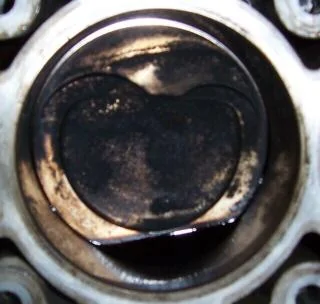
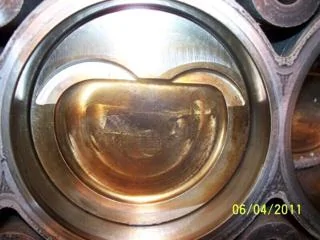
You seem to have bought into a lot of anti-ethanol propaganda. I'm sorry for the poor video quality here, but it's a great example.
There's ample lubrication in E70, E75, E80, and E85 to not cause any noticeable issues. Whatever wear that may be increased with ethanol versus gasoline is easily made up for with the elimination of carbon build up using E85.
There's ample lubrication in E70, E75, E80, and E85 to not cause any noticeable issues. Whatever wear that may be increased with ethanol versus gasoline is easily made up for with the elimination of carbon build up using E85.
Sponsored
Spa2k
Well-Known Member
- Joined
- May 4, 2015
- Threads
- 34
- Messages
- 2,047
- Reaction score
- 1,046
- Location
- In the Middle
- Vehicle(s)
- You don’t want to know
You're using a video from a company that sells E85 conversion kits? BS.
I live smack dab in the middle of E85 country, have watched how it has affected vehicles using it and would never use it in a vehicle not specifically designed for it. Plus, I would never put up with the huge reduction in fuel economy or the lack of year-round usability.
It may be fun for instant gratification and a power boost in a vehicle built and tuned for it, but that's it. Converting to E85 also will violate your warranty if any engine-related issues turn up.
I live smack dab in the middle of E85 country, have watched how it has affected vehicles using it and would never use it in a vehicle not specifically designed for it. Plus, I would never put up with the huge reduction in fuel economy or the lack of year-round usability.
It may be fun for instant gratification and a power boost in a vehicle built and tuned for it, but that's it. Converting to E85 also will violate your warranty if any engine-related issues turn up.
Nataphen
Well-Known Member
You're using a video from a company that sells E85 conversion kits? BS.
I live smack dab in the middle of E85 country, have watched how it has affected vehicles using it and would never use it in a vehicle not specifically designed for it. Plus, I would never put up with the huge reduction in fuel economy or the lack of year-round usability.
It may be fun for instant gratification and a power boost in a vehicle built and tuned for it, but that's it. Converting to E85 also will violate your warranty if any engine-related issues turn up.
That's a result similar to all the examples that I've seen in researching it personally.
Tuning an engine at all will void the warranty if your dealership or Ford wants it to. That's why I suggested it only if he was willing to go that route anyway.
Older cars and small engines don't have ethanol safe components, so ethanol can wreak havoc on them. However, 99% of newer cars have ethanol-safe hard parts. Non-flex fuel cars usually lack only a sensor and a compatible ECU. The drop in fuel economy admittedly sucks, but that didn't bother me because I didn't drive mine every day. I also have a few E85 stations very nearby.
You guys are obviously going to believe what you want, and that's fine. I'd suggest that you research things yourself rather than just writing it off because of mass public opinion, or comparisons to older and/or non-ethanol safe equipment.
VoodooMaster
Active Member
You accuse me of buying into propaganda, but your counter evidence comes from a company selling E85 conversion kits. Talk about propaganda!You seem to have bought into a lot of anti-ethanol propaganda. I'm sorry for the poor video quality here, but it's a great example.
There's ample lubrication in E70, E75, E80, and E85 to not cause any noticeable issues. Whatever wear that may be increased with ethanol versus gasoline is easily made up for with the elimination of carbon build up using E85.
I have not bought into propaganda. My information comes from actual experience.
Car companies do put premium material valve seats in engines intended to run E85. Do you think they would spend that money if it wasn't needed? And why wouldn't they just do a little calibration work and make all engines Flex Fuel if it didn't require any hardware changes.
VoodooMaster
Active Member
Can you provide data to back up this statement? Of course you can't. Because it is not true. How do I know - I have first hand knowledge.99% of newer cars have ethanol-safe hard parts.
Do you even know what "hard parts" are required?
I don't need to research this. Again, I have first hand knowledge.I'd suggest that you research things yourself rather than just writing it off because of mass public opinion, or comparisons to older and/or non-ethanol safe equipment.
I realize I am offering no proof. So I don't expect you or anyone else to believe me. I just hope they don't believe you.
Sponsored
Nataphen
Well-Known Member
That's just a quick video I knew of off the top of my head. There are other examples out there that show similar results.
I haven't seen any proof of special valve seats in a flex fuel car. If it's true, I'm sure that they're just covering themselves in case someone stores a car with E85 in the fuel system. Like I said earlier, you shouldn't store a car with E85 in it. The general rule of thumb is to make sure that you're going to drive the car at least every two weeks.
I'm not going to try to convince you guys. I've had good experience with ethanol fuels, and that's what matters to me. Arguing is only going to further entrench everyone in their own opinions. If you modify your car in any way, it's at your own risk.
I haven't seen any proof of special valve seats in a flex fuel car. If it's true, I'm sure that they're just covering themselves in case someone stores a car with E85 in the fuel system. Like I said earlier, you shouldn't store a car with E85 in it. The general rule of thumb is to make sure that you're going to drive the car at least every two weeks.
I'm not going to try to convince you guys. I've had good experience with ethanol fuels, and that's what matters to me. Arguing is only going to further entrench everyone in their own opinions. If you modify your car in any way, it's at your own risk.
Nataphen
Well-Known Member
Do you even know what "hard parts" are required?
Just shooting from the hip, so forgive me if I miss something:
All fuel lines
Fuel pump
Fuel filter element
Injectors
Injector o-rings
Valve seats (never said they weren't needed, just that non flex fuel cars have them as well)
O2 sensors set at a 45° angle to avoid excess moisture build up
The thing is that all cars that I know of are now built to handle up to 15% ethanol content. They have to have ethanol safe parts to make that possible. Yes, I know they say not to use E15 on the fuel fillers, but the OEM Ford fuel systems on the Mustangs can adjust for at least E0-E20, possibly E25. That's on a 100% stock tune. You may get a CEL if you run on 20% content for a while, but it would still adjust fueling and safely operate. Something may have changed in regards to the GT350 systems, but I highly doubt it.
If you don't feel comfortable using E85, then by all means, don't. I'm not trying to force my opinions on anyone, I was just suggesting that as an option if the OP ever wanted to get a custom tune. I don't see any harm in running it personally, especially if he only used it occasionally when it was convenient. I'm done derailing, and I apologize for veering off course in this thread.
Hack
Well-Known Member
- Joined
- Nov 26, 2014
- Threads
- 86
- Messages
- 12,877
- Reaction score
- 8,315
- Location
- Minneapolis
- Vehicle(s)
- Mustang, Challenger
The biggest caveat I've heard about E85 in a modern engine is that the percentage of ethanol isn't tightly controlled. So if you expect to be able to just drive to the pump and fill up normally, you need the tune to be able to accommodate a significant change in the ethanol content. Basically you need your custom tune to be a flex fuel tune. If you don't have a tune that can accommodate changes in the ethanol content, you're asking for a problem.

Special50
Well-Known Member
- Joined
- Apr 1, 2015
- Threads
- 6
- Messages
- 100
- Reaction score
- 17
- Location
- California
- Vehicle(s)
- 50th Anniversary Special Edition
When drove the 350s in Laguna Seca, Ford was putting 100 octane there. Like a previous user suggested use Google Maps to find some. Here in Silicon Valley there is a 76 in Redwood City that has race gas 100 unleaded at the pump, and higher octanes on the premises. King's Union 76 
Sponsored
Similar threads

- Replies
- 38
- Views
- 9,794


