
Sponsored

2.3L TST Optimization Thread

lisandra

mama smurf
Joined
Jul 3, 2015
Threads
18
Messages
959
Reaction score
203
Location
Puerto Rico
First Name
lisandra
Vehicle(s)
ecoboost PP non premium
When you say factory oil separator do you mean pcv?
Sponsored

 
OP
OP
TheLion

TheLion

Well-Known Member
Joined
Jul 1, 2016
Threads
68
Messages
1,621
Reaction score
601
Location
US
Vehicle(s)
Ruby Red 2016 Mustang GT PP 6-MT
When you say factory oil separator do you mean pcv?
The PCV Valve is just a ball valve and spring, which is what most of us are used to seeing on NA engines. In the vast majority of cars that's all there is to vent the crank case back into the intake to relieve positive crank case pressure as the down strokes occur on each cylinder.

On the 2.3L EB engine there is a factory oil separator, which is a cooling or filtering chamber which helps to condense or filter the vaporized oil in the vented crank case air before that air is re-circulated back into the intake.

I do not believe there is a PCV valve in the 2.3L EB, only the oil separator. If there is a PCV valve, it would have to be integrated into the factory separator. I just installed a UPR Dual Valve catch can last night, there's NO PCV valve on the top of the crank PCV outlet pipe (a blue 90 degree plastic elbow under the intake manifold).

See the link for an image of the factory oil separator (which takes place of the traditional ball valve which does not really "separate" vaporized oil from the heated crank case air): https://engineering.mishimoto.com/wp-content/uploads/2014/12/PCV-Shot-580x372.jpg

Also, if you do an actual search for PCV valve for 2.3L EB, you won't find any retailers listing a PCV valve for the 2.3L EB, only for the V6 and V8's can I find the traditional ball valve most have come to expect, hence why I believe the factory Oil Separator completely replaces the traditional ball valve. There's really no reason for the ball valve is you have an oil separator anyway as it could be integrated or may not be required with the presence of the separator.

Turbo engines run hotter, period. Your re-using flowing exhaust gasses coming right out of the integral exhaust manifold, just inches away from the cylinder camber. There's a lot of heat there. Also your turbo bearings are oil lubricated and cooled, so the oil temperature is hotter than a traditional NA engine. On top of that the pistons are oil cooled as well on top of the normal lubrication the oil performs on the bearings / cams.

All that heat and spraying under pressure causes some oil to vaporize due to the heat (higher quality oils have a lower volatility, aka they vaporize less under the same conditions). That vaporized oil in the crank case air is vented through the PCV system into the intake in any engine, NA or FI. But FI engines have a higher rate of oil vaporization, hence why they replaced the PCV valve with an oil separator. However it's not 100% effective as it is a no maintenance system, so there are trade offs. They are balancing filtration ability with minimal user interaction.

None of the auto makers expect you to empty a catch can at every oil change. Also if it's forgotten and eventually fills up, now your dumping oil directly into the intake in higher concentrations (assuming there's no overflow protection) which could potentially help generate LSPI conditions or at the very least increase fouling you were trying to prevent in the first place.

The OEM separator just drains the oil back into the crank to my knowledge, but it's ability to separate the oil from the air is more limited due to having to be a no-maintenance system, we know this because:

1. There are quite a few people running catch cans who find oil in them, especially those who have the original gen 1 oil separator and are experiencing the "blue smoke from exhaust" issues, this illustrates it cannot filter 100% of the oil particulates.

2. There is a TSB about a recall on 2015 and early 2016 mustangs for replacing the first generation oil separator with a High Flow unit (which confirms the fact the 2.3L is equipped with a factory unit), as the original design was causing too much crank case pressure (aka it's air flow rate was too low to adequately vent the crank case) and hence forcing oil out the turbo bearing seals.
 
OP
OP
TheLion

TheLion

Well-Known Member
Joined
Jul 1, 2016
Threads
68
Messages
1,621
Reaction score
601
Location
US
Vehicle(s)
Ruby Red 2016 Mustang GT PP 6-MT
As far as plugs, you say not iridium which is what adam sells and I run. Name some alternatives then
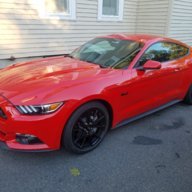
Because Adam sells them, doesn't mean they are the best or only option. I just made a post a couple days back on these aftermarket tunes as a warning to those running a stock down pipe, the reason these aftermarket tunes are not safe unless you upgrade the down pipe is because lifting the power band in the upper rpm range causes the catalytic converter temps to exceed their maximum safe margin by over 250F! Ford Racing put out a bunch of documented data on why their tunes don't lift the upper RPM power band in the 2.0L EB for the Focust St as they were getting criticism for doing nothing in the upper range (their gains were all in the mid and low end) compared to all of the aftermarket tunes. This is just an example of how tuners, tinkerers or enthusiasts may not have considered all possible ramifications. The idea that "it works fine now or hasn't broken in the last 6,000 miles" isnt' necessarily a good indicator of long term reliability over the life of the car. Now that particular issue can be solved by upgrading the down pipe, but there are a lot of EB owners running a tune with the stock down pipe...at least until they start failing at xxxxxx miles.

I'm not suggesting Adam isn't a smart guy or doesn't do outstanding work, but he doesn't know everything and may not have considered or know about alternatives, so I would be careful about using that as the reasoning. Now there's nothing wrong with Iridium plugs. What people say "better" alternatives, you have to keep in mind their reference. Better is subjective to your perspective.

In some cases, better might be longevity / reliability / low maintenance. Mass produced, factory setups, unless your into exotic models or 100k+ price points, usually are geared towards the above criteria. In other cases better might mean higher performance or higher performance at a certain price point.

Brisk RR14YS plugs use a silver electrode, which is an alternative I recommend considering (there are lots of great plugs out there, but also some not so great ones, just be sure to do a lot of research prior to). Silver has a higher resistance to oxidation than say copper, the highest conductivity and thermal transfer of any base metal, period. Silver electrodes give you the benefit of the performance of copper electrode plugs, but tend to maintain their performance throughout their life unlike copper plugs which tend to degrade in performance after just a few thousand miles (around 5k they degrade in their ability to ignite the fuel to where iridium are now performing better). Silver is also 20% less anodic than copper, meaning its corrosion is 20% less than copper under the same charge conditions.

Iridium has a much lower thermal and electrical conductivity (many times lower) than either copper or silver. It requires a more robust ignition system to generate the same spark energy. Spark energy actually does affect how the flame front propagates, the exact point in time at which it ignites and the consistency of ignition. Case in point, because silver has a much higher thermal conductivity, a more projected electrode can be used for the same heat range of plug as it sheds thermal energy better vs. iridium.

However they do have a shorter overall service life (20k to 25k according to Brisk customer service in Turbo applications). The factory iridium plugs are rated for between 30k and 45k. The price is virtually the same for a set of 4 of either. You can order them from Jegs E-bay store if you fancy pay-pal for convenience / security, directly from Brisk USA or from Americanmuscle, which is the only alternative plug they list for the 2.3L EB engines.

The advantage of silver electrode plugs result in higher AVERAGE cylinder pressures, more consistent ignition timing and better fuel efficiency (due to the other two). Again, the trade off is life span, 20~25k vs 30~45k, so almost half the life span. The other advantage is a higher resistance to knock as they are less prone to fouling issues (they will still generate a strong spark even partially fouled where iridium will not). They are well known as being one of the "plugs of choice" for hard to ignite fuels such as Nitro methane or LPG, which you would NOT use iridium plugs for.

Also their required operating voltage is notably lower, so as they wear they won't EXCEED the ignition systems capabilities. This is also advantageous as the ignition coils age and the con-formal coating the winding's begins to break down (aka the coils become leaky and stores less energy to transfer to the electrodes due to exposure to constant high temperatures from being both in the engine compartment and also the coils own internal losses from eddy currents, DC resistance etc.).

I am running these in my 2016 EB, I replaced the factory Iridium plugs as part of my 3-phase bolt-on process to increase the 2.3L's efficiency, reliability and consistency (in making good power). The other two are as we all know the IC and then the catch can. Oil would be a fourth, but it's not a "bolt on" modification, so I didn't consider it as part of the big 3.
 
Last edited:

ypena02

Well-Known Member
Joined
Nov 14, 2015
Threads
27
Messages
789
Reaction score
203
Location
Massachusetts
Vehicle(s)
2017 Mustang GT
I am running these in my 2016 EB, I replaced the factory Iridium plugs as part of my 3-phase bolt-on process to increase the 2.3L's efficiency, reliability and consistency (in making good power). The other two are as we all know the IC and then the catch can. Oil would be a fourth, but it's not a "bolt on" modification, so I didn't consider it as part of the big 3.
Did you notice a difference with the Brisk plugs?

 

Busser48

Well-Known Member
Joined
Sep 7, 2015
Threads
40
Messages
1,637
Reaction score
171
Location
La
Vehicle(s)
2015 mustang ecoboost
Because Adam sells them, doesn't mean they are the best or only option. I just made a post a couple days back on these aftermarket tunes as a warning to those running a stock down pipe, the reason these aftermarket tunes are not safe unless you upgrade the down pipe is because lifting the power band in the upper rpm range causes the catalytic converter temps to exceed their maximum safe margin by over 250F! Ford Racing put out a bunch of documented data on why their tunes don't lift the upper RPM power band in the 2.0L EB for the Focust St as they were getting criticism for doing nothing in the upper range (their gains were all in the mid and low end) compared to all of the aftermarket tunes. This is just an example of how tuners, tinkerers or enthusiasts may not have considered all possible ramifications. The idea that "it works fine now or hasn't broken in the last 6,000 miles" isnt' necessarily a good indicator of long term reliability over the life of the car. Now that particular issue can be solved by upgrading the down pipe, but there are a lot of EB owners running a tune with the stock down pipe...at least until they start failing at xxxxxx miles.

I'm not suggesting Adam isn't a smart guy or doesn't do outstanding work, but he doesn't know everything and may not have considered or know about alternatives, so I would be careful about using that as the reasoning. Now there's nothing wrong with Iridium plugs. What people say "better" alternatives, you have to keep in mind their reference. Better is subjective to your perspective.

In some cases, better might be longevity / reliability / low maintenance. Mass produced, factory setups, unless your into exotic models or 100k+ price points, usually are geared towards the above criteria. In other cases better might mean higher performance or higher performance at a certain price point.

Brisk RR14YS plugs use a silver electrode, which is an alternative I recommend considering (there are lots of great plugs out there, but also some not so great ones, just be sure to do a lot of research prior to). Silver has a higher resistance to oxidation than say copper, the highest conductivity and thermal transfer of any base metal, period. Silver electrodes give you the benefit of the performance of copper electrode plugs, but tend to maintain their performance throughout their life unlike copper plugs which tend to degrade in performance after just a few thousand miles (around 5k they degrade in their ability to ignite the fuel to where iridium are now performing better). Silver is also 20% less anodic than copper, meaning its corrosion is 20% less than copper under the same charge conditions.

Iridium has a much lower thermal and electrical conductivity (many times lower) than either copper or silver. It requires a more robust ignition system to generate the same spark energy. Spark energy actually does affect how the flame front propagates, the exact point in time at which it ignites and the consistency of ignition. Case in point, because silver has a much higher thermal conductivity, a more projected electrode can be used for the same heat range of plug as it sheds thermal energy better vs. iridium.

However they do have a shorter overall service life (20k to 25k according to Brisk customer service in Turbo applications). The factory iridium plugs are rated for between 30k and 45k. The price is virtually the same for a set of 4 of either. You can order them from Jegs E-bay store if you fancy pay-pal for convenience / security, directly from Brisk USA or from Americanmuscle, which is the only alternative plug they list for the 2.3L EB engines.

The advantage of silver electrode plugs result in higher AVERAGE cylinder pressures, more consistent ignition timing and better fuel efficiency (due to the other two). Again, the trade off is life span, 20~25k vs 30~45k, so almost half the life span. The other advantage is a higher resistance to knock as they are less prone to fouling issues (they will still generate a strong spark even partially fouled where iridium will not). They are well known as being one of the "plugs of choice" for hard to ignite fuels such as Nitro methane or LPG, which you would NOT use iridium plugs for.

Also their required operating voltage is notably lower, so as they wear they won't EXCEED the ignition systems capabilities. This is also advantageous as the ignition coils age and the con-formal coating the winding's begins to break down (aka the coils become leaky and stores less energy to transfer to the electrodes due to exposure to constant high temperatures from being both in the engine compartment and also the coils own internal losses from eddy currents, DC resistance etc.).

I am running these in my 2016 EB, I replaced the factory Iridium plugs as part of my 3-phase bolt-on process to increase the 2.3L's efficiency, reliability and consistency (in making good power). The other two are as we all know the IC and then the catch can. Oil would be a fourth, but it's not a "bolt on" modification, so I didn't consider it as part of the big 3.

Did not say that, I asked for an alternative, also I am running an aftermarket DP
 

Sponsored

OP
OP
TheLion

TheLion

Well-Known Member
Joined
Jul 1, 2016
Threads
68
Messages
1,621
Reaction score
601
Location
US
Vehicle(s)
Ruby Red 2016 Mustang GT PP 6-MT
Did you notice a difference with the Brisk plugs?
On an otherwise stock engine, it seems to be notably more responsive and smoother overall. I don't think there's much peak power gains so much as it's more consistent, which is the biggest issue with stock EB's. It's not going to be a night and day difference as with an inter cooler upgrade or a tune, however it works with these other changes to maximize fuel efficiency but also making consistent power.

I don't see a reason not to at least try a set and see for yourself, if you don't notice any improvement at all, then next service interval just go back to factory iridium. Total cost is same per 4 plugs. At one point I calculated the cost difference assuming a 0.75 mpg fuel savings, 15k miles a year and it was a wash in overall cost between factory iridium and the brisk plugs, except the brisk plugs are providing more consistent power / responsiveness. As I mentioned they are also more resistant to fouling, which is a big safety benefit in high boost engines.

Even if your factory iridium aren't used up, give them a try, save the factory plugs and you can always put them back in once the Brisk are used up.
 

Juben

Well-Known Member
Joined
Jan 29, 2015
Threads
35
Messages
2,519
Reaction score
809
Location
Chattanooga, TN
First Name
Justin
Vehicle(s)
2015 EcoBoost Mustang (AT) w/PP
The factory PCV/oil separator has a ball and spring. That's what you gut to stop the smoking on the older PCV equipped models. If you remove the 90° elbow from the oil separator, it's incased within the bottom portion of that elbow.

In regards to the Brisk plugs, I've been running them too with no intentions of switching to anything else at this time. I agree with your analysis of these plugs, and so far, they've performed wonderfully.
 
OP
OP
TheLion

TheLion

Well-Known Member
Joined
Jul 1, 2016
Threads
68
Messages
1,621
Reaction score
601
Location
US
Vehicle(s)
Ruby Red 2016 Mustang GT PP 6-MT
The factory PCV/oil separator has a ball and spring. That's what you gut to stop the smoking on the older PCV equipped models. If you remove the 90° elbow from the oil separator, it's incased within the bottom portion of that elbow.

In regards to the Brisk plugs, I've been running them too with no intentions of switching to anything else at this time. I agree with your analysis of these plugs, and so far, they've performed wonderfully.
Good to know on the PCV. I wasn't sure of the blue polymer elbow had a ball valve attached to the bottom or if there was no ball-valve period. So it appears that in the EB engines the PCV is to a degree integrated with the oil separator chamber.

I could also see how removing the ball valve would help relieve pressure, as the it's another restriction in the original separator design. Although now it would make more sense to have it warranty replaced by ford with the high flow design, even if your not having issues.

Also good to know on the plugs, at least I'm not the only one running them. Can't wait for my Levels Gen 3 to ship, it'll be really interesting to see how the combination of the plugs, catch can, IC and good fuel perform. Although out of all of them, the IC and fuel have the most immediate and biggest impact by quite a bit in terms of performance. There's no getting around how weofully under designed the factory IC is for the application and it's very notably negative impacts on making consistent power on a bone stock car...at least it's a cheap fix though (relatively).
 

sharp21

Well-Known Member
Joined
Aug 8, 2015
Threads
29
Messages
245
Reaction score
44
Location
Houston
Vehicle(s)
Mustang
Great thread. I too am going for reliability and max performance sans tune. Intercooler was the first step, DVCC was planned next, although might grab a set of plugs before that.

Everything after that will be related to driving feel. Just picked up a blowfish bracket and going to pair that with a short throw shifter. Strut tower brace after that.

S.
 
OP
OP
TheLion

TheLion

Well-Known Member
Joined
Jul 1, 2016
Threads
68
Messages
1,621
Reaction score
601
Location
US
Vehicle(s)
Ruby Red 2016 Mustang GT PP 6-MT
My thoughts are quite simple on this subject, a 1,000 HP mustang sitting on the side lines broken down is slower than a 1 HP mustang rolling across the finish line at 1 mph...a silly illustration but proves a point.

Now with that being said, once I have reliability and durability items taken care of I will move on to more fun stuff like PCM tuning, exhaust, suspension etc. That is, if I can ever get Nick to ship my IC this century...
 

Sponsored
OP
OP
TheLion

TheLion

Well-Known Member
Joined
Jul 1, 2016
Threads
68
Messages
1,621
Reaction score
601
Location
US
Vehicle(s)
Ruby Red 2016 Mustang GT PP 6-MT
I would add this to the list for the price (there may be other options, but this one seems to be well integrated to work with the system):

http://www.boombaracing.com/2015-ford-mustang-ecoboost-boost-operated-blow-off-valve/

For $235 that's a great addition giving you nice gains under the curve due to eliminating losses from the leaky stock Diverter Valve. According to Boomba, a MAP tuned ECU will not have issues with the change in venting to intake vs venting to atmosphere.

In this case, as with the others, the power gains aren't coming from changing more critical and sensitive items such as timing or boost, but rather from eliminating inefficiencies in the existing system architecture.

While the total is up to around $1,447 total for all of these modifications, they are again all low key items that should be relatively warranty safe, at the very least they can all quite easily be reversed even with a blown engine as they are true bolt on integrations.

I would bet my bottom dollar if we implemented items 1-6 with this being the 7th on my list, we could push this car into the 13.5~13.6 1/4 mile times consistently.

We've seen a bone stock EB Auto run a 13.6 in cooler weather, I think it was 54F in their video (look up one of Bama's you tube videos advertising their tune, they tested the stock car first with drag radials being the only modification). I don't see why an optimized EB 6 speed manual couldn't run similar or even better times if the driver is up to the task.

Throw in a Ford Racing tune as #8 for about $600 and the total is right about $2k. That would be on fast car for $28k total (I paid $26k out the door after taxes, titles etc.). Used WRX's in my area were going for 26~27K with 20 to 40k miles already on them, bone stock...granted the AWD is a nice advantage in the winter for a Daily Driver and the sedan chassis is more practical, however I think the mustang is a far better looking car and certainly has more track potential. With just a PP and summer tires it hit .98g holding in corners...thats Z-car territory.
 

Busser48

Well-Known Member
Joined
Sep 7, 2015
Threads
40
Messages
1,637
Reaction score
171
Location
La
Vehicle(s)
2015 mustang ecoboost
I would add this to the list for the price (there may be other options, but this one seems to be well integrated to work with the system):

http://www.boombaracing.com/2015-ford-mustang-ecoboost-boost-operated-blow-off-valve/

For $235 that's a great addition giving you nice gains under the curve due to eliminating losses from the leaky stock Diverter Valve. According to Boomba, a MAP tuned ECU will not have issues with the change in venting to intake vs venting to atmosphere.

In this case, as with the others, the power gains aren't coming from changing more critical and sensitive items such as timing or boost, but rather from eliminating inefficiencies in the existing system architecture.

While the total is up to around $1,447 total for all of these modifications, they are again all low key items that should be relatively warranty safe, at the very least they can all quite easily be reversed even with a blown engine as they are true bolt on integrations.

I would bet my bottom dollar if we implemented items 1-6 with this being the 7th on my list, we could push this car into the 13.5~13.6 1/4 mile times consistently.

We've seen a bone stock EB Auto run a 13.6 in cooler weather, I think it was 54F in their video (look up one of Bama's you tube videos advertising their tune, they tested the stock car first with drag radials being the only modification). I don't see why an optimized EB 6 speed manual couldn't run similar or even better times if the driver is up to the task.

Throw in a Ford Racing tune as #8 for about $600 and the total is right about $2k. That would be on fast car for $28k total (I paid $26k out the door after taxes, titles etc.). Used WRX's in my area were going for 26~27K with 20 to 40k miles already on them, bone stock...granted the AWD is a nice advantage in the winter for a Daily Driver and the sedan chassis is more practical, however I think the mustang is a far better looking car and certainly has more track potential. With just a PP and summer tires it hit .98g holding in corners...thats Z-car territory.

Ford racing tune??? Yea right, good luck with that lol

 
OP
OP
TheLion

TheLion

Well-Known Member
Joined
Jul 1, 2016
Threads
68
Messages
1,621
Reaction score
601
Location
US
Vehicle(s)
Ruby Red 2016 Mustang GT PP 6-MT
Ford racing tune??? Yea right, good luck with that lol
I hear what your sayin'. They did the same thing with the GT, coming out this month, delayed to next, delayed to month after next...rinse and repeat 10x. However they actually did release the GT tune just recently. I would expect the same cycle for the 23EB and now that the GT tune is done I would expect more resources to focus on the 23EB. It will arrive eventually...if your patient. Either that or my warranty will expire first ;-), in which case I will go with an aftermarket tune and down pipe.

The big issue with aftermarket tunes for me are two things primarily at this point in time as my 23EB Stang has only 3k miles on it:

1. It voids the factory warranty and is difficult / risky to reverse if a catastrophic failure does occur, even though they are rare statistically.

2. To utilize an aftermarket tune I need to upgrade the down pipe otherwise I"m over heating the catalytic converter by a very substantial amount in the upper RPM range. So the real cost of an aftermarket tune is about $1,000~$1,200 depending on the tuner and down pipe (weather you go catless or catted varies cost by another $100).

I'm not going to play because I can't pay $7k in cash for a new motor if it fails, at least not at this point in time. That may change in the future, but there are quite a few people out there who also want to keep their warranty.

Any of the bolt ons mentioned are not only low risk for warranty issues, but they actually decrease the risk of failure as oppose to increase the risk of failure while still providing performance improvements. They also provide a very solid and robust foundation for tunes once the warranty expires / or your in a position to soak up the worst case cost, aka an entire engine replacement.
 

sharp21

Well-Known Member
Joined
Aug 8, 2015
Threads
29
Messages
245
Reaction score
44
Location
Houston
Vehicle(s)
Mustang
Can you elaborate further on the downpipe vs. tune issue? Haven't heard anything about that.
S.
 

JamesinLittleSilver

Well-Known Member
Joined
Nov 10, 2015
Threads
15
Messages
379
Reaction score
78
Location
Little Silver, NJ
Vehicle(s)
2015 Ruby Red Ecoboost Premium
I'm not going to play because I can't pay $7k in cash for a new motor if it fails, at least not at this point in time. That may change in the future, but there are quite a few people out there who also want to keep their warranty.

Any of the bolt ons mentioned are not only low risk for warranty issues, but they actually decrease the risk of failure as oppose to increase the risk of failure while still providing performance improvements. They also provide a very solid and robust foundation for tunes once the warranty expires / or your in a position to soak up the worst case cost, aka an entire engine replacement.
I like your thinking and suggestions. I am at this point doing similar things.
I have added simple mods so far...Ford Racing strut tower brace, got the EB PP/GT base brakes, higher end brake fluid, stainless brake lines, and going to get the Ford Racing track suspension. Last will be IC and Ford Racing tune. I figure make best handling and safest I can within reason + budget.
Thanks for all the posts appreciate it.:clap2:
Sponsored


Top