Sponsored

Talked to Fore about E85/pump maintenance recommendations,thoughts?

SheepDog

Well-Known Member
Joined
Nov 3, 2018
Threads
26
Messages
4,193
Reaction score
5,257
Location
Colorado
First Name
Dax
Vehicle(s)
Iconic Silver 2022 MACH 1 HP, 2023 F150 Powerboost
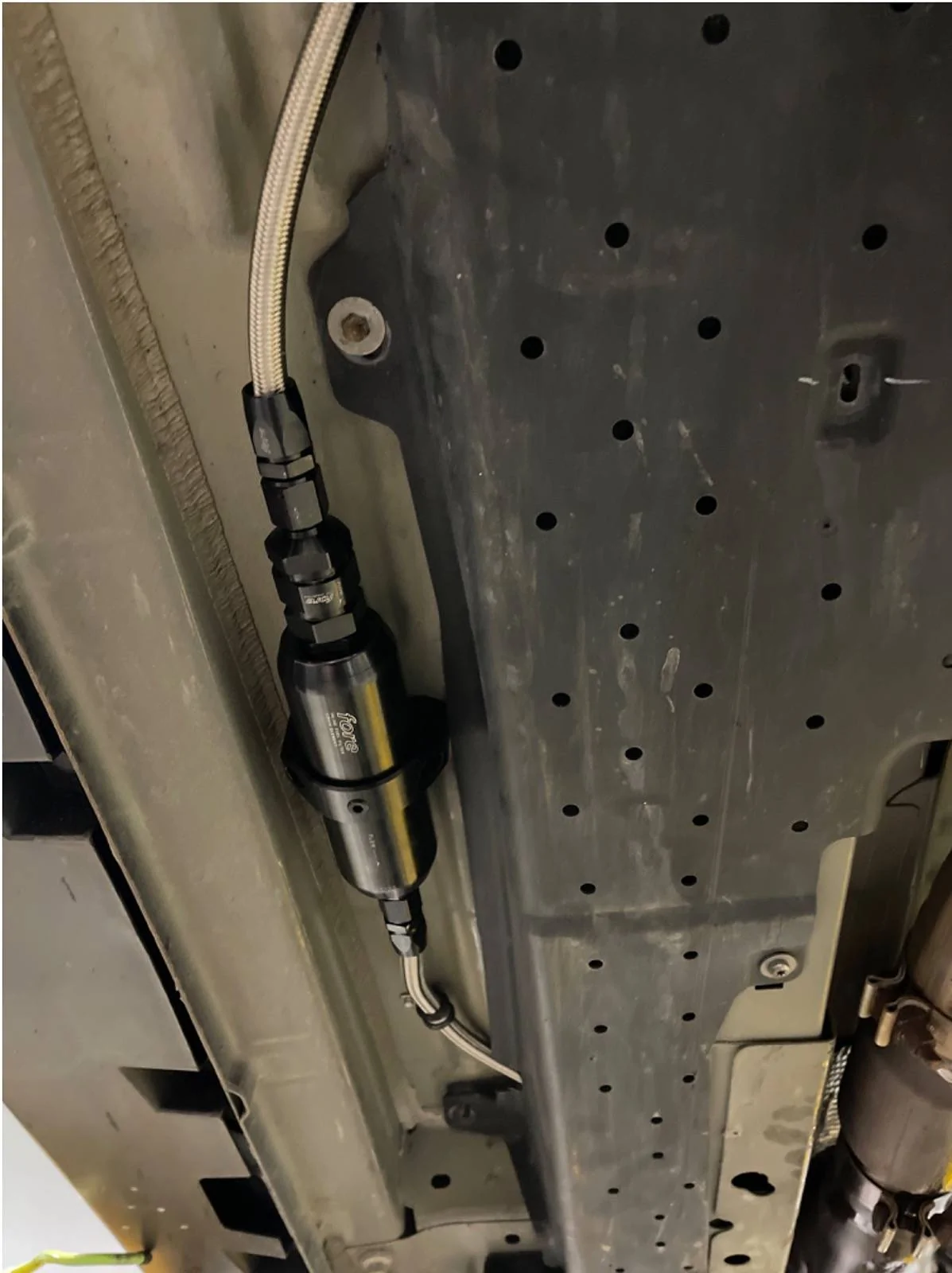
So thing under my car has the fuel filter? I’m not even sure wether I have the micro glass or the stainless steel

IMG_5081.jpeg
Correct. Just open it up.
Sponsored

 
OP
OP
Unas2k5

Unas2k5

Well-Known Member
Joined
May 30, 2022
Threads
83
Messages
1,654
Reaction score
675
Location
Detroit
First Name
Samer
Vehicle(s)
2015 Mustang GT, 2021 Explorer ,2019 Impala
Correct. Just open it up.
OK, I’m gonna open it up when I get home. Does it just screw off? Also a couple days ago, I emptied out my passenger side catch can It was almost full. I dumped it and it’s a bottom. There was some white stuff. Any idea what this means if anything at all?


SheepDog

Well-Known Member
Joined
Nov 3, 2018
Threads
26
Messages
4,193
Reaction score
5,257
Location
Colorado
First Name
Dax
Vehicle(s)
Iconic Silver 2022 MACH 1 HP, 2023 F150 Powerboost
OK, I’m gonna open it up when I get home. Does it just screw off? Also a couple days ago, I emptied out my passenger side catch can It was almost full. I dumped it and it’s a bottom. There was some white stuff. Any idea what this means if anything at all?

Almost full? it looks like less than an oz in there unless you dumped it before taking the photo?
The white stuff is oil mixed with water. Condensation naturally occurs in the engine (especially with E85) and can be problematic if you are generally taking very short trips and not allowing the engine oil to fully heat up, and vaporize the water in it.

Yeah the filter housing is threaded on one end and has a large nut as part of the assembly. YOu first need to remove the lines at both ends. Be careful not to nick or damage the flare fittings as they are aluminum and easily scratched. Once the lines are removed, you can unscrew the cap and reveal the filter inside
 
Last edited:
OP
OP
Unas2k5

Unas2k5

Well-Known Member
Joined
May 30, 2022
Threads
83
Messages
1,654
Reaction score
675
Location
Detroit
First Name
Samer
Vehicle(s)
2015 Mustang GT, 2021 Explorer ,2019 Impala
ALmost full? it looks liek less than an oz in there unless you dumped it before taking the photo?
The white stuff is oil mixed with water. Condensation naturally occurs in the engine (especially with E85) and can be problematic if you are generally taking very short trips and not allowing the engine oil to fully heat up, and vaporize the water in it.

Yeah the filter housing is threaded on one end and has a large nut as part of the assembly. YOu first need to remove the lines at both ends. Be careful not to nick or damage the flare fittings as they are aluminum and easily scratched. Once the lines are removed, you can unscrew the cap and reveal the filter inside
I always let it warm up until it says “normal” for temp on the dash. That’s like 7+ minutes. Yes , I dumped it then took a picture.
Will there be fuel in those lines or is it sucked back up into the tank ?
 

SheepDog

Well-Known Member
Joined
Nov 3, 2018
Threads
26
Messages
4,193
Reaction score
5,257
Location
Colorado
First Name
Dax
Vehicle(s)
Iconic Silver 2022 MACH 1 HP, 2023 F150 Powerboost
I always let it warm up until it says “normal” for temp on the dash. That’s like 7+ minutes. Yes , I dumped it then took a picture.
Will there be fuel in those lines or is it sucked back up into the tank ?

Im not talking about a warm up, you need to drive it for a good 30-45 minutes down the highway once a week to get the oil at or above a temperature that will vaporize the water/condensation in the engine. You'll never get there just idling.

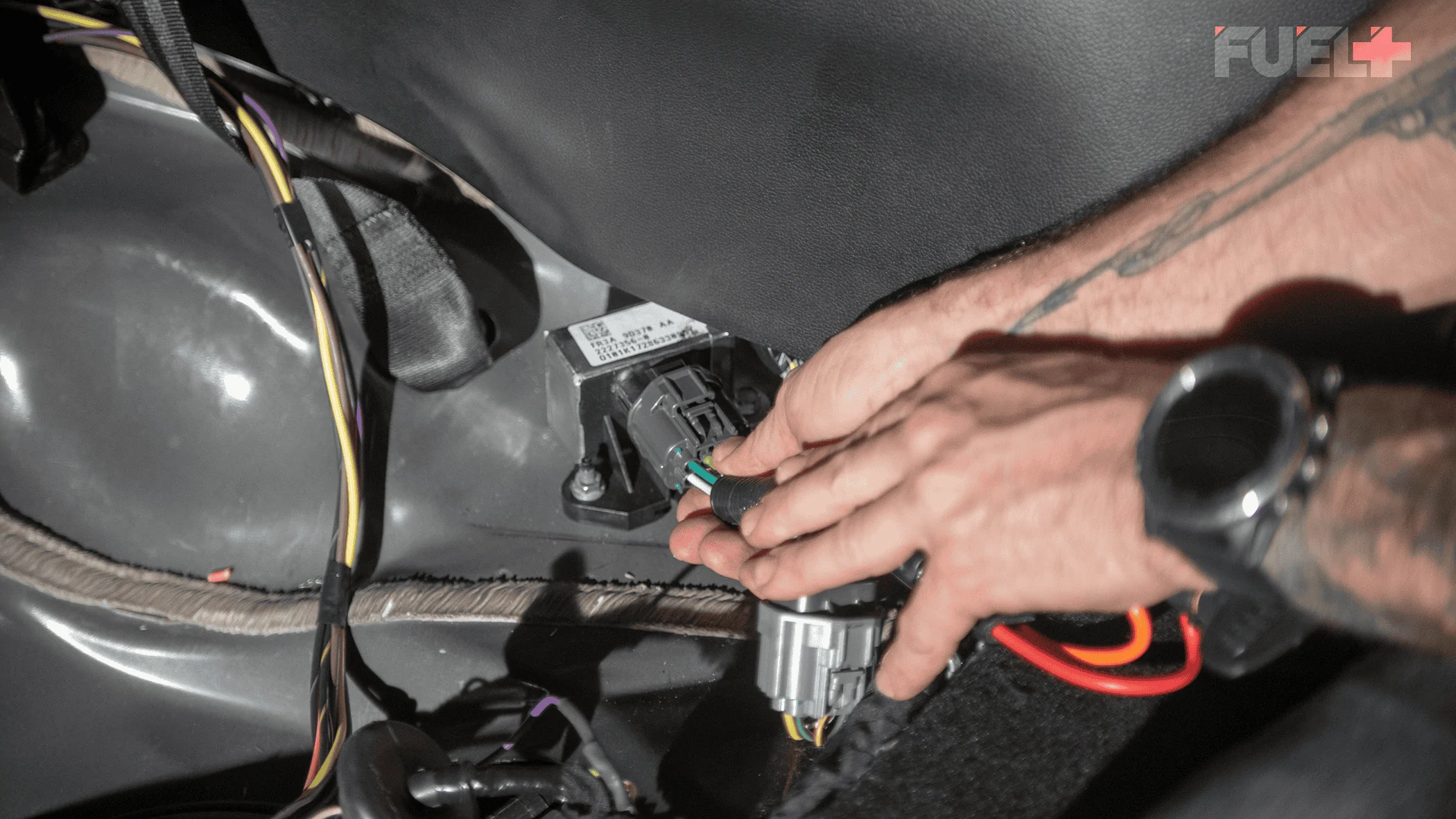
Yes there will be fuel in the lines. The best thing to do is lift up the back seat and unplug the FPDM connector (drivers side, right next to the wheel well) , then start the engine a couple of times to relieve any fuel pressure in the lines. It will still spill some but wont be pressurized. Also, the line leading back to the tank should be elevated as much as possible after disconnecting it, or it can create a syphon and pull the fuel out of the tank.

1712945050032-y2.webp
 

Sponsored

jpjr501

Well-Known Member
Joined
Feb 29, 2024
Threads
2
Messages
297
Reaction score
315
Location
Boca Raton, FL
First Name
Joe
Vehicle(s)
2020 Mustang GT - Procharged
I just let my car idle for 20 minutes. Also dumped the 2.5G can of E85 I got two weeks ago into the tank. Tonight I'll go rip on it to blow some of this out.

My car only has 6700 miles and it's a 2020 so I need to drive it more.
 

HKusp

Well-Known Member
Joined
Jul 22, 2021
Threads
37
Messages
2,227
Reaction score
2,875
Location
Hampton, Md.
First Name
Jason
Vehicle(s)
2018 Mustang GT
I just let my car idle for 20 minutes. Also dumped the 2.5G can of E85 I got two weeks ago into the tank. Tonight I'll go rip on it to blow some of this out.

My car only has 6700 miles and it's a 2020 so I need to drive it more.
Uh, yeah you do. What are you doing with it? Walking out in the garage every 10 days and looking at it? :crazy::crackup:

 

LOL WUT

Well-Known Member
Joined
Aug 31, 2015
Threads
45
Messages
1,859
Reaction score
2,615
Location
Illinois
Vehicle(s)
19 GT
Recommending 93 over E85 on a boosted vehicle is almost comical to me.

The internet has been riddled with E85 “sludge” or “goo ball” stories for over a decade, most of which can likely be traced back to bad fuel.

Letting E85 sit in your tank for a while is fine. But if you want to chase imaginary issues feel free. Personally, on a boosted car I feel MUCH safer with E85 (even if it’s been stored a long time) in the tank over any 93 octane gas available from the pump. And even more so with an external filter I can easily check whenever I want.
 
Last edited:

CrackedHorn

Well-Known Member
Joined
May 28, 2019
Threads
30
Messages
385
Reaction score
405
Location
Kansas
Vehicle(s)
09 Mustang GT/CS; 15 Mustang GT
The only major issue I've heard of with E85 within the last 10 years was from YouTube of all places. (MotoIQ)

Basically, short tripping a car is bad. And it's worse with E85. But I think we all knew that.

Now, years ago, in the motorcycle and small engine world, people were leary of Ethonal as it would "destroy gaskets" and "gum up carbs"

There are people that still swear that gasoline goes bad after 3 months, too.

I would have to imagine E85 is stable enough to sit in the tank of a car for a few weeks without issue. Assuming it's good E85, anyway.


LOL WUT

Well-Known Member
Joined
Aug 31, 2015
Threads
45
Messages
1,859
Reaction score
2,615
Location
Illinois
Vehicle(s)
19 GT
The only major issue I've heard of with E85 within the last 10 years was from YouTube of all places. (MotoIQ)

Basically, short tripping a car is bad. And it's worse with E85. But I think we all knew that.

Now, years ago, in the motorcycle and small engine world, people were leary of Ethonal as it would "destroy gaskets" and "gum up carbs"

There are people that still swear that gasoline goes bad after 3 months, too.

I would have to imagine E85 is stable enough to sit in the tank of a car for a few weeks without issue. Assuming it's good E85, anyway.


I’ve seen that video a few times and always thought that with the oil pan looking like that, and their mention of frequent oil changes, you’d surely hope they’d notice that garbage pretty quickly and also have drivability issues before the car just stopped running.
 
Last edited:

Sponsored

jpjr501

Well-Known Member
Joined
Feb 29, 2024
Threads
2
Messages
297
Reaction score
315
Location
Boca Raton, FL
First Name
Joe
Vehicle(s)
2020 Mustang GT - Procharged
Uh, yeah you do. What are you doing with it? Walking out in the garage every 10 days and looking at it? :crazy::crackup:
Bahaha, you're exactly right. I clean it so much in the garage, my kids think I'm going to rub off the paint. I tell them, when I'm dead you're going to like the fact I never put miles on this car.

Hey, I did take it to the local car show. BUT, It was only 1.5 miles away though. I only do the close ones.
 

Angrey

Well-Known Member
Joined
Jun 21, 2020
Threads
104
Messages
2,794
Reaction score
2,984
Location
Coral Gables
Vehicle(s)
2016 GT350
A lot of this is antiquated and outdated stuff.

First, nearly all component manufacturers now fabricate ethanol resistant parts and materials. That wasn't the case 10 or 15 years ago. Yes, heat increases the yield of chemical reactions. A general rule of thumb is that for every 10 degrees Celsius it doubles the chemical reaction. In the old days when fuel lines, pumps, etc weren't always the ethanol resistant, this was a concern. It still is to a lesser extent for brushed motors, but in reality, few fuel system failures now are from ethanol corruption of materials.

The biggest concern with high ethanol content is honestly to ensure you elevate the oil temps high enough to burn off lightweight contamination. This is also more prevalent for guys who are running cats. The Ford calibration strategy features a few scenarios where it purposefully runs rich, which tends to "cut" the oil more when it's ethanol vs gasoline.

So short trips to the grocery store and back and the car never reaches full top temps could be cutting the oil. Best to get the temps elevated to the point of evaporating it off (and have a good CPV system for evacuating it).

As far as pump loading again, it's pick your poison. Yes, ethanol requires more flow, which creates more pump demand, which creates more heat in the fuel system.

This is one of the advantages of returnless vs return style setups. With return style, you're constantly sending fuel to the engine bay that gets warmed and then returned to the tank. So the fuel is being heated not only by the pumps, but the constant return flow of warm(er) fuel that comes back from the hot engine bay.

Few people have any sorta credible data on fuel temps and whether it's really an issue. When I installed my "fuel it" sensor I could see fuel temps and I posed the question, when does it become an issue. Crickets. Basically it's either a non-factor, or no one really knows. "Racecare life" is the answer and no one really considers the effects of long trips on multi-pump, return style setups.

Again, this is where brushless motors are superior. They're virtually unaffected by any heat ranges contemplated within the fuel system. Carbon brushes inside brush style pumps, probably not so much. But again, to what extent, who knows.

I will say there's also some pretty compelling theories about "pump shock" and if you take a long trip and get the fuel quite warm and the pumps are heat soaked, what the rapid cooling does to the pumps when the external casing is cooled off but the pump internals are still warm/hot. This situation occurs when you've been driving for a long time and low hot fuel and hot pumps, splash in much cooler fuel at fill up and then drive off immediately. Again, to what extent this harms the pumps or reduces their service life..........who knows. But it's an interesting thought. (kinda like cooling the casing of a supercharger while the internal rotating components are still hot).

As far as filtering goes, you should be running a high filtration unit regardless of fuel type to protect the injectors. Injector dynamics actually has specifications that will void the warranty. So regardless of any fuel system considerations, if you're running the bosch injectors (which is what nearly all of them start off as) then you should be running 10 micron or less. Preferably microglass vs microsteel if you're worried about corrosion from moisture.
Sponsored


Top