Sponsored

Louder In Cold Weather ?

WD Pro

Well-Known Member
Joined
Jan 18, 2018
Threads
132
Messages
6,763
Reaction score
13,550
Location
United Kingdom
Vehicle(s)
Lime GT
Vehicle Showcase
1
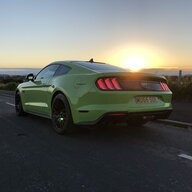
Since having a H pipe fitted to my active exhaust, it’s always been a little louder and given more burbles on the overrun (compared to the standard active) - particularly during on / off throttle at reasonably low revs.

However since the colder weather has started to move in, it’s got noticeably more pronounced (louder burbles and more of them).

Same grade fuel, same make fuel, even the same station and pump - because it’s a wide bay with no pump on the other side :giggle:

Is it related to the colder weather ? Or is it something to do with one of the self learning features (the car hasn’t had a KAM reset for a while).

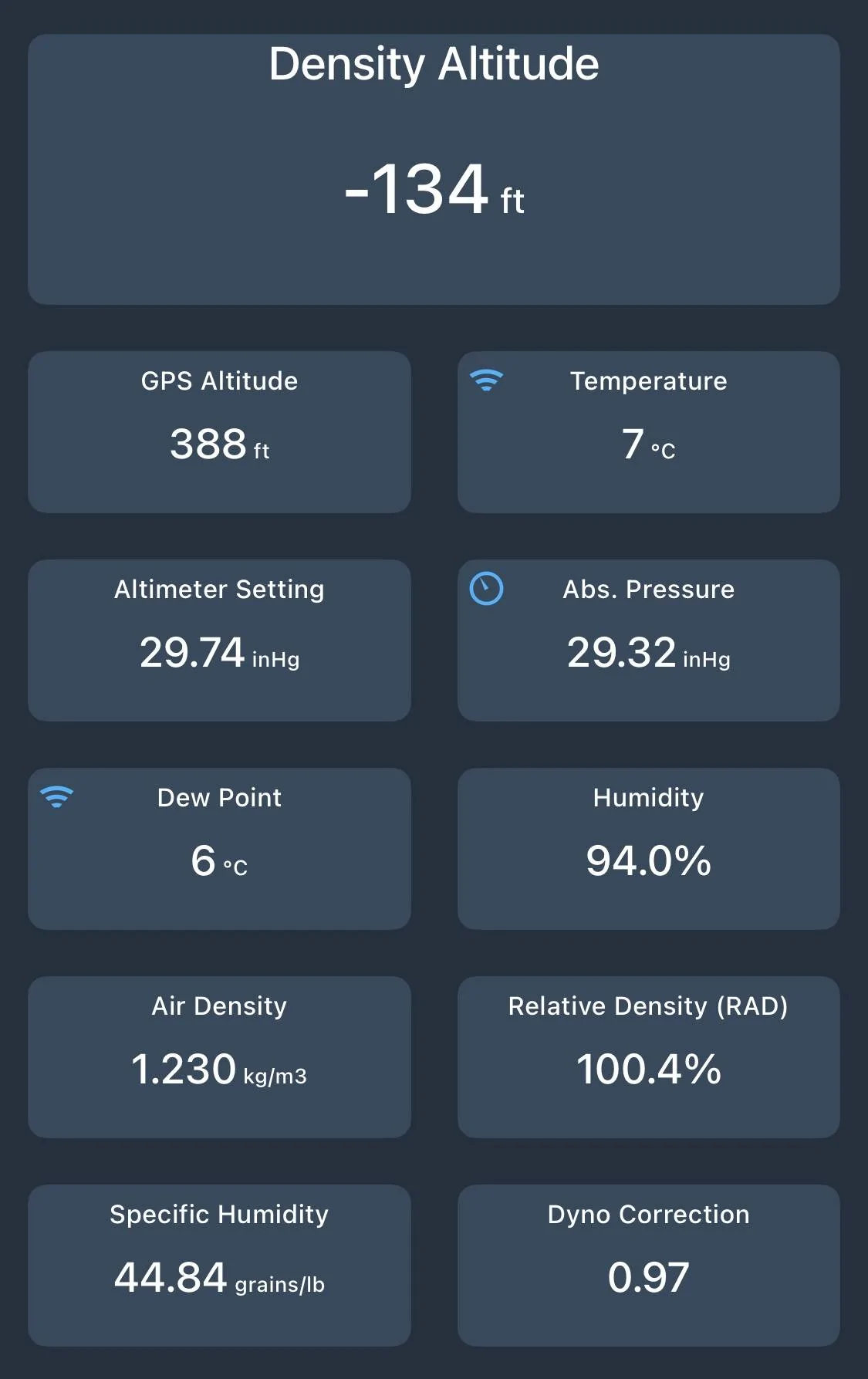
If it’s a factor, the DA here is low at the moment :

1698099644346.jpeg


So I’m interested, what’s triggered the change ?

WD :like:
Sponsored


ShadowCoyote

Well-Known Member
Joined
Mar 2, 2022
Threads
7
Messages
82
Reaction score
140
Location
Shreveport,LA
First Name
Zachary
Vehicle(s)
2022 Mustang GT
So colder air means more molecules, and more air molecules means more energy released in each combustion cycle. A drop from 30 C to 0 C is roughly a 10% drop measured in Kelvin, which suggests 10% more energy for each combustion cycle --> 10% more horsepower! **per corsa performance website.
 

MAGS1

Well-Known Member
Joined
Mar 6, 2020
Threads
96
Messages
11,314
Reaction score
18,538
Location
Somewhere in Middle America
First Name
Mark
Vehicle(s)
2022 Mustang GT

Torched10

Well-Known Member
Joined
May 15, 2019
Threads
107
Messages
1,320
Reaction score
542
Location
Atlanta
First Name
Bob
Vehicle(s)
2019 gt premium convertible. 2017 caddy xts vsport twin turbo.2011 caddy ext
The issue is when it's colder the car has more hp and more combustion means more noise. The cold air makes tires harder which make it harder to stop and easier to spin tires. The issue on the well written response it assumes the same event will travel faster in warm wather.but in this case the source of the sound is more horsepower
Ie louder exhaust
 

Sponsored

OP
OP
WD Pro

WD Pro

Well-Known Member
Joined
Jan 18, 2018
Threads
132
Messages
6,763
Reaction score
13,550
Location
United Kingdom
Vehicle(s)
Lime GT
Vehicle Showcase
1
1698154250050.webp


It sounds like that would be an interesting read :like:

Note that we aren't really cold though, we're typically around 6°C in the mornings - and it's not like we get huge temperature swings across our seasons. OK, maybe a few outlier days, but nothing drastic (or that we have experienced yet this year).

So colder air means more molecules, and more air molecules means more energy released in each combustion cycle. A drop from 30 C to 0 C is roughly a 10% drop measured in Kelvin, which suggests 10% more energy for each combustion cycle --> 10% more horsepower! **per corsa performance website.
The issue is when it's colder the car has more hp and more combustion means more noise. The cold air makes tires harder which make it harder to stop and easier to spin tires. The issue on the well written response it assumes the same event will travel faster in warm weather, but in this case the source of the sound is more horsepower
Ie louder exhaust
Yeah I understand that, but these are low throttle opening / low rpm / low power scenarios where it's doing it most (on an off gas, slowly accelerating, slowly de-accelerating as I manage the speed humps near home (20mph limit zone with schools and shops etc).

So now I suppose we are getting down to what I was wondering ...

Yes the air is denser, but surely the ECU should account for that, giving the same burn regardless of air density. Then if you have the same burn, why the more brubley overrun (suggesting it's richer ?)

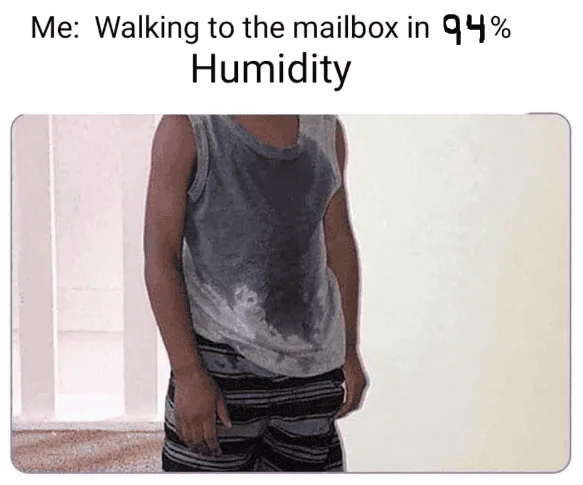
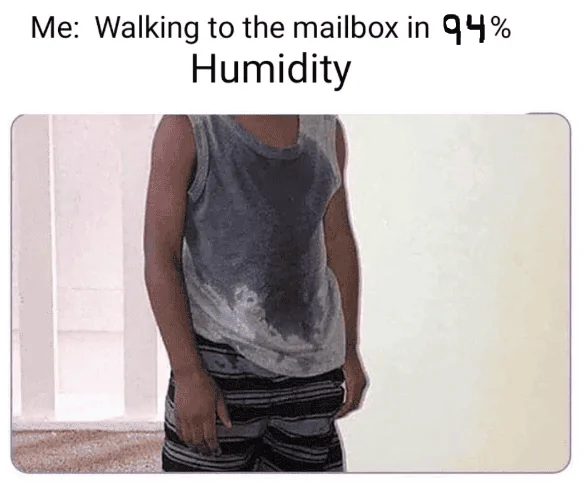
Umm... 94% HUMIDITY???

Your loud burble problem is nowhere near as bad as your humidity problem. I can't help you.

1698122142963-png.webp
At 7°C, that's not really a problem ... :crackup:

WD :like:
 

MAGS1

Well-Known Member
Joined
Mar 6, 2020
Threads
96
Messages
11,314
Reaction score
18,538
Location
Somewhere in Middle America
First Name
Mark
Vehicle(s)
2022 Mustang GT
1698154250050.png


It sounds like that would be an interesting read :like:

Note that we aren't really cold though, we're typically around 6°C in the mornings - and it's not like we get huge temperature swings across our seasons. OK, maybe a few outlier days, but nothing drastic (or that we have experienced yet this year).


Yeah I understand that, but these are low throttle opening / low rpm / low power scenarios where it's doing it most (on an off gas, slowly accelerating, slowly de-accelerating as I manage the speed humps near home (20mph limit zone with schools and shops etc).

So now I suppose we are getting down to what I was wondering ...

Yes the air is denser, but surely the ECU should account for that, giving the same burn regardless of air density. Then if you have the same burn, why the more brubley overrun (suggesting it's richer ?)


At 7°C, that's not really a problem ... :crackup:

WD :like:
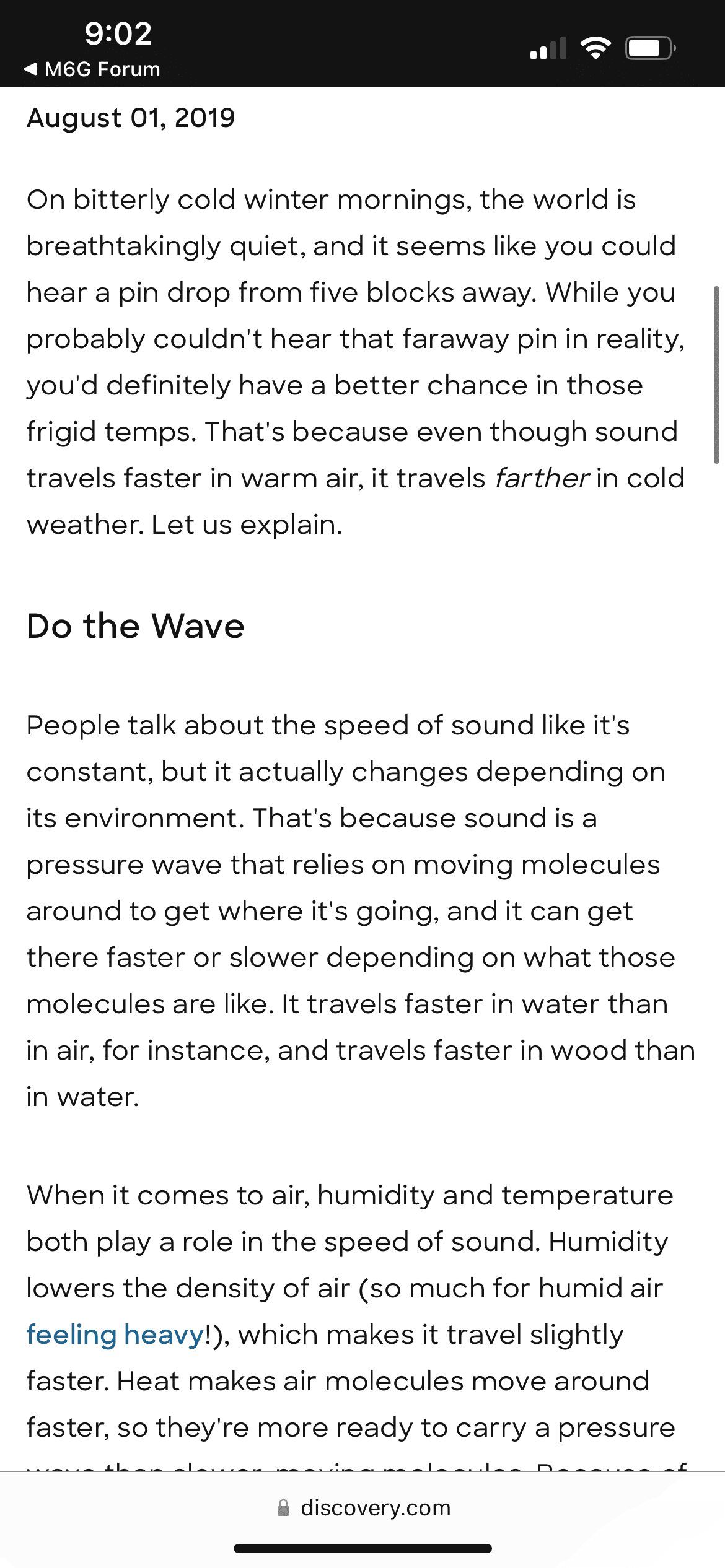
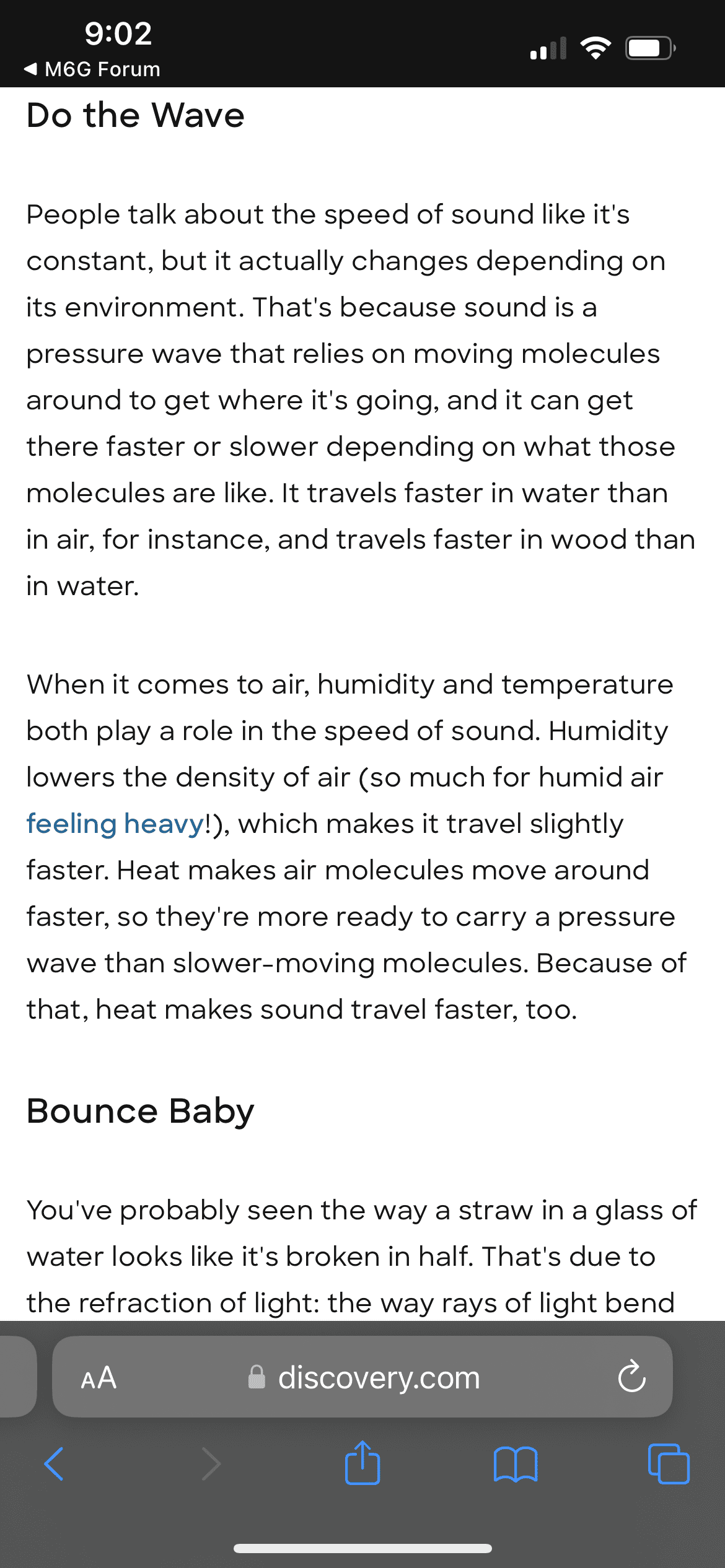
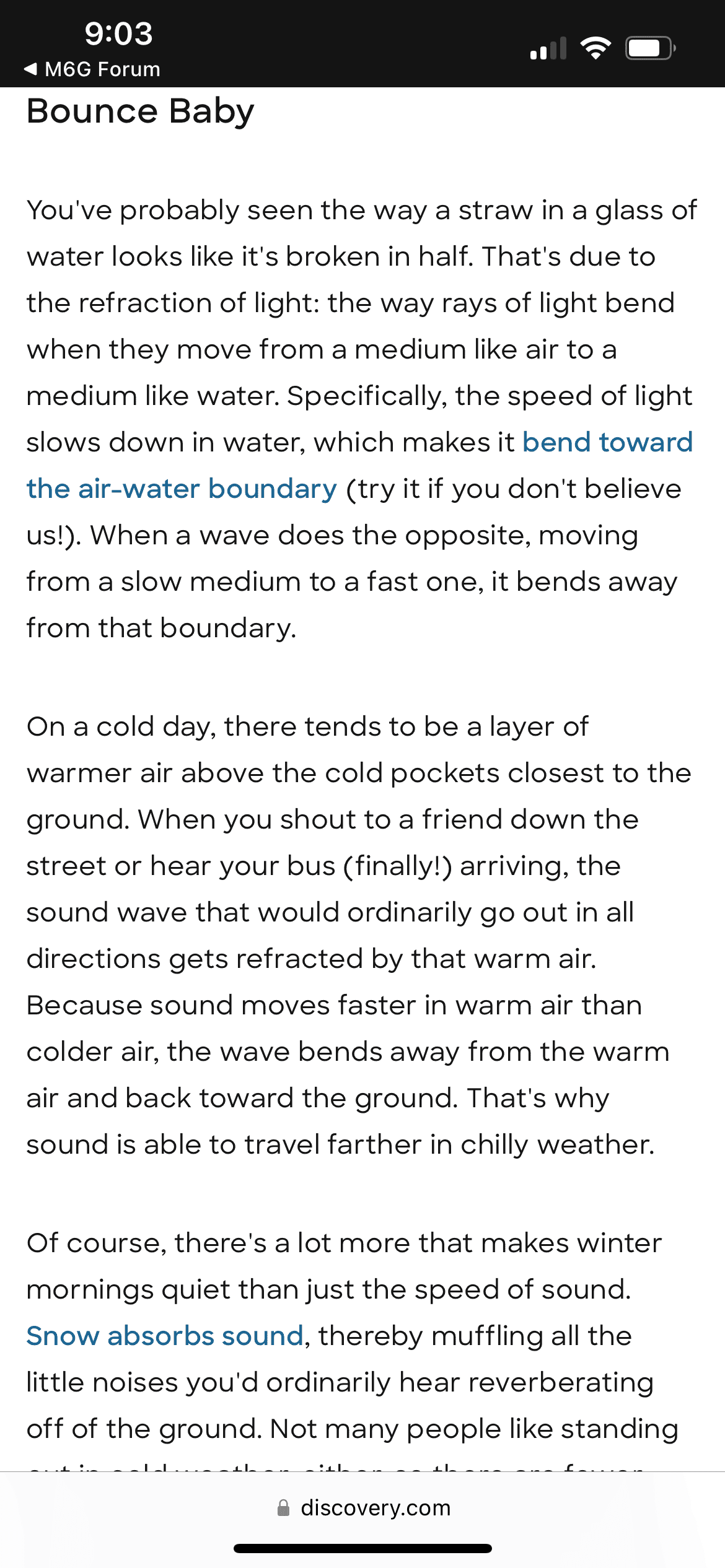
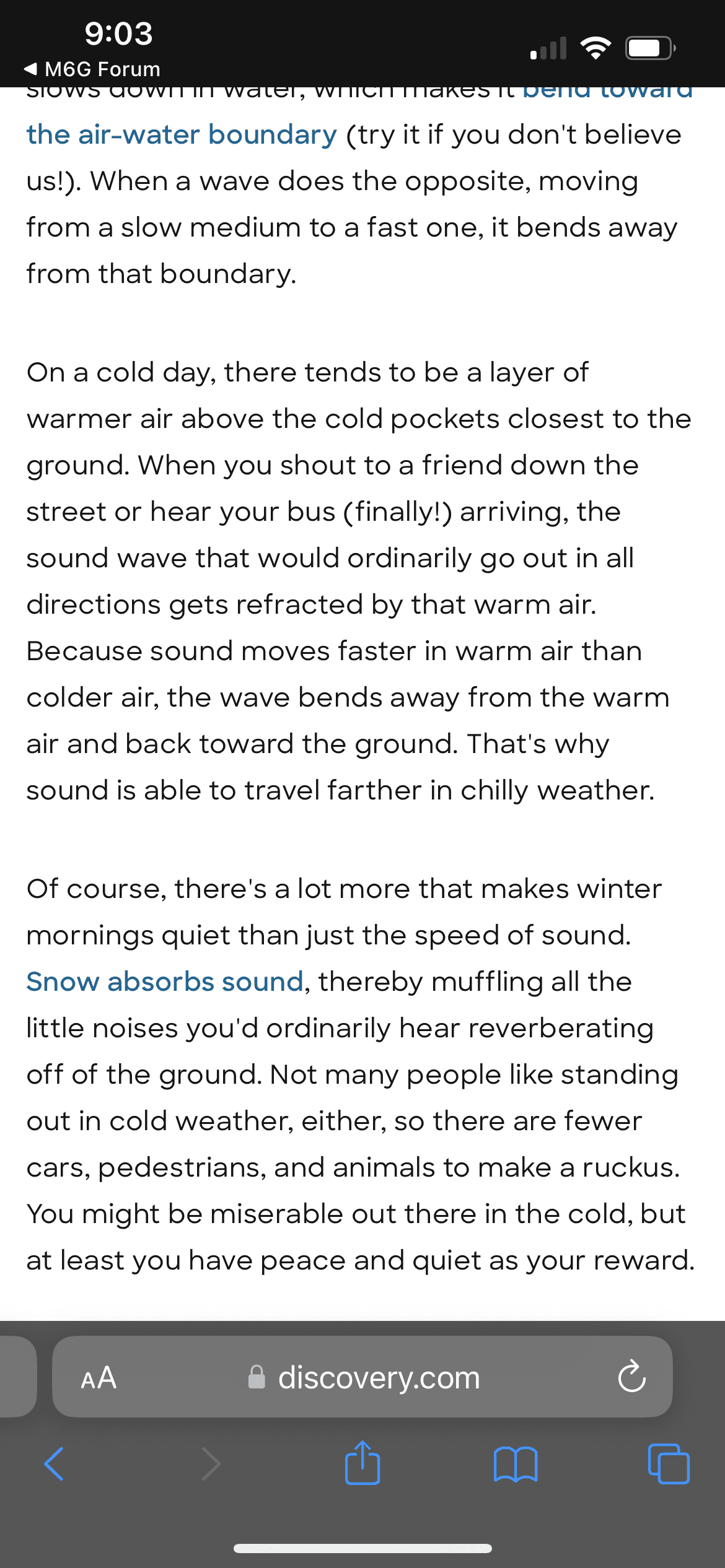
So 6C is roughly 43F, that’s cold enough that the sound will seem louder. Here’s screenshots of the article for you.

We’re typically in the 80’sF during the summer and we have cold winters (below freezing). We had a stretch the last couple weeks of temps in the low 40’sF in the mornings and I notice something similar, the exhaust does sound louder and the burbles seem to be more pronounced. It’s warmer again this week with colder temps coming next week with overnight lows at or below freezing. All that to say we can get fairly large temperature swings this time of year so a change in exhaust volume is noticeable.

IMG_2281.png


IMG_2282.png


IMG_2283.png


IMG_2284.png
Sponsored


Top