Sponsored

Just ordered Antigravity Lithium Battery

honeybadger

Just don't care
Joined
Apr 20, 2016
Threads
63
Messages
4,089
Reaction score
7,429
Location
COTA
First Name
Kevin
Vehicle(s)
'17 GT350
@Evolvd
This thread has taken a few turns but I'm at the point of replacing my battery. I want to thank Demonic for all the testing and info he's provided. After many hours researching over the past couple weeks — I have come to similar conclusions. I ordered a YTX20 and will be doing some testing to get it to hopefully run like OEM for everyone.

Antigravity YTX20
Antigravity's YTX20 appears to be one of the better options. It has cell balancing and one of the best true capacities for the price point/weight. I don't think I will have any problem following Demonic's experience and simply dropping it in, resetting the BMS with Forscan, and using it as a DD (being mindful it is of course a smaller lithium battery).

For example, I use Shorai batteries in all my motorcycles and they've performed flawlessly. I don't even think about it with my bikes even in stop and go traffic and 30 degree weather. For cars, the Shorai LFX36L3-BS12 is $100 cheaper than the YTX20. But it has a slightly smaller capacity at 12AH (true) vs. the 14AHish of the YTX20 (estimate, can't find an exact published value). Most importantly it does not have cell balancing. May not be a big deal but a definite plus to the Antigravity. Vette, Miata, Toyota guys run this battery all the time with no issues.

Smart Charging and Lithium
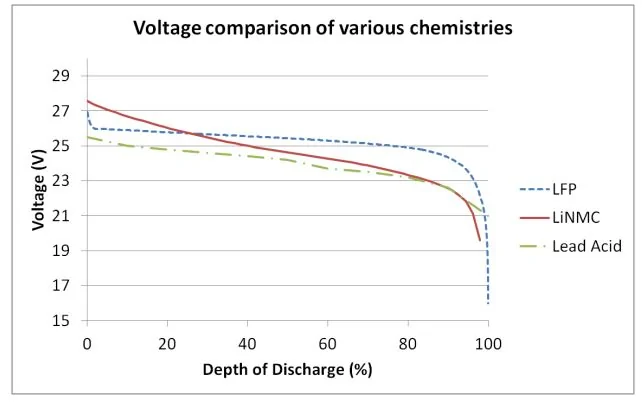
The only issue left is Smart Charging. Lithium batteries charge/discharge differently than FLA (Flooded Acid) or AGM batteries. Most notably they discharge at a constant rate. A lead acid battery discharges at a linear decreasing rate in terms of voltage. See example below:
voltages.webp

LFP (Antigravity and similar batteries) pretty much hold a constant voltage. Think a new lithium power drill. It basically quits working once it's discharged rather than slowing down like an old drill.

So what's the big deal? Well Smart Charging makes sure the battery stays at a specific charge of say 85% for example. It may charge immediately at full volts after starting a vehicle but drop down on the highway once the battery is charged. This extends the life of the battery, improves MPG, and helps out with power in certain scenarios. Basically a more dynamic.. or smarter system. Pretty neat

The problem comes in the PCM knowing at what charge level the battery is. A big part of measuring this is just reading the voltages. There's a bunch of other factors but point is — Lithium batteries state of charge are read differently than lead acids.

Minor Problem
Demonic came to the same conclusion I did awhile ago. The Smart Charging system stock just doesn't know a Lithium battery is discharged enough to warrant charging until a little too late. A simplified hypothesis is likely due to constant voltage nature of lithium batteries explained above.


Demonic do you have any updates? I'd guess lithium batteries running under the stock settings may be running at 50-70% levels of charge. I'll confirm once I have mine in.

Possible Solution
The off the cuff solution is to just turn off Smart Charging.. There's some big benefits seen above and I think it's more of a case of misunderstood tech rather than "needless complicated technology."

As Demonic was looking into, basically the solution is to get the PCM to realize that there's a lithium battery in there and charge accordingly. If only there was another recently released Ford vehicle that uses a lithium battery that the PCM already has a profile for.... oh wait Batman! There is!
jay-leno.webp


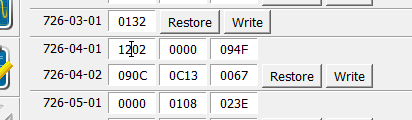
The Ford GT uses a lithium battery. Seeings as how plenty of S550 owners are using Ford GT Splash Screens, Sync Settings, and other non sense — the lithium Smart Charging battery type should be a valid option. Thanks to Mr. Leno and his GT's VIN (love the show!), the Smart Charging line is "726-04-01 0502 0000" where "05" is the battery type and "02" means that Smart Charging is indeed enabled stock on the Ford GT.

Obviously the battery is different and won't be a perfect match but hopefully it'll get us near enough. The other option is to purchase a Ford GT battery for the low price of $700 (HG7Z-10655-B)!

GT350 Programmed Battery Type
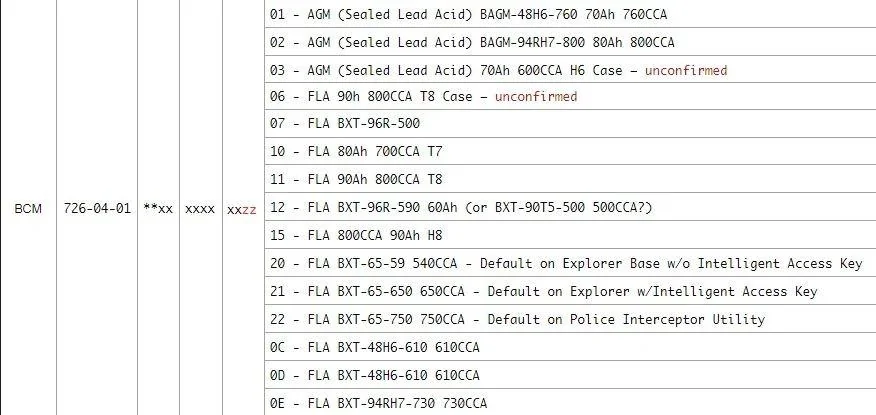
The stock value seen in forscan for my R is for a normal S550 Group 96R battery (incidentally not even the GT350's smaller battery). The code is "12" although interestingly some 350s come with "07" for a similar battery.
Stock Forscan.PNG

List of known batteries from the F150 forum. Yes it's for an F150 but the value of "12" found in my R correlates correctly as does the "07". There's a lot of shared values between vehicles.
confirmed battery types.webp


Next Steps
Once I get the battery in I'll do some data logging — primarily the state of charge. I will have to find a tool that does this for Lithium Batteries. Hopefully it's running at an acceptable level of charge and we don't have to mess with anything else but I doubt it.

If that's the case I'll swap over to the GT Battery Type and repeat testing. Hopefully it's a valid option and the battery runs at an acceptable charge level. View attachment 331003
Sponsored


honeybadger

Just don't care
Joined
Apr 20, 2016
Threads
63
Messages
4,089
Reaction score
7,429
Location
COTA
First Name
Kevin
Vehicle(s)
'17 GT350
That’s not the same battery most people have issues with. It’s the 96R size battery with Restart that is causing issues.
That's why I recommended the ATX20-HD and ATX30-HD batteries. Scott from AG talks about it pretty clearly in the post below from a few years ago.


Hey all,

Scott from Antigravity Batteries... damn, about a month ago when we became Sponsors I made a long post about the batteries and other stuff and either I didn't press the submit button, or something wacky happened and my post didn't go up. I was wondering why there were no notifications to my email about this thread. Anyway Antigravity Batteries is a sponsor here now. So I'll be available to answer some questions and bring up some new products that are pretty freaking cool.

First off MASSIVE thanks to Demonic (Austin) for testing and getting me some data on his real world testing of the RE-START vs the Non-RE-START models.... It was a big help just to drill down and understand not only the Ford System, but how it was conflicting with our Circuitry in the ATX30 RE-START Model. I went on to do a bunch of research on the Ford IBSensors and learned alot. That was a big help. And thanks to companies like Morris and Ben at Fast House for making cool products for our products. And last thanks to the rational folks on the board who didn't want to bash.

Getting info from Demonic lead to some updates on the ATX30 and ATX20 that we are currently testing now, and if it works it might be a great option in the future because the RE-START versions are meant to be a protection against accidental over-discharge, and to not allow the battery to be damaged by accidental over-discharge,or over-charge... which the NON-RESTART Batteries can't do. So anyway working on that.

But additionally we have a few MAJORLY cool new products that are coming out now... but I will go into those in a later Post.

I think Demonic gave you guys most the info needed to understand the issue with the RE-START versions , but to put it in a nutshell, our RE-START system was not playing well with the Voltage drops on the Fords System because it would make the RE-START circuitry basically think it was being over-discharged.... so it would shut itself off. Basically the RE-START Circuitry was cutting off at a higher voltage than was best for working with the Mustangs system, whereas the NON-RE-STARTs only have Cell Balancing inside and WON"T cut-off even if you drop the voltage quite low. So in essence as some have described Modern Car systems rely on the battery MUCH more to initially power the vehicles systems/accessories. For example the A/C, Stereo or whatever is turned on will draw on the Battery BEFORE turning on the Alternator to start charging and supplying some additional. So this means more of a draw on the battery, and because the Alternator is not "ON" and dragging on the motor this therefore creates less emissions, better mileage, and more power overall since the Alternator is not creating a drag. So that is where the Auto Manufacturers are going with this. And Start/Stop adds even more to that because they really want the car being as efficient as possible so again drawing on the battery and allowing it to go deeper into a state of discharge before turning on the charging system. So that's the basics.

Last, the point of the RE-START was to get a battery that could not be accidentally over-discharged, and leave the User Stranded with a dead battery.... It would also have the most safety features and therefore the User would not be able to damage the battery accidentally. Over-Discharge is the #1 reason that a Small Lithium Battery is damaged, so by protecting the battery from over-discharge the battery would be in a great position for a very long life, so a win, win for everybody. And it actually works great... but not with the Fords. So that was unfortunate because it worked in everything we were testing it in. Anyway as I explained I will go into developments on some new models in my next post.
 

Sponsored

Evolvd

Instigator
Joined
Jan 19, 2015
Threads
186
Messages
6,865
Reaction score
5,867
Location
Northwest Florida
First Name
Brian
Vehicle(s)
2021 Shelby GT500
That's why I recommended the ATX20-HD and ATX30-HD batteries. Scott from AG talks about it pretty clearly in the post below from a few years ago.
Right, but that’s not the conversation we were having here. We are trying to figure out how to run full size LIPO batteries, not small race batts.
 

KevinMar

Member
Joined
Jun 11, 2021
Threads
3
Messages
18
Reaction score
5
Location
Los Angeles
First Name
Kevin
Vehicle(s)
GT350R
Just throwing in my experience here. I've been getting full electronics faults in my 2018 350R with the ATX-20HD. This has happened about 5 times, all of which while engine braking.

My conclusion is that the car is trying to use the excess energy (kinetic) to harvest for the battery. That's part of the Mustang's "smart BMS." With lead acid batteries this is great as they can absorb the momentarily higher power input to add back capacity. It seems as though this is causing the ATX-20HD to freak out, though, because lithium batteries are far more sensitive to over voltage events.

Although I have a FORSCAN tool I am electing to disconnect the BMS coil on the negative battery lead to see if that solves my issues.
 

Evolvd

Instigator
Joined
Jan 19, 2015
Threads
186
Messages
6,865
Reaction score
5,867
Location
Northwest Florida
First Name
Brian
Vehicle(s)
2021 Shelby GT500
Just throwing in my experience here. I've been getting full electronics faults in my 2018 350R with the ATX-20HD. This has happened about 5 times, all of which while engine braking.

My conclusion is that the car is trying to use the excess energy (kinetic) to harvest for the battery. That's part of the Mustang's "smart BMS." With lead acid batteries this is great as they can absorb the momentarily higher power input to add back capacity. It seems as though this is causing the ATX-20HD to freak out, though, because lithium batteries are far more sensitive to over voltage events.

Although I have a FORSCAN tool I am electing to disconnect the BMS coil on the negative battery lead to see if that solves my issues.
That did not work for me or another guy I know who tried it.
 

honeybadger

Just don't care
Joined
Apr 20, 2016
Threads
63
Messages
4,089
Reaction score
7,429
Location
COTA
First Name
Kevin
Vehicle(s)
'17 GT350
Right, but that’s not the conversation we were having here. We are trying to figure out how to run full size LIPO batteries, not small race batts.
Not to be a dick, but the original post in this thread is about running their 30 series batteries. This thread is quite literally about running race batteries.
 

Sponsored

Gt350procharged

Well-Known Member
Joined
Mar 6, 2021
Threads
2
Messages
66
Reaction score
31
Location
South Florida
First Name
John
Vehicle(s)
2018 gt350 proxharged
So does the ford GT code number change in forscan work to adjust for an atx20hd?

I changed the settings from flooded to agm in forscan and reset the battery hopefully this helps

In my 21 gt500. The atx20hd works nice for 6 months then it starts overvoltage issues and check engines.....only way to fix is getting a new battery then good for 6months.....so let's see if it lasts longer on agm mode
 

honeybadger

Just don't care
Joined
Apr 20, 2016
Threads
63
Messages
4,089
Reaction score
7,429
Location
COTA
First Name
Kevin
Vehicle(s)
'17 GT350
So does the ford GT code number change in forscan work to adjust for an atx20hd?

I changed the settings from flooded to agm in forscan and reset the battery hopefully this helps

In my 21 gt500. The atx20hd works nice for 6 months then it starts overvoltage issues and check engines.....only way to fix is getting a new battery then good for 6months.....so let's see if it lasts longer on agm mode
You need to do the change to the GT. Right now the car's BMS is set for an entirely different battery chemistry profile and you'll have issues. That's why folks are seeing 15v+ and having issues with dead batteries.
 

Gt350procharged

Well-Known Member
Joined
Mar 6, 2021
Threads
2
Messages
66
Reaction score
31
Location
South Florida
First Name
John
Vehicle(s)
2018 gt350 proxharged
You need to do the change to the GT. Right now the car's BMS is set for an entirely different battery chemistry profile and you'll have issues. That's why folks are seeing 15v+ and having issues with dead batteries.
Can you please repeat the step by step process in forscan on how to change to GT mode.....and has this been proven to fix issue on an atx20hd ?
 

honeybadger

Just don't care
Joined
Apr 20, 2016
Threads
63
Messages
4,089
Reaction score
7,429
Location
COTA
First Name
Kevin
Vehicle(s)
'17 GT350


Top