Sponsored

Gutting the PCV. Why?

LOL WUT

Well-Known Member
Joined
Aug 31, 2015
Threads
45
Messages
1,859
Reaction score
2,615
Location
Illinois
Vehicle(s)
19 GT
I am curious what benefit gutting the PCV has for these cars? I see some members recommend it when boosted and others don’t seem to think it matters.

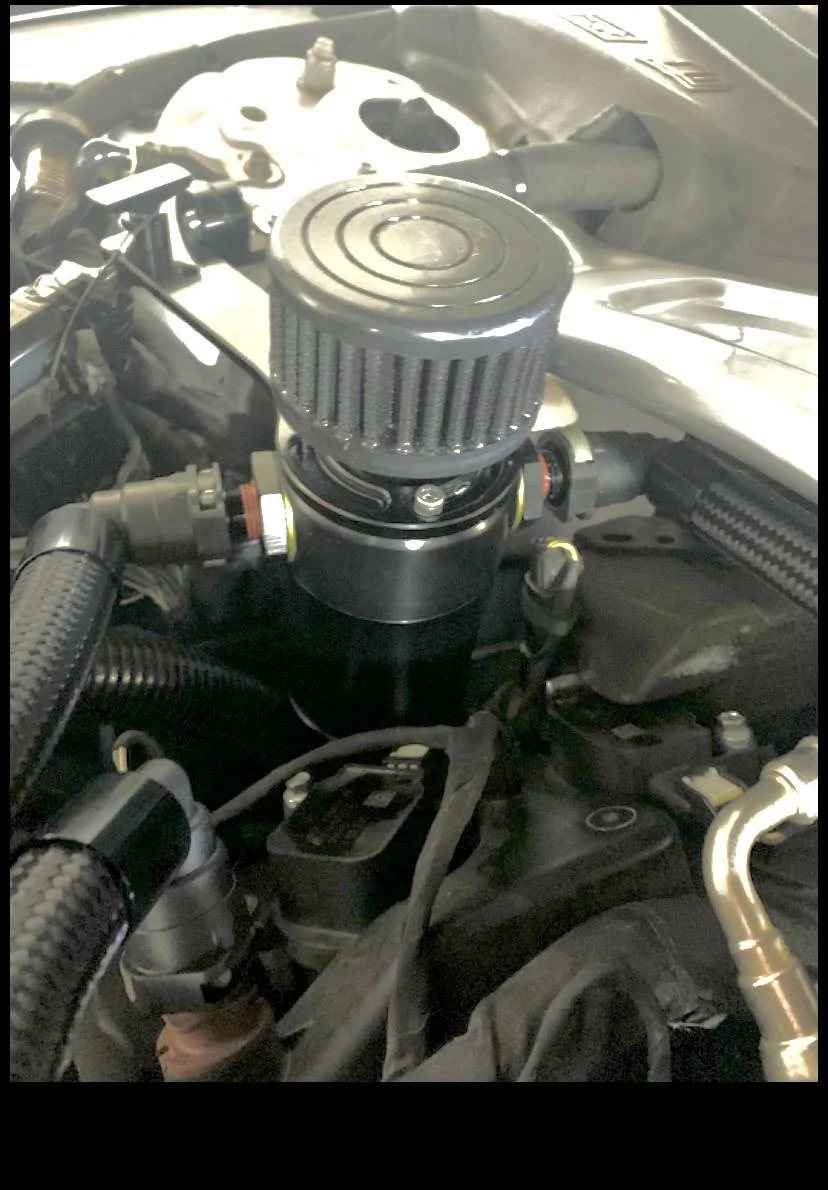
For my specific setup I am boosted and I have a UPR dual vent catch can which routes both sides of the motor to a single catch can that has a breather on top of it (photo below).

My understanding is that gutting the PCV removes the check valve which is in place to allow air to escape but not enter the motor. So, if the PCV is only letting air out, what is the reason to gut it?

8F4ED2D4-88A9-4AC8-9FC0-C9C1522A4349.webp
Sponsored


Proshop

Well-Known Member
Joined
Jun 7, 2021
Threads
18
Messages
2,337
Reaction score
2,532
Location
Florida
First Name
Billy
Vehicle(s)
2021 Ford Mustang GT
And to boggle the mind even more… one manufacturer states nothing about gutting/ running a straight through design and another one does tell you too. 😵
 

Gfswindle

Well-Known Member
Joined
Dec 27, 2019
Threads
2
Messages
107
Reaction score
129
Location
Huntsville, Alabama
First Name
Gary
Vehicle(s)
2019 GT A10
The PCV valve is a one-way device, but more importantly it's a restriction to limit the flow of crankcase pressure venting. If there is excessive pressure as in a boosted application the flow will leave both valve covers. Ideally you want a negative pressure in the crankcase which helps the piston rings seal and keeps windage to a minimum. Stock systems however don't maintain a true vacuum within the crankcase, if anything it's maybe just slightly below atmospheric. The drivers side valve cover draws in fresh filtered/metered air after the MAF from the intake tube. The passenger side is under vacuum from the manifold under part throttle conditions. In reality to increase vacuum in the crankcase you would place the restriction on the fresh air side of the engine and open the vacuum side to unrestricted manifold vacuum. In boosted situations, the easiest way is simply route both sides to a catch can with a filter on top as you have that will just vent to atmosphere, you would gut the PCV to allow maximum flow from the passenger side VC, but the crankcase would never have any vacuum, it's just simply vented to atmosphere.
 
OP
OP

LOL WUT

Well-Known Member
Joined
Aug 31, 2015
Threads
45
Messages
1,859
Reaction score
2,615
Location
Illinois
Vehicle(s)
19 GT
The PCV valve is a one-way device, but more importantly it's a restriction to limit the flow of crankcase pressure venting. If there is excessive pressure as in a boosted application the flow will leave both valve covers. Ideally you want a negative pressure in the crankcase which helps the piston rings seal and keeps windage to a minimum. Stock systems however don't maintain a true vacuum within the crankcase, if anything it's maybe just slightly below atmospheric. The drivers side valve cover draws in fresh filtered/metered air after the MAF from the intake tube. The passenger side is under vacuum from the manifold under part throttle conditions. In reality to increase vacuum in the crankcase you would place the restriction on the fresh air side of the engine and open the vacuum side to unrestricted manifold vacuum. In boosted situations, the easiest way is simply route both sides to a catch can with a filter on top as you have that will just vent to atmosphere, you would gut the PCV to allow maximum flow from the passenger side VC, but the crankcase would never have any vacuum, it's just simply vented to atmosphere.
Excellent response, thank you for the detail! Essentially, unless I want “max flow” my current setup is sufficient as both sides are routed to a catch can and vented to atmosphere. With both sides being vented, I assume that gutting the PCV would only provide a marginal increase in flow.
 

Gfswindle

Well-Known Member
Joined
Dec 27, 2019
Threads
2
Messages
107
Reaction score
129
Location
Huntsville, Alabama
First Name
Gary
Vehicle(s)
2019 GT A10
There are several articles and lots of dyno tests that show what actual crankcase vacuum can do. By nature dry sump systems run high amounts of vacuum as the scavenge pump is always trying to pull oil out of the sump taking air with it as well. I imagine but haven't verified that factory dry sump systems simply route the space over the oil level in the reservoir to the manifold for those gases and vapors to be burned just like a wet sump pcv system as it's against epa regulations to vent crankcase gases to atmosphere.

http://www.nutterracingengines.com/racing_oil_pumps/crankcase_vacuum_facts.html

https://inthegaragemedia.com/horsepower-from-nothing/

https://dsportmag.com/the-tech/quick-tech-the-benefits-of-lowering-crankcase-pressure-part-1/

https://www.dragzine.com/tech-stories/tech-how-external-vacuum-pumps-free-up-horsepower/
 

Sponsored

WildHorse

N/A or GO HOME
Joined
Jun 28, 2017
Threads
270
Messages
10,297
Reaction score
8,350
Location
Home World: CLASSIFIED
First Name
Puddintane
Vehicle(s)
'17 S550
Vehicle Showcase
1
Gutting = one ginormous vacuum leak. Either run the intact PCV, or have both sides dump into the header collector. There is no 'in-between' .
 

cbrtrx

Well-Known Member
Joined
Nov 23, 2014
Threads
33
Messages
957
Reaction score
636
Location
tampa fl
Vehicle(s)
2016 mustang gt
Excellent response, thank you for the detail! Essentially, unless I want “max flow” my current setup is sufficient as both sides are routed to a catch can and vented to atmosphere. With both sides being vented, I assume that gutting the PCV would only provide a marginal increase in flow.
If both sides are vented to atmosphere you want to remove the valve, in that situation the valve is a restriction.
 
OP
OP

LOL WUT

Well-Known Member
Joined
Aug 31, 2015
Threads
45
Messages
1,859
Reaction score
2,615
Location
Illinois
Vehicle(s)
19 GT
Continued differing of opinion on the topic lol. Glad I asked 😄.
 

cbrtrx

Well-Known Member
Joined
Nov 23, 2014
Threads
33
Messages
957
Reaction score
636
Location
tampa fl
Vehicle(s)
2016 mustang gt
Continued differing of opinion on the topic lol. Glad I asked 😄.
It's super simple, you no longer have a closed/recirculating system. All you have now is positive crankcase pressure at all times that should be vented, you wouldn't want anything that would limit that especially when boosted. There is no longer a vacuum there is no longer circulation/direction there is nothing that would be metered there is no reason in that situation to have a pcv valve.
 
OP
OP

LOL WUT

Well-Known Member
Joined
Aug 31, 2015
Threads
45
Messages
1,859
Reaction score
2,615
Location
Illinois
Vehicle(s)
19 GT
It's super simple, you no longer have a closed/recirculating system. All you have now is positive crankcase pressure at all times that should be vented, you wouldn't want anything that would limit that especially when boosted. There is no longer a vacuum there is no longer circulation/direction there is nothing that would be metered there is no reason in that situation to have a pcv valve.
Appreciate it! That makes perfect sense.
 

Sponsored

WildHorse

N/A or GO HOME
Joined
Jun 28, 2017
Threads
270
Messages
10,297
Reaction score
8,350
Location
Home World: CLASSIFIED
First Name
Puddintane
Vehicle(s)
'17 S550
Vehicle Showcase
1
Continued differing of opinion on the topic lol. Glad I asked
Well if the PCV is open all the time you'll need to adjust that in the tune.

95% of the time the car nowhere near WOT.

IDEALLY :
idle - closed
part throttle - partially open
WOT - fully open

I just checked the Demon 170. Stupid amount of cylinder pressure, & 1025hp worth of functional PCV valve.

Don't over think this.
 

cbrtrx

Well-Known Member
Joined
Nov 23, 2014
Threads
33
Messages
957
Reaction score
636
Location
tampa fl
Vehicle(s)
2016 mustang gt
Well if the PCV is open all the time you'll need to adjust that in the tune.

95% of the time the car nowhere near WOT.

IDEALLY :
idle - closed
part throttle - partially open
WOT - fully open

I just checked the Demon 170. Stupid amount of cylinder pressure, & 1025hp worth of functional PCV valve.

Don't over think this.
He's no longer using a controlled/metered recirculating system. Both sides are vented to atmosphere, the pcv valve is no longer needed.

If the tune was originally calibrated with the system functioning like stock then removing it in this way the tune will not need adjustment. If the tune was calibrated with the pcv set up improperly in a way that allowed a controlled air leak then it could be trimming out about 5 percent now.
 

WildHorse

N/A or GO HOME
Joined
Jun 28, 2017
Threads
270
Messages
10,297
Reaction score
8,350
Location
Home World: CLASSIFIED
First Name
Puddintane
Vehicle(s)
'17 S550
Vehicle Showcase
1
He's no longer using a controlled/metered recirculating system
Ahh yes, the UPR. So what I wrote is moot. apologies.
Sponsored


Top