Austin8341
Member
- Thread starter
- #16
That’s great information.Good catch. Something is off.
From this article:
https://www.enginelabs.com/engine-t...y-does-a-dyno-graph-always-cross-at-5252-rpm/
If you’ve seen a dyno graph more than once in your life, you’ve likely noticed that horsepower and torque always seem to cross around 5,200 rpm, regardless of combination or engine type. That’s not some fluke, because horsepower and torque do, in fact, cross at exactly 5,252 rpm. It’s not magic or witchcraft, but rather simple math. We’ll explain.
The mathematical equation for horsepower is torque times RPM, divided by 5,252. If you are familiar with algebraic expressions, you have probably already picked up why the lines of the dyno graph cross at 5,252 rpm. In the horsepower equation, when RPM equals 5,252, dividing it by the constant gives us a value of 1. So simplifying that equation for that specific RPM means that at 5,252 rpm, horsepower equals torque. (If you’re a pedantic math nerd, it actually means that horsepower equals torque, times 1, divided by one.)
So, we’ve answered why they always cross, but you might have picked up on something else… why is there an equation for horsepower? Aren’t we measuring it on the dyno? The answer to that question might surprise you. No, we aren’t directly measuring horsepower on the dyno. We are directly measuring torque, and then calculating horsepower using the torque measurement and engine RPM.
That leads us further down the mathematical rabbit hole. If all that is true, then below 5,252 rpm torque will always be greater than horsepower, and above 5,252 rpm, horsepower will always be greater than torque. But, again, why? That all comes down to the variable of time.
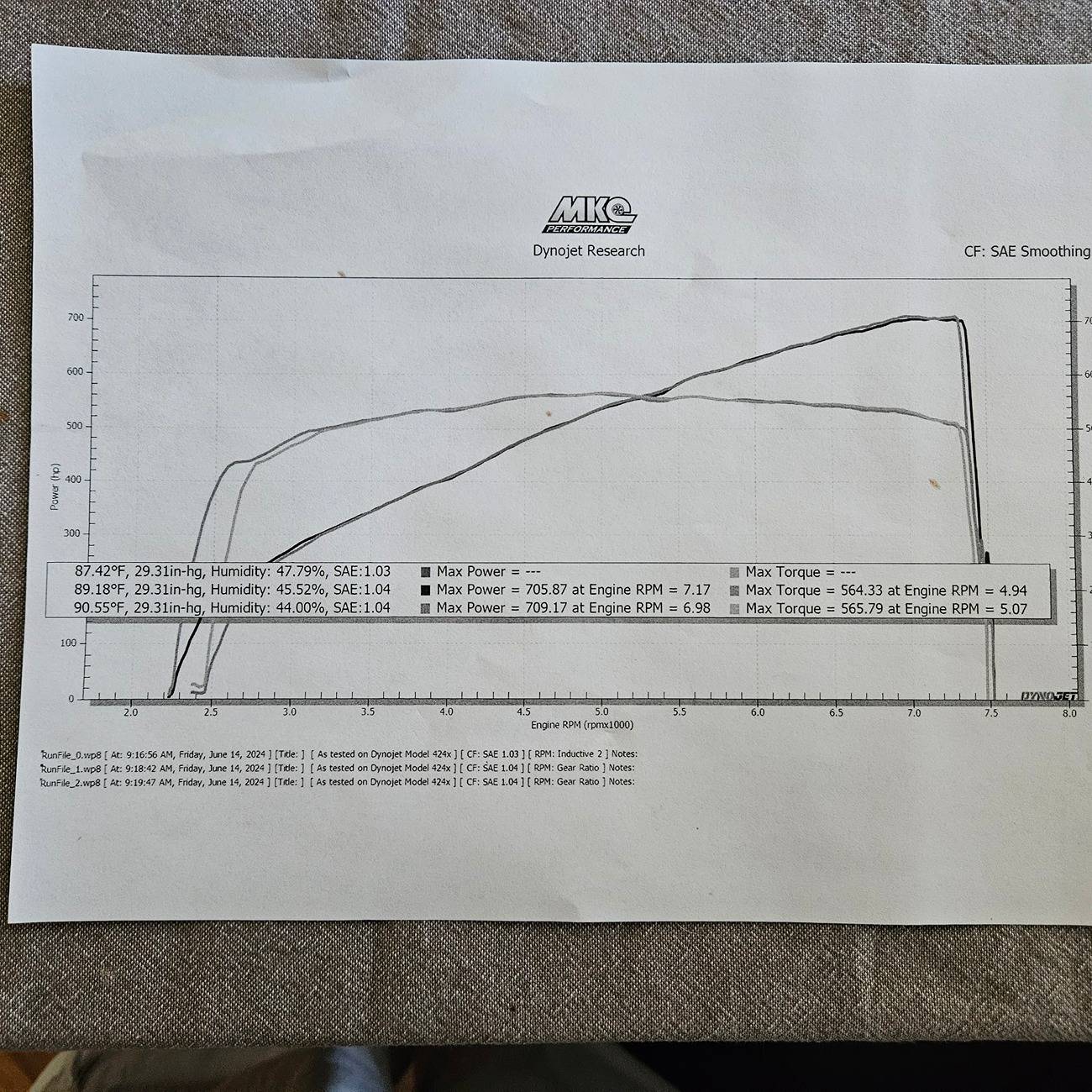
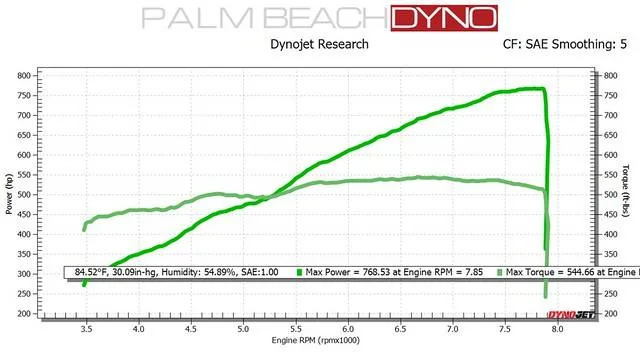
I actually ended up drawing out the torque curve by hand scaled on the hp curve and it does intersect at 5300 not 5600. I about had a stroke trying to do it with two different scales.
Sponsored