Sponsored

2019 GT Engine fan and A/C issues

bwilder10h

New Member
Joined
Jul 3, 2026
Threads
1
Messages
1
Reaction score
0
Location
Cinci
First Name
Brian
Vehicle(s)
2019 GT Premium Convertible
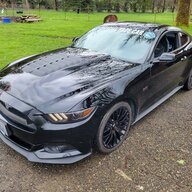
Hi all, I have a bit of a weird one I was hoping to get help with. My 2019 GT is not turning engine cooling fans or a/c on.
My a/c condenser took a rock late last year and I let it go until a couple weeks ago. I replaced it and went to charge the system earlier in the week and noticed the fans weren't turning on, nor would the a/c compressor kick on with the system up to pressure.
In troubleshooting, going through all the fuses and relays, checking wiring, etc, I noticed that fuse #42 (vehicle power 3) in the under hood fuse/relay box was blown. Unfortunately, when you replace and simply turn the ignition on, the fuse immediately blows and there is a pretty good pop. One time when I was testing the blown fuse was glowing which is something I've never seen before.
Oddly, I unplugged the engine cooling fan plug and the fuse does not blow. However, I have a spare fan from another project I was working on and it does the same thing, so I have to assume the issue is not the fan. Looking for any insights as to where to turn next. I don't have the wiring schematic for the car which would help but I'll be honest, interpreting those diagrams is far from my strong suit. Thanks!
Sponsored
 

Skye

Well-Known Member
Joined
Jan 18, 2022
Threads
13
Messages
2,963
Reaction score
4,153
Location
≈39N
Vehicle(s)
"Skye" Mach1 N2144
My a/c condenser took a rock late last year and I let it go until a couple weeks ago.
There could be countless reasons why someone lets something like this go. Unfortunately in doing so, it allows the atmosphere into an otherwise closed system. Moisture then begins to rust the parts in that loop. The same thing can happen to a home A/C system.

I do not have a specific wiring diagram to support t-shooting, but some general checks this morning note that fuse #42, vehicle power circuit three, is associated with three things:

- Active Exhaust (AE)
- Cooling Fans
- A/C Compressor

The cooling fans should turn on/off by themselves, given the appropriate temperature.

When the A/C is turned on, regardless of the radiator temperature, the cooling fans should also turn on; the logic behind this is to draw air across the condenser and help the A/C operate. The compressor, condenser and cooling fans help liquify the refrigerant to the greatest density before going back to the car's interior.

Stating the obvious, the conditions you're seeing highlight a short circuit or a high load.

One t-shooting step is to disconnect the wiring going to the fans, disconnect the wiring going to the compressor. If you have AE, disconnect the leads attached to the valves at the mufflers.

Insert a new fuse into position #42. Start the car. See if the fuse holds. Then, connect the fans only. See how long or if that holds. Drive around, fans, only, to see if they continue operating as expected.

You could later attempt to re-connect the compressor, see what happens then. And later still, the AE valves.

The general idea is to disconnect all loads associated with the circuit, then re-insert them one at a time to identify the problem piece. If with everything disconnected the circuit continues to blow, that highlights a short circuit with the wiring itself, maybe with a connector end, maybe with a section of wiring damaged by something else.

Attached is a link to a web site which offers Ford procedures, the same that dealer mechanics use. It's $30 for three days, during which time you can download as much information as you like.

https://www.motorcraftservice.com/

Depending on the skillset, it might be worthwhile to seek out a local shop for an estimate. Pay them an hour of labor to t-shoot this issue and provide a general cost. The diagnostic fee is sometimes waived if they get the job.

Edit,

Thinking things out further...

Fuse #42 and vehicle circuit #3 is a 15A run. Fifteen amps isn't much to power the devices mentioned. And it doesn't. Vehicle circuit #3 acts as a trigger for high-amp devices. If you study the fuse chart, the fans, A/C compressor and other devices are powered by their own relays or fuses.

Fuse #42 is a low-power switching circuit, to latch the high-amp connections and those devices. It's like your home A/C system. You compressor is drawing tens of amps, but it could be switched by something as small as a 3V watch battery in the interior thermostat.

As part of the t-shooting process, you'll want to remove fuses and relays associated with the fans, compressor and A/E valves. Doing so would help segment these issues further.

For example, disconnect the fans, compressor and A/E valves. Remove fuse #42. Remove fuses and relays associated with those devices. Insert fuse #42 only; You'd have a circuit with nothing attached as this point. Turn the car on and see if that holds. Later, insert the relay or fuse associated with the fans. See if that holds. Attach the fans. See if that holds. Drive the car to confirm the fans work as expected. Later, you use the same process to introduce the A/C compressor and the AE valves.

That's the general idea.
 
Last edited:


Top