
Sponsored

ShadesOfBloo

Well-Known Member
Joined
Feb 25, 2021
Threads
3
Messages
1,657
Reaction score
6,675
Location
SE Virginia
Vehicle(s)
1980 Datsun 210 wagon, 1992 Nissan 240SX, 2008 Evo, 2020 Mustang GT
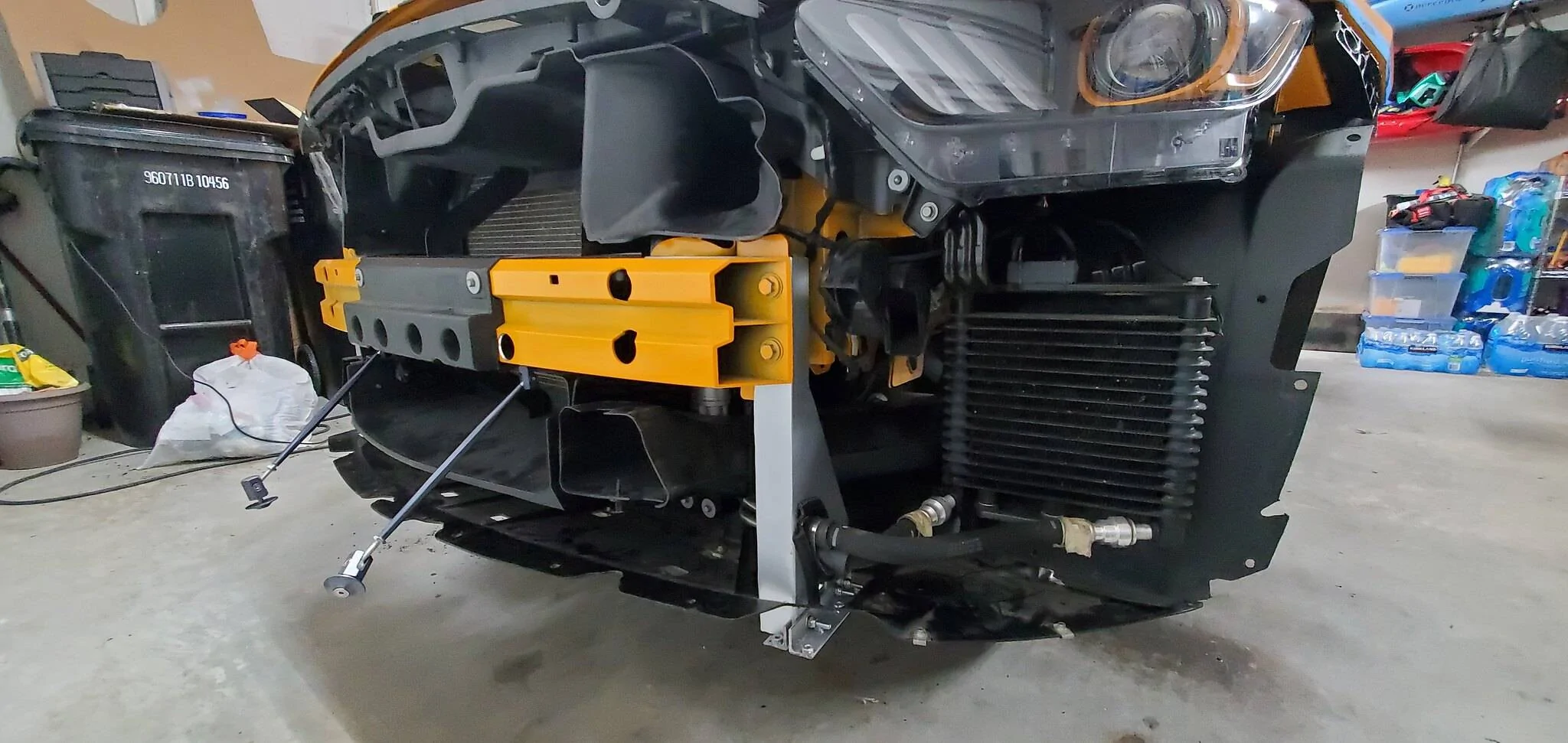
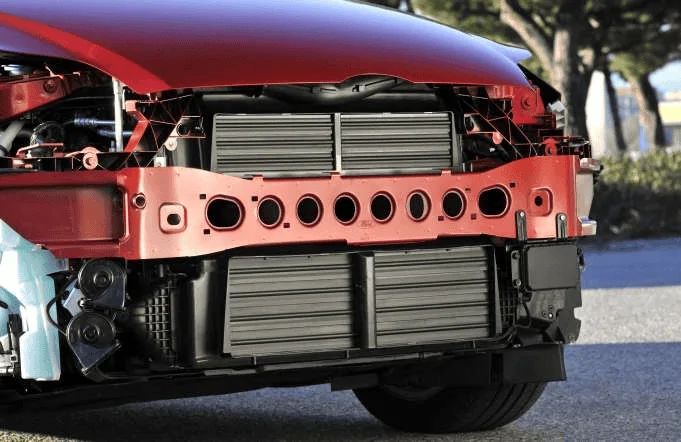
Do you have a plan for getting all that air out of your hood now?
Yeah, this.

If I did anything with my grill, I'd want to close more cells to reduce drag.

I'd want to know how many square inches they left open on the 2019 GT350 grill, and I could probably use a couple of square inches less than that.
Sponsored

 

jmagnus87

Well-Known Member
Joined
Jan 23, 2023
Threads
10
Messages
945
Reaction score
1,199
Location
Rhode Island
First Name
Magnus
Vehicle(s)
2015 Mustang GT PP Comp Orange '22 Chevy Silverado
Didn't even know those were a thing as the GT350 has that from the factory on the driver's side to feed the air intake.

52703327813_1e86910092_k.jpg


Does the passenger side feed anything other than the fuse box?
Thanks for the info on the carburetor hood cowl question. Now for a funny question/joke.
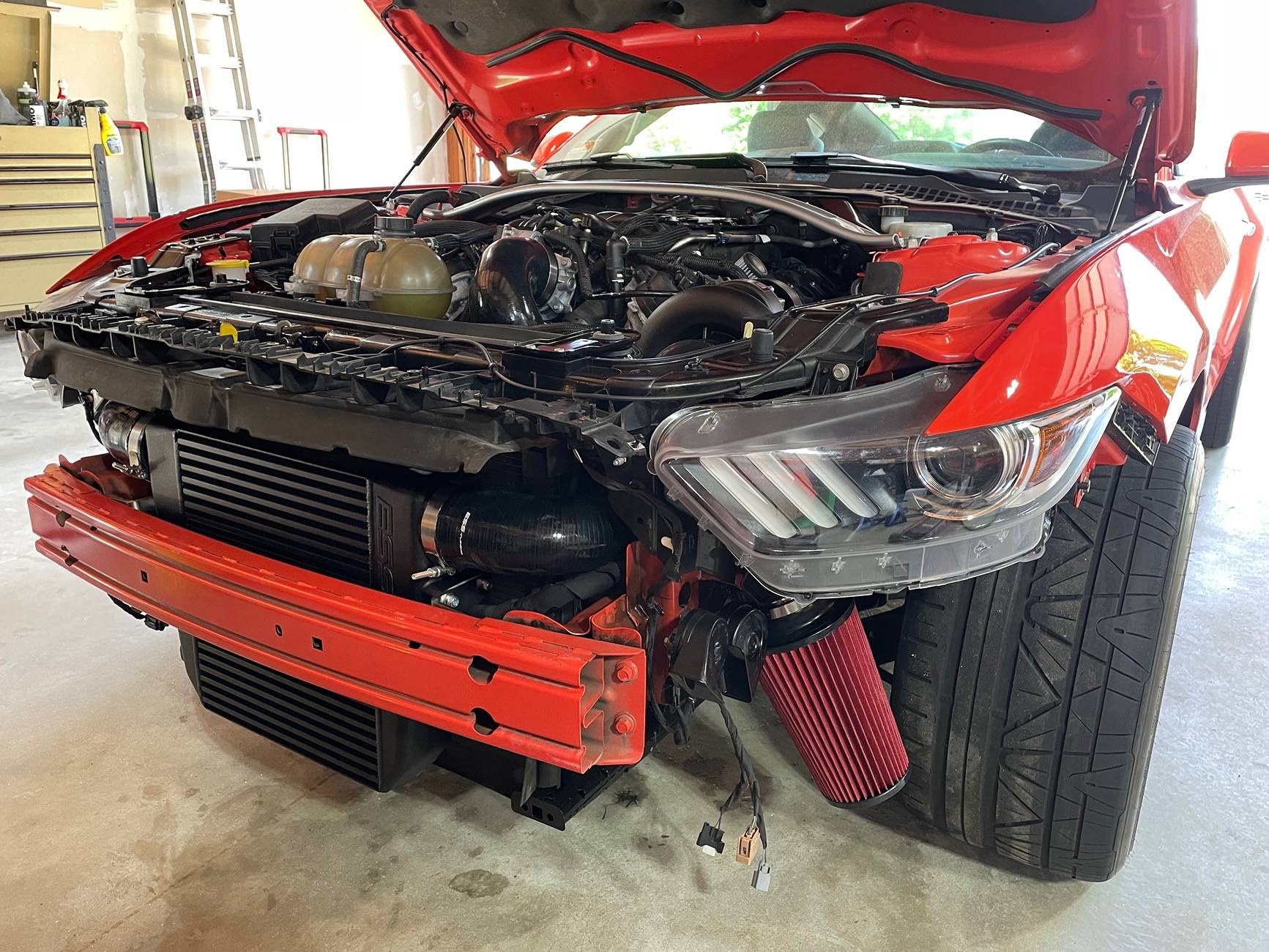
where you gonna be able to put all your ESS supercharger intake and piping with all that stuff in the way behind your factory bumper 🤣
IMG_1138.jpeg
 

mavisky

Well-Known Member
Joined
Nov 17, 2018
Threads
12
Messages
2,351
Reaction score
3,240
Location
Cumming, GA
First Name
Kyle
Vehicle(s)
2018 GT350
Thanks for the info on the carburetor hood cowl question. Now for a funny question/joke.
where you gonna be able to put all your ESS supercharger intake and piping with all that stuff in the way behind your factory bumper 🤣
IMG_1138.jpeg
I could ask you how you're going to keep from hitting 290 oil temps or limp mode on your transmission during a 20 minute track session in the summer heat in the south?

Different priorities for different builds is all. I honestly think there is a little wiggle room behind the oil cooler, but it's not super optimal.
 

jmagnus87

Well-Known Member
Joined
Jan 23, 2023
Threads
10
Messages
945
Reaction score
1,199
Location
Rhode Island
First Name
Magnus
Vehicle(s)
2015 Mustang GT PP Comp Orange '22 Chevy Silverado
I could ask you how you're going to keep from hitting 290 oil temps or limp mode on your transmission during a 20 minute track session in the summer heat in the south?

Different priorities for different builds is all. I honestly think there is a little wiggle room behind the oil cooler, but it's not super optimal.
Oh it was definitely a joke for sure but I've tracked my car in New England on 85-90 degree days 100% humidity. Oil temp always read normal and never lost pressure even using factory 5w-20 on a boosted car at 20 minute track sessions. My differential hasn't exploded yet either but i don't have a fancy differential oil temp grade so it's probably over heated a few times 🤷‍♂️ eff it, full send
 

Sponsored

Sig556

White18
Joined
Jan 26, 2014
Threads
30
Messages
947
Reaction score
676
Location
North Carolina
First Name
Ed
Vehicle(s)
2024 GT Premium / Iconic Silver 10 Speed Auto
I have been thinking of opening the closed ends of my grill for some time. (2024 GT) but I keep wondering WHY Ford closed them off in the first place. There has to be a good reason or the entire grill would be open. I just don't want to compromise any air flow to the radiator. And you say?
 

mavisky

Well-Known Member
Joined
Nov 17, 2018
Threads
12
Messages
2,351
Reaction score
3,240
Location
Cumming, GA
First Name
Kyle
Vehicle(s)
2018 GT350
I have been thinking of opening the closed ends of my grill for some time. (2024 GT) but I keep wondering WHY Ford closed them off in the first place. There has to be a good reason or the entire grill would be open. I just don't want to compromise any air flow to the radiator. And you say?
Probably fuel economy strategy. Opening up unnecessary air inlets adds air into the engine bay and that in turn adds drag. So long as you have enough air flow to cool the vehicle, any additional air is just adding drag.

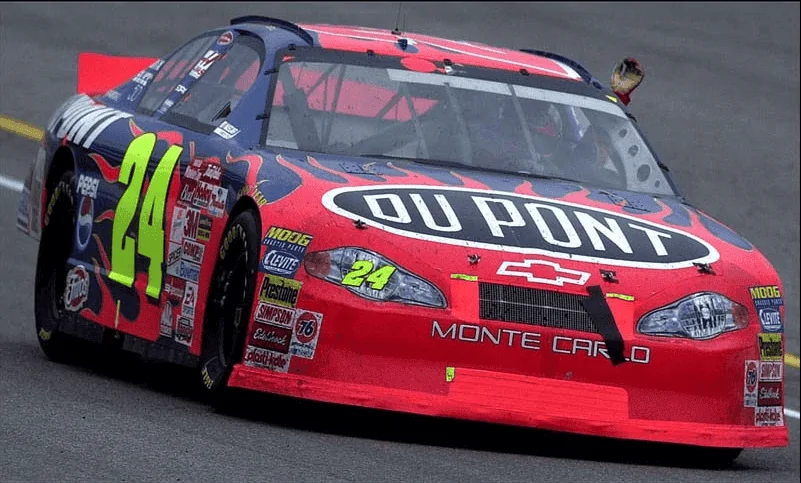
You'll see Nascar teams do this on super speedways where they'll tape off 90% of the grill opening because moving at 200mph around Daytona means that an envelope slot can properly cool the car and blocking off more of the grill reduces drag and gives them a higher top speed.

While the effect may not be super noticeable to you or I, a 1/2mpg change is enough for a manufacturer to lock in on that change. These are the same engineers that are implementing tons of minor changes to scrounge for every MPG improvement they can find.
 

Sig556

White18
Joined
Jan 26, 2014
Threads
30
Messages
947
Reaction score
676
Location
North Carolina
First Name
Ed
Vehicle(s)
2024 GT Premium / Iconic Silver 10 Speed Auto
Probably fuel economy strategy. Opening up unnecessary air inlets adds air into the engine bay and that in turn adds drag. So long as you have enough air flow to cool the vehicle, any additional air is just adding drag.

You'll see Nascar teams do this on super speedways where they'll tape off 90% of the grill opening because moving at 200mph around Daytona means that an envelope slot can properly cool the car and blocking off more of the grill reduces drag and gives them a higher top speed.

While the effect may not be super noticeable to you or I, a 1/2mpg change is enough for a manufacturer to lock in on that change. These are the same engineers that are implementing tons of minor changes to scrounge for every MPG improvement they can find.

Kyle, Excellent answer! Now that explains what I was looking for and it makes perfect sense. My grill openings shall remain sealed off.
 
OP
OP
GTP

GTP

Deutsche Pony
Joined
May 27, 2015
Threads
263
Messages
6,010
Reaction score
3,929
Location
Indy
Website
www.BambergAudio.com
First Name
Philip
Vehicle(s)
2019 GT PP1 A10 Outrageous Orange HPDE mods
Kyle, Excellent answer! Now that explains what I was looking for and it makes perfect sense. My grill openings shall remain sealed off.
I have been thinking of opening the closed ends of my grill for some time. (2024 GT) but I keep wondering WHY Ford closed them off in the first place. There has to be a good reason or the entire grill would be open. I just don't want to compromise any air flow to the radiator. And you say?
Probably fuel economy strategy. Opening up unnecessary air inlets adds air into the engine bay and that in turn adds drag. So long as you have enough air flow to cool the vehicle, any additional air is just adding drag.

You'll see Nascar teams do this on super speedways where they'll tape off 90% of the grill opening because moving at 200mph around Daytona means that an envelope slot can properly cool the car and blocking off more of the grill reduces drag and gives them a higher top speed.

While the effect may not be super noticeable to you or I, a 1/2mpg change is enough for a manufacturer to lock in on that change. These are the same engineers that are implementing tons of minor changes to scrounge for every MPG improvement they can find.
I have a different perspective. In Fluid Dynamics class we learned that the "frontal area" is very important to total amount of drag. If you looked at the front of a car dead-on and visualized the silhouette of it, that has a greater bearing on total drag than the precise shape of the front end.

Therefore, whether you improve the front end shape, or smooth the flow of intake air, or use fake vents (e.g. at the bumper corners) or open vents, the actual size of of the hole "punched" in the air still dominates.

I believe that opening all my grille cells basically creates a higher pressure in front of the cooler stack. The higher pressure then requires that some of that extra air flows through the stack, and some leaks around the internal openings, etc.

If I didn't track my car, and if I wasn't trying get gain small cooling improvements for cheap, then I would certainly not go to any of trouble of opening cells, or opening the OEM hood vents.
 
OP
OP
GTP

GTP

Deutsche Pony
Joined
May 27, 2015
Threads
263
Messages
6,010
Reaction score
3,929
Location
Indy
Website
www.BambergAudio.com
First Name
Philip
Vehicle(s)
2019 GT PP1 A10 Outrageous Orange HPDE mods
Musing further, I don't think anyone should underestimate the importance that the factory designers place on the appearance of the front end.

The trend lately is for ALL cars to have a very high grille-to-bodywork ratio. And they style up the shape of the grille cells, too. When you look close, much of the grille cells are blanked off, and the smaller ones may be fully blocked off. Personally I can't stand this trend of massive grilles on cars these days. For one, I know half that cell area is blanked off, and futhermore, I appreciate the smoother and elegant look of some bodywork with the bumper. Aston Martin comes to mind. They could learn a lot from how A-M has styled the front and rear of their cars. Classy.

Again, the designers know that the drag is still mostly based on the frontal area of the entire car. But blanking off unnecessary cells is still a little more aero efficient than keeping them open, so they do that.

As for the Mustang, perhaps they thought that more grille area than is actually needed to cool the car looks more high-performance. We know they claim a Performance Pack car is track ready, but we all discover that it still won't stay cool for 20 minutes on track with an experienced driver.
 
Last edited:

Sponsored

mavisky

Well-Known Member
Joined
Nov 17, 2018
Threads
12
Messages
2,351
Reaction score
3,240
Location
Cumming, GA
First Name
Kyle
Vehicle(s)
2018 GT350
I have a different perspective. In Fluid Dynamics class we learned that the "frontal area" is very important to total amount of drag. If you looked at the front of a car dead-on and visualized the silhouette of it, that has a greater bearing on total drag than the precise shape of the front end.
Agreed, frontal area is the dominating force. I too have spent time in engineering school playing with windtunnels.

Therefore, whether you improve the front end shape, or smooth the flow of intake air, or use fake vents (e.g. at the bumper corners) or open vents, the actual size of of the hole "punched" in the air still dominates.
While frontal area is still dominant, those other add-ons have an effect. AJ tested the air curtains that Ford designed into the GT350 (and many of their other vehicles) and found that while they reduce drag, blocking them off also increases downforce. Again, still a small change, but everything adds up to percentage points of change overall.


I believe that opening all my grille cells basically creates a higher pressure in front of the cooler stack. The higher pressure then requires that some of that extra air flows through the stack, and some leaks around the internal openings, etc.
Agreed you're creating more pressure in front of the stack, and you'd do even better to reduce pressure on the backside of the stack with a vented hood. As it is though you're adding additional pressure into the engine bay which has a convoluted air-flow route. This increases drag and front end lift. Everything has a trade-off. You've increased cooling by increasing airflow, but have added drag and lift. If you got the air out from behind the stack efficiently you'd increase cooling and potentially increase downforce while also reducing drag. I can't give you the net change overall between those 3 values, but I can tell you that only addressing one end of the system is going to have consequences on the end of that equation.

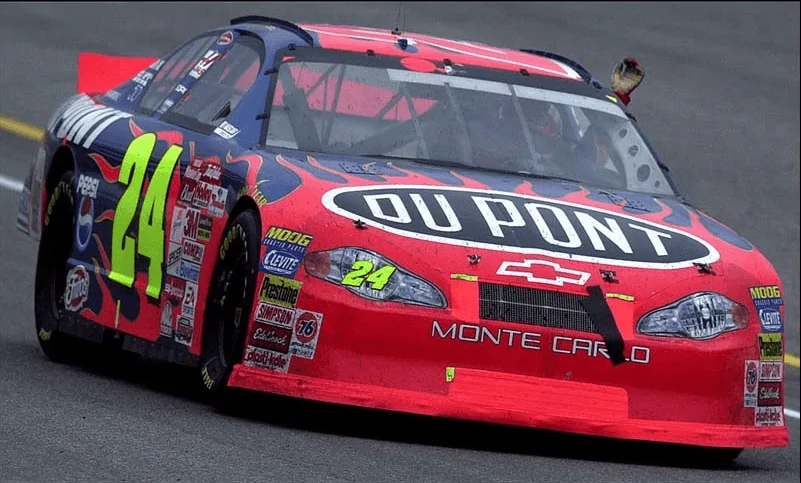
This is where we go back to my Nascar example. Throughout the testing week they'll change the openings of the radiator to effect both lift and cooling as their series doesn't allow them to add any type hood vent. They also can't adjust anything else at the front end so adjusting grill opening allows them to affect front end grip and cooling capability. By opening up the grill they run cooler but add lift. Many times you'll see the car taped off as below and then on the straights they'll pull out of the draft slightly to try and get some cool air as running in the draft causes them to overheat.

1722957417055-vd.webp


If I didn't track my car, and if I wasn't trying get gain small cooling improvements for cheap, then I would certainly not go to any of trouble of opening cells, or opening the OEM hood vents.
Agreed. If you're not experiencing cooling issues, then adding the extra openings just creates additional unneeded airflow which, as I covered above, creates drag and lift. How much is debatable, but it does have an impact. Again, when we're talking about OEM's and trying to meet CAFE standards, a few percentage points of less drag by closing off some unneeded grill openings is 100% worth the change.

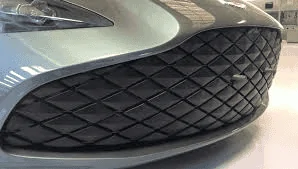
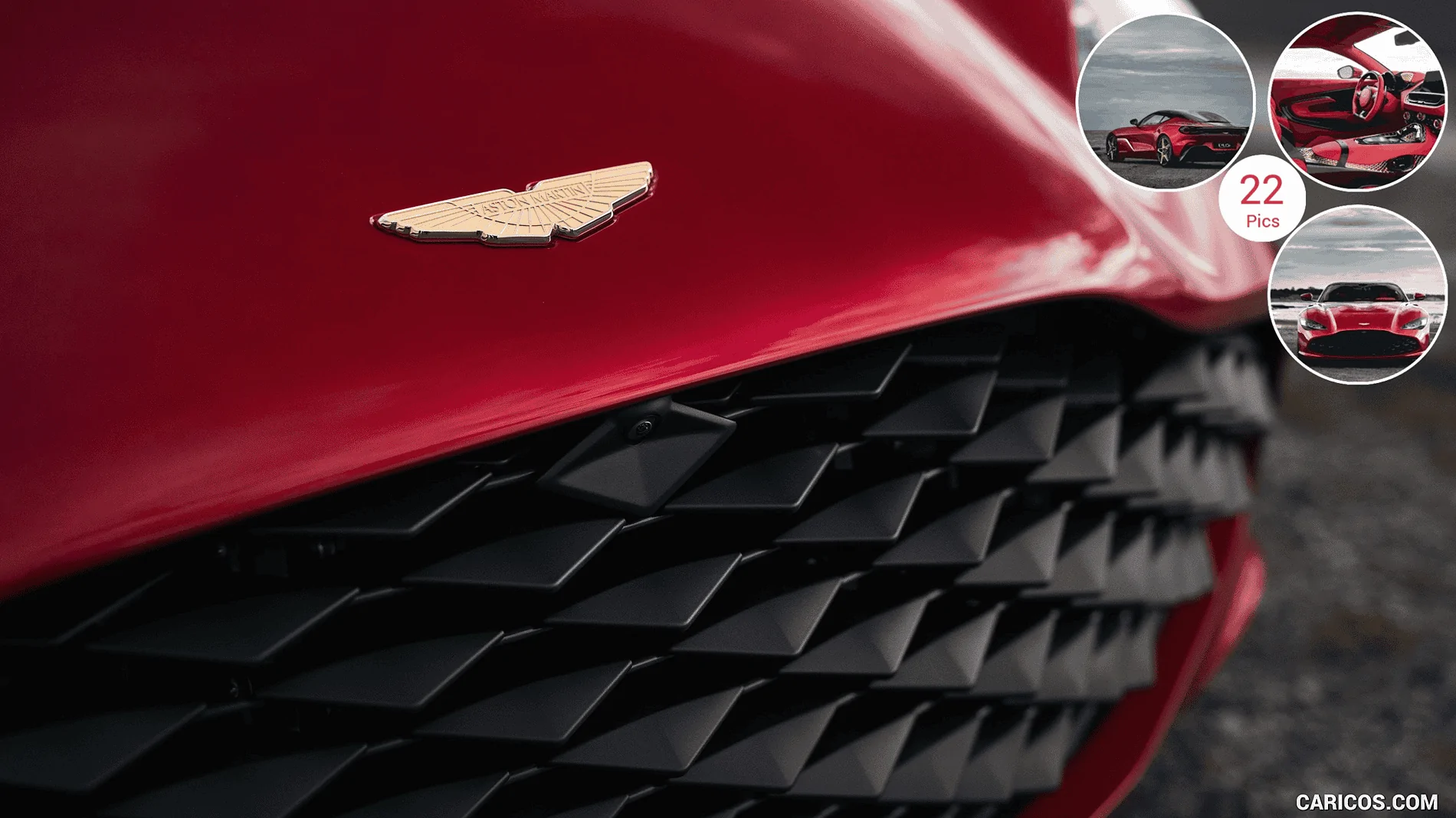
Blanked off areas create an air "bubble" as air stacks up in front of them and then air flows around them. While not as ideal as having a smaller grille opening that's 100% open, it's better than having them all open. As you mentioned it's always a balance between the designers, engineers, and accountants when it comes to the exact design of a new car's grill opening. One method we're seeing more and more now are active grill shutters that close down the openings when the engine doesn't need the additional cooling. This allows for better aero efficiency until the car needs that extra cooling air. Aston Martin probably has the sexiest version of this now

Regular shutters behind the grill.
1722957851676-00.webp


Aston Martin active grille
Closed
1722957888701-zs.webp

Open
1722957905321-fq.webp
 

MAGS1

Well-Known Member
Joined
Mar 6, 2020
Threads
96
Messages
11,365
Reaction score
18,630
Location
Somewhere in Middle America
First Name
Mark
Vehicle(s)
2022 Mustang GT
This is where we go back to my Nascar example. Throughout the testing week they'll change the openings of the radiator to effect both lift and cooling as their series doesn't allow them to add any type hood vent. They also can't adjust anything else at the front end so adjusting grill opening allows them to affect front end grip and cooling capability. By opening up the grill they run cooler but add lift. Many times you'll see the car taped off as below and then on the straights they'll pull out of the draft slightly to try and get some cool air as running in the draft causes them to overheat.

1722957417055-vd-png.webp
I just dropped in to say you picked the perfect car/driver for your pic. Jeff is still my favorite driver to this day.
 

Snakebyte

Well-Known Member
Joined
Jun 26, 2020
Threads
6
Messages
1,080
Reaction score
1,251
Location
West Central Florida
First Name
Nathan
Vehicle(s)
2019 Mustang GT Convertible
Probably fuel economy strategy. Opening up unnecessary air inlets adds air into the engine bay and that in turn adds drag. So long as you have enough air flow to cool the vehicle, any additional air is just adding drag.

You'll see Nascar teams do this on super speedways where they'll tape off 90% of the grill opening because moving at 200mph around Daytona means that an envelope slot can properly cool the car and blocking off more of the grill reduces drag and gives them a higher top speed.

While the effect may not be super noticeable to you or I, a 1/2mpg change is enough for a manufacturer to lock in on that change. These are the same engineers that are implementing tons of minor changes to scrounge for every MPG improvement they can find.
Agreed. With the EPA breathing down their necks, you can be assured MPG is one of the top manufacturers' priorities (alongside emissions).
After a sale, MPG and emissions may be viewed very differently by consumers. Many are happy with what they've purchased, others ???...well not so much.
Realizing heat is one of the greater enemies of underhood components, folks in warmer climates and folks that like to hit the track prioritize heat extraction, not MPG. Cooler airflow across heat-vulnerable components may be a greater priority than a slipstream airflow across exterior body panels.​
On the other hand, as we pursue massive horsepower increases, such mods generally generate additional heat. Which leads to...we need to feed those mods more air, add coolers, and so on. Emissions and fuel costs at this point are a mirage in the rear view mirror.​
All that said, everyone has different priorities. "Optimum" solutions can easily be different based on those priorities. Of course, as with manufacturers, federal or state statutes (California comes to mind immediately) may shape our priorities.
 

ShadesOfBloo

Well-Known Member
Joined
Feb 25, 2021
Threads
3
Messages
1,657
Reaction score
6,675
Location
SE Virginia
Vehicle(s)
1980 Datsun 210 wagon, 1992 Nissan 240SX, 2008 Evo, 2020 Mustang GT
I have a different perspective. In Fluid Dynamics class we learned that the "frontal area" is very important to total amount of drag. If you looked at the front of a car dead-on and visualized the silhouette of it, that has a greater bearing on total drag than the precise shape of the front end.
You're talking about the equation that includes the frontal area and the coefficient of drag?


[Dammit, I can't get this computer to paste it correctly]

The smaller grill opening gives you a lower coefficient of drag.
The marketing and styling departments really determine the size of the vehicle, so the engineers (and later, owners) really only have influence over the drag coefficient.

I thought the GT350R was probably the most track-worthy Mustang, from the factory, and I took notice when SVT shrank the front grill opening for 2019. They had been scooping up more air than they could use, and there was more to be gained by getting the right amount of air and directing it properly.
 

rubyredponycar

Well-Known Member
Joined
Jun 4, 2018
Threads
0
Messages
84
Reaction score
41
Location
TX
Vehicle(s)
2016 Mustang GT Premium PP Ruby Red - 1st Mustang
You're talking about the equation that includes the frontal area and the coefficient of drag?


[Dammit, I can't get this computer to paste it correctly]

The smaller grill opening gives you a lower coefficient of drag.
The marketing and styling departments really determine the size of the vehicle, so the engineers (and later, owners) really only have influence over the drag coefficient.

I thought the GT350R was probably the most track-worthy Mustang, from the factory, and I took notice when SVT shrank the front grill opening for 2019. They had been scooping up more air than they could use, and there was more to be gained by getting the right amount of air and directing it properly.
Sometimes air flow is better than air access. If there’s not enough negative pressure at the back of the hood then the hot air just gets stuck in the engine bay. The cowl hood popular with hot rods know about this and they suck out a lot of air.
Sponsored


Top