Sponsored

geep81

Well-Known Member
Joined
Sep 29, 2018
Threads
58
Messages
1,417
Reaction score
1,446
Location
Cleveland OH
Vehicle(s)
2020 GT Premium
And Ford didn't cheap out implementing DI. They kept port injection as well to reduce maintenance issues.
I think the main complaint about DI is that it could have been built to be quieter.

I know that would increase costs, but that's my take. If the 2k rattle didn't exist a lot of complaints would go away. People want their v8s to purr not rattle.
Sponsored


 

Bob Lob Law

Well-Known Member
Joined
Apr 18, 2023
Threads
9
Messages
855
Reaction score
1,338
Location
417
First Name
Jeff
Vehicle(s)
'22 GT 401A ESS A10
Agreed. The 6.2 failures in the cars are on track though. Where everything is a consumable. The 6.2 in trucks, different story.
From what I've read and understand, is it is also the truck 6.2. They had full stop sale of all 6.2L vehicles for the model year 2024 in late April of 2025. To include trucks and SUVs.
 

martinjlm

Retired from GM
Joined
Feb 4, 2018
Threads
16
Messages
1,680
Reaction score
3,354
Location
Detroit
Vehicle(s)
2017 Camaro Fifty SS Convertible
To be fair, most "issues" with the Coyote are people complain about noises. The 6.2 actually has significant frequency of catastrophic failure of lifters and main bearings. The Coyote has been by far much more reliable from an engine failure standpoint.

And Ford didn't cheap out implementing DI. They kept port injection as well to reduce maintenance issues. I don't like DI, but you are not going to prevent carbon buildup without retaining port injection.
Agreed. The 6.2 failures in the cars are on track though. Where everything is a consumable. The 6.2 in trucks, different story.

My point is, the architecture of the motor, how water was designed to flow, how oil returns to the pan, the baffling in the pan, the OPGs, I think GM does a better job with those than Ford. Ford used inferred temps on so much, rather than just putting a temp sensor in.

Part of the complication, compared to a pushrod V8 IMO, is because of the DOHC set up. Don't get me wrong, I am all for the DOHC. BUT...it's a totally different world from pushrods.
For the most part both you guys are right. You're just shopping in different aisles. The GM lifter issue is directly related to the implementation of AFM. All 6.2L got the AFM lifters whether the vehicle has AFM implemented or not. Sorta like all 6.2L have hardened valve trains to support FlexFuel whether they actually are specced for FlexFuel or not. Makes build sequencing in the engine plant a lot easier.

The incidence of lifter failure is highly over-blown because, let's face it...people don't get on car forums and say "my lifters didn't drop!" We only hear the horror stories. I have a friend who's had it happen twice on the same car. I know no one else who has ever had the problem. And I'm president of a large Camaro Club so I know A LOT of people with Camaros. People who drive them hard.

As for Ford including DI and PFI on the same engines, that was not done for maintenance. It was done for emissions. DI technology is "borrowed" from diesel technologies. One of the results of this is that a by-product of DI combustion is high nitrous oxide emissions at startup and at low speed. There are two ways to deal with this. NOx traps or include PFI. Ford chose to go PFI, probably because PFI brings added performance advantages on the high end where the engine may be starved for fuel. GM added PFI to the 5.5L DOHC and is adding it to the new 6.7L engines primarily for performance since they had already handled the emissions aspect of it in the LT1 / L87 engines.
 

martinjlm

Retired from GM
Joined
Feb 4, 2018
Threads
16
Messages
1,680
Reaction score
3,354
Location
Detroit
Vehicle(s)
2017 Camaro Fifty SS Convertible
From what I've read and understand, is it is also the truck 6.2. They had full stop sale of all 6.2L vehicles for the model year 2024 in late April of 2025. To include trucks and SUVs.
It wasn't because of lifter problems. There was a supplier problem with bearings.
 

Sponsored

martinjlm

Retired from GM
Joined
Feb 4, 2018
Threads
16
Messages
1,680
Reaction score
3,354
Location
Detroit
Vehicle(s)
2017 Camaro Fifty SS Convertible
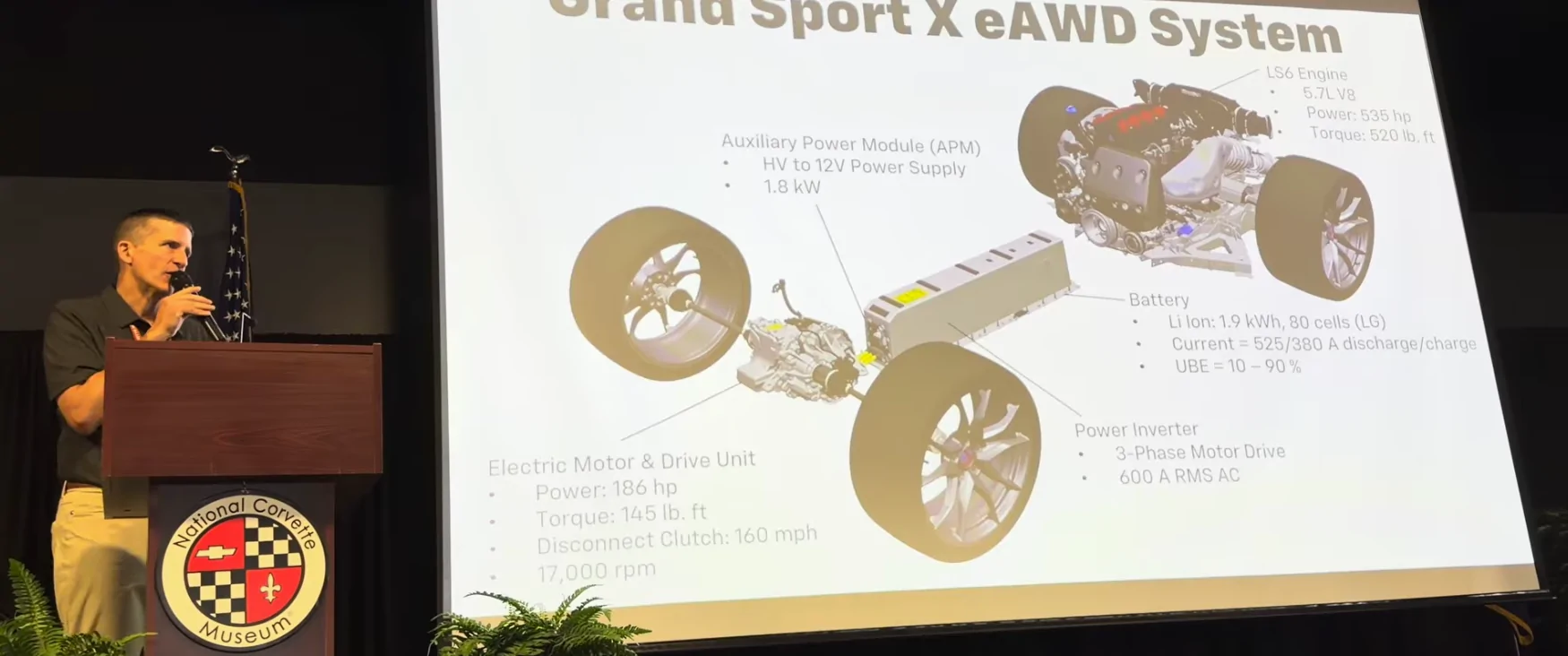
At a press event discussing the 2027 Corvette lineup, Corvette Chief Engineer Josh Holder provided some details on the LS6 engine. Top right corner. 535 hp, 520 lb-ft.

1784063699801-mh.webp


Expect Camaro to get the same engine, same output. GM has stopped playing the de-rating game when putting Corvette engines in Camaros because...

  1. Sometimes the exhaust routing differences manage the Camaro hp to a few hp less than the Corvette without any unnecessary manipulation.
  2. The Corvette is so much lighter than Camaro, and now with mid-engine, capable of putting more of that hp to effectives use that it doesn't matter.
  3. At the Executive Chief Engineer level, the Corvette Chief Engineer and the Camaro Chief Engineer report to the same person (Tony Roma).
 

HKusp

Well-Known Member
Joined
Jul 22, 2021
Threads
37
Messages
2,251
Reaction score
2,889
Location
Hampton, Md.
First Name
Jason
Vehicle(s)
2018 Mustang GT
For the most part both you guys are right. You're just shopping in different aisles. The GM lifter issue is directly related to the implementation of AFM. All 6.2L got the AFM lifters whether the vehicle has AFM implemented or not. Sorta like all 6.2L have hardened valve trains to support FlexFuel whether they actually are specced for FlexFuel or not. Makes build sequencing in the engine plant a lot easier.

The incidence of lifter failure is highly over-blown because, let's face it...people don't get on car forums and say "my lifters didn't drop!" We only hear the horror stories. I have a friend who's had it happen twice on the same car. I know no one else who has ever had the problem. And I'm president of a large Camaro Club so I know A LOT of people with Camaros. People who drive them hard.

As for Ford including DI and PFI on the same engines, that was not done for maintenance. It was done for emissions. DI technology is "borrowed" from diesel technologies. One of the results of this is that a by-product of DI combustion is high nitrous oxide emissions at startup and at low speed. There are two ways to deal with this. NOx traps or include PFI. Ford chose to go PFI, probably because PFI brings added performance advantages on the high end where the engine may be starved for fuel. GM added PFI to the 5.5L DOHC and is adding it to the new 6.7L engines primarily for performance since they had already handled the emissions aspect of it in the LT1 / L87 engines.
The coyotes with DI use almost exclusively DI in order to start, though, so that's kind of weird.
Sponsored


Top