markmurfie
Well-Known Member
One skilled in the art is capable of performing such experiments without further explanation.
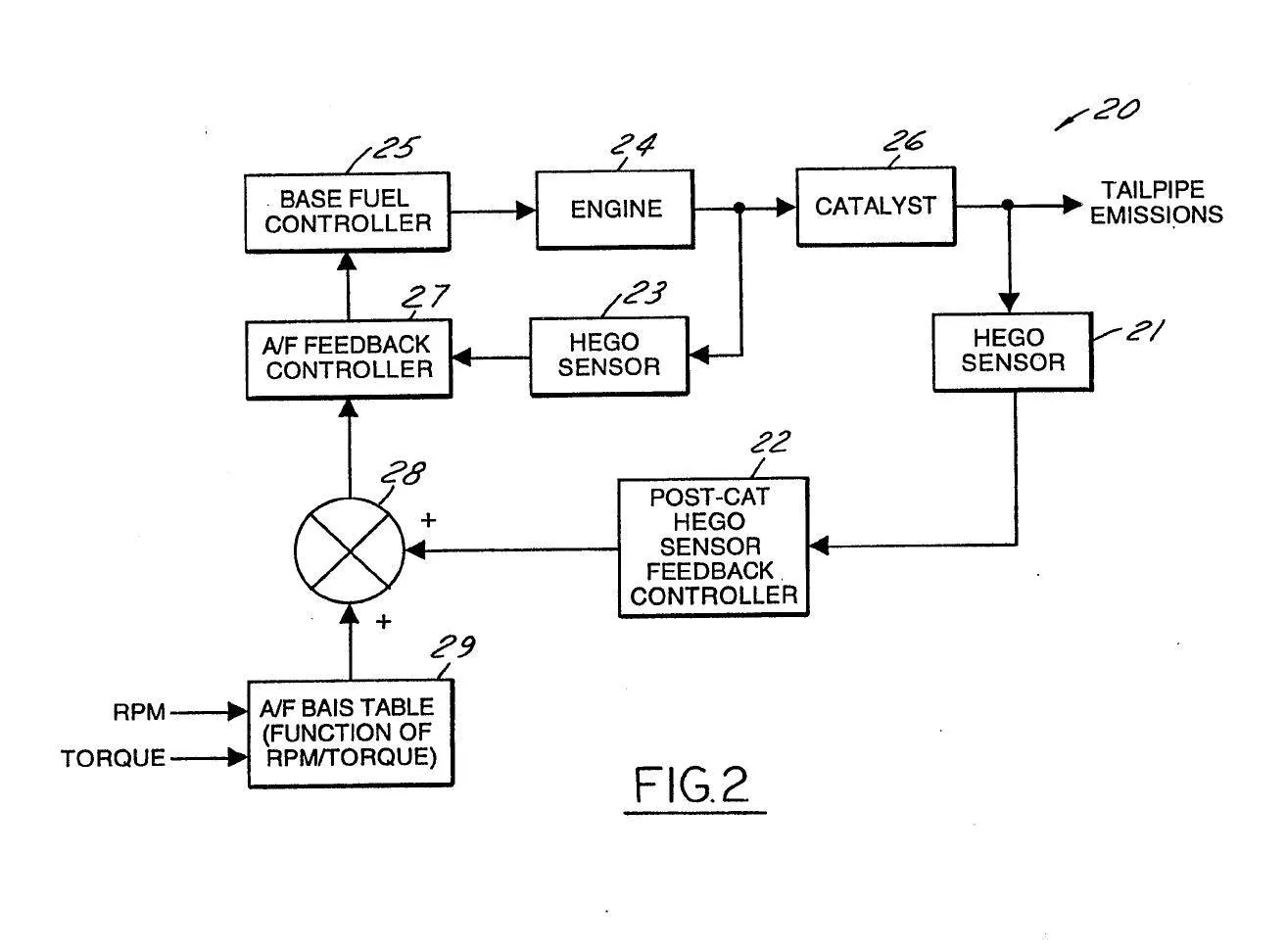
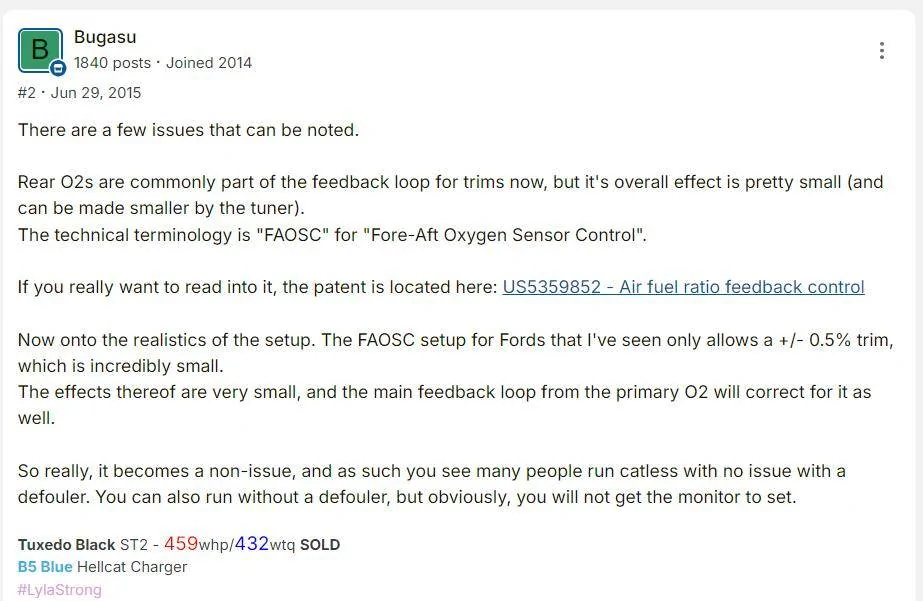
A fore-aft oxygen sensor (FAOS) fuel control system. The control system uses an A/F bias for trimming the closed-loop operating point of a pre-catalyst A/F feedback controller. The A/F bias is generated by a proportional-integral feedback signal from a post-catalyst EGO sensor feedback controller fed by the output of a post-catalyst Exhaust Gas Oxygen (EGO) sensor.
A substantial time delay is associated with the post-catalyst feedback loop. Therefore, this control system is subject to some A/F errors. A/F errors result in catalyst breakthrough and higher emission levels, making it difficult to meet the stringent emission regulations.
In an attempt to improve the performance of the FAOS control system, it has been proposed to use a modelbased feedback controller. In the model-based system, the inputs to the system to be controlled are also applied to a model. The model is adaptively updated based upon a comparison between the output of the model and the output of the actual system. The output of the model is used to generate a real-time corrective signal to rapidly compensate for potential, or present, system response errors. The accuracy of the model is important to the success of the modelbased system.
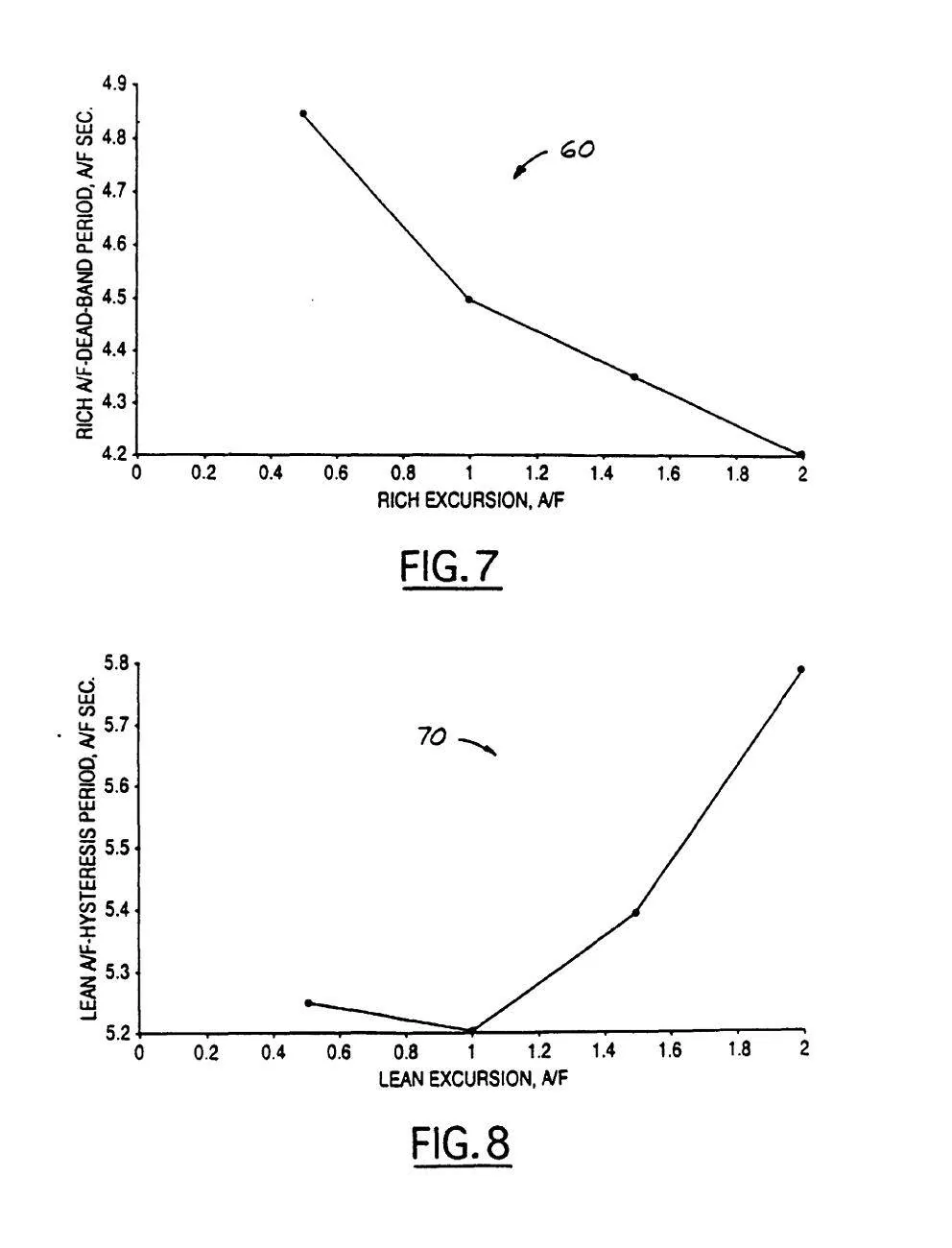
FAOSC Rich excursion correction factor

FAOSC Lean excursion correction factor

The referred to figures these correction factors were derived from.

Im pretty sure disabling FAOSC just changes from using these or something very similar, to a constant oxidizing and reducing species for the A/F Bias. Nothing to do with correcting for the age of sensors, but likely monitoring the age of the catalyst and its storage capacity to throw one of those efficiency codes.
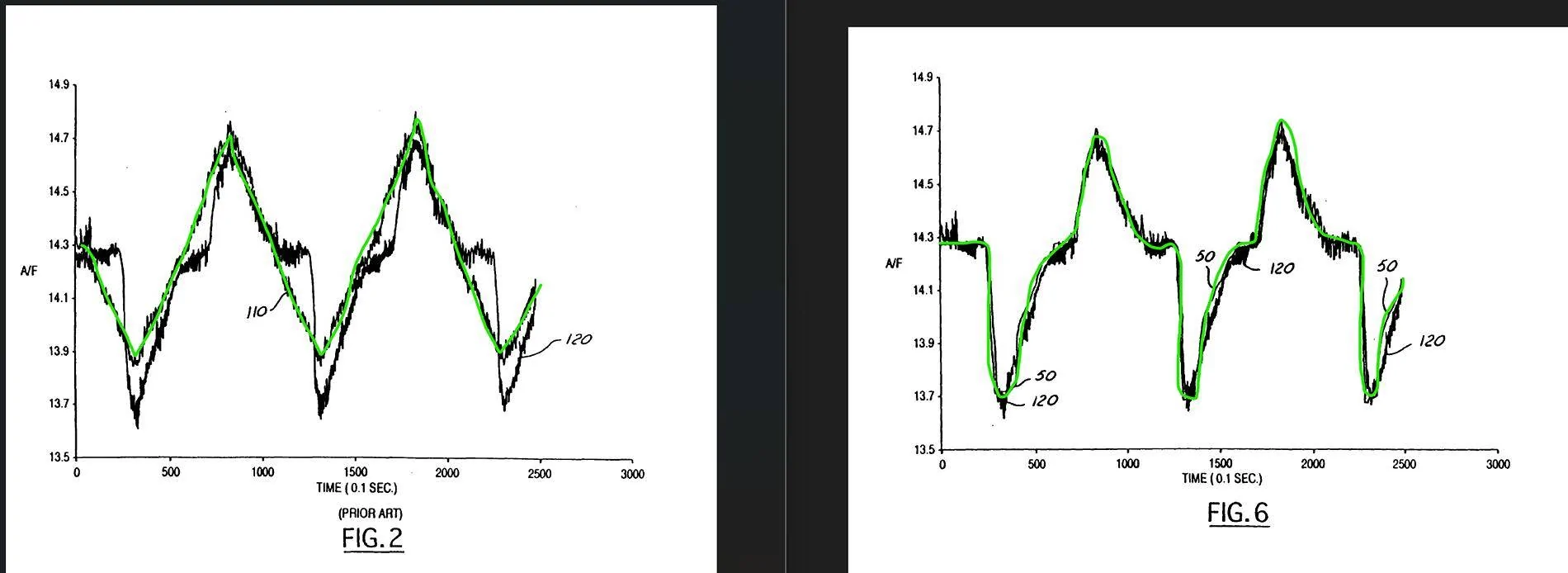
With out correction factor vs with correction factor post cat AFR model vs measured.

A fore-aft oxygen sensor (FAOS) fuel control system. The control system uses an A/F bias for trimming the closed-loop operating point of a pre-catalyst A/F feedback controller. The A/F bias is generated by a proportional-integral feedback signal from a post-catalyst EGO sensor feedback controller fed by the output of a post-catalyst Exhaust Gas Oxygen (EGO) sensor.
A substantial time delay is associated with the post-catalyst feedback loop. Therefore, this control system is subject to some A/F errors. A/F errors result in catalyst breakthrough and higher emission levels, making it difficult to meet the stringent emission regulations.
In an attempt to improve the performance of the FAOS control system, it has been proposed to use a modelbased feedback controller. In the model-based system, the inputs to the system to be controlled are also applied to a model. The model is adaptively updated based upon a comparison between the output of the model and the output of the actual system. The output of the model is used to generate a real-time corrective signal to rapidly compensate for potential, or present, system response errors. The accuracy of the model is important to the success of the modelbased system.
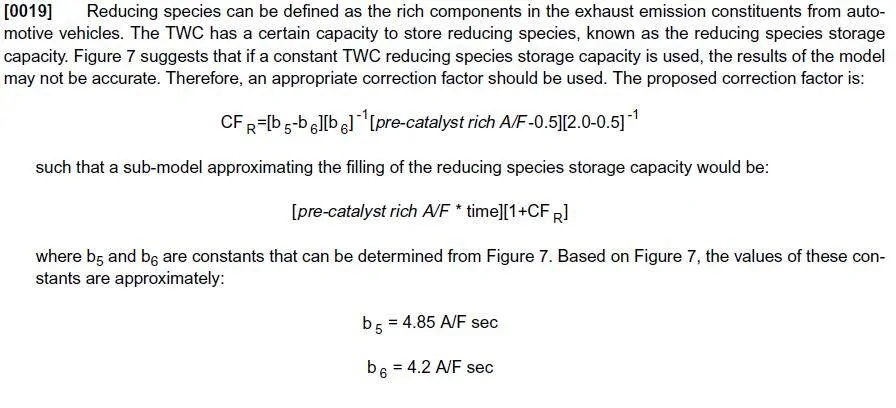
FAOSC Rich excursion correction factor
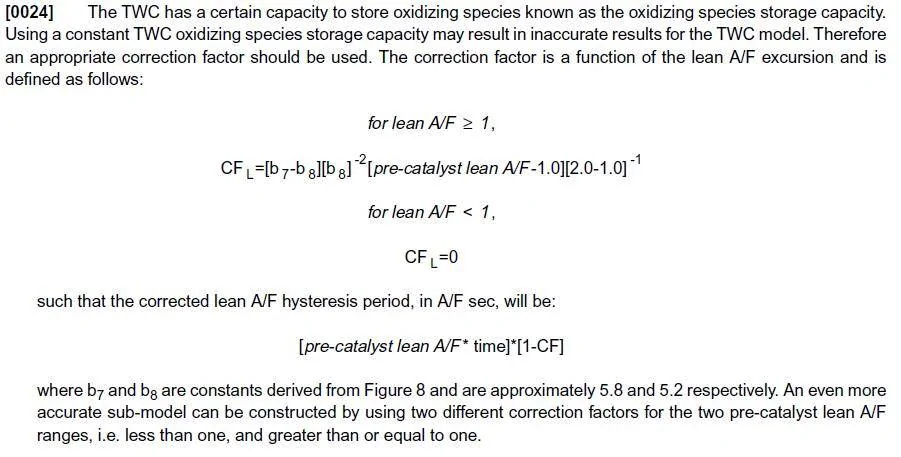
FAOSC Lean excursion correction factor
The referred to figures these correction factors were derived from.
Im pretty sure disabling FAOSC just changes from using these or something very similar, to a constant oxidizing and reducing species for the A/F Bias. Nothing to do with correcting for the age of sensors, but likely monitoring the age of the catalyst and its storage capacity to throw one of those efficiency codes.
With out correction factor vs with correction factor post cat AFR model vs measured.
Sponsored
Last edited: