
Sponsored

GM is pulling back on EVs

Burkey

Well-Known Member
Joined
Feb 9, 2016
Threads
87
Messages
5,524
Reaction score
3,512
Location
Australia
Vehicle(s)
2016 Mustang GT
Vehicle Showcase
1
Hello; Interesting. Back in the science is cancelled thread climate models were brought up. I found instances where the models were not closely matching what actually happened and posted the information.
Did not save the links however. Should still be in that thread someplace before page 600. If memory serves one where the model was fed historical data and missed modern day outcomes by a significant fraction. Another where the creator of a model acknowledged an issue.

I worked with testing an animal population model back in 1993. Not writing just as an early end user.
So because some models were “faulty“, they must all be faulty?
Is that your position?

Do you think it’s possible that the models might improve, year on year, which might explain why they “keep changing the narrative” in your words….

I honestly don’t think you appreciate just how much data and resolution goes into these models. Last I heard they were typically using upwards of 500,000 lines of code, sometimes over a million.

“ The Met Office Hadley Centre’s three new Cray XC40 supercomputers, for example, are together capable of 14,000 trillion calculations a second. The timelapse video below shows the third of these supercomputers being installed in 2017.”

“For the atmosphere component of climate models, a time step of around 30 minutes “seems to be a reasonable compromise” between accuracy and computer processing time, says Williams:

“Any smaller and the improved accuracy would not be sufficient to justify the extra computational burden. Any larger and the model would run very quickly, but the simulation quality would be poor.”

Bringing all these pieces together, a climate model can produce a representation of the whole climate system at 30-minute intervals over many decades or even centuries.”

A decent read to be had here. It may also help explain your lack of confidence in the older models.

https://www.carbonbrief.org/qa-how-do-climate-models-work/

You can either chose to educate yourself or just continue believing what you already believe. Yes, the latter is much easier of course.
Sponsored


 

sk47

Well-Known Member
Joined
Nov 12, 2020
Threads
32
Messages
6,833
Reaction score
3,176
Location
North Eastern TN
First Name
Jeff
Vehicle(s)
Chevy Silverado & Nissan Sentra SE
Hello; I am not good at searching this site but did find two of my old threads. Both about the same link. Tried to open that old link and discover it no longer exists. I will attempt to copy and paste my two posts from the Science is cancelled thread back in May 28, 2021 post #1654.

Warming effect of greenhouse gases 'has been overestimated' (msn.com)

Hello; This one ought to strike a nerve. I just this morning was trying to point out that computer models might be flawed and this afternoon was given a gift.


From the article "Antarctic ice has revealed that pre-industrial air pollution was worse than thought, suggesting climate models have overstated the warming from greenhouse gases. "

May 28,2021 post #1654


May 28, 2021 post #1,661

sk47 said:

Warming effect of greenhouse gases 'has been overestimated' (msn.com)

Hello; This one ought to strike a nerve. I just this morning was trying to point out that computer models might be flawed and this afternoon was given a gift.


From the article "Antarctic ice has revealed that pre-industrial air pollution was worse than thought, suggesting climate models have overstated the warming from greenhouse gases. "

"

Hello; Here is another quote from the article.

"Specifically, in order to account for the observed increase in surface temperatures since then, models may have overestimated the warming from greenhouse gases.

While the world is 'clearly' warming, as the team put it, the new findings suggest that it might not be heating up at quite the rate that was previously feared."

Hello; Now this does not do away with the idea the earth has warmed, it does appear to cast at least some question about the CO2 greenhouse gas contribution. The potential implication being the danger so loudly broadcast about fossil fuels and their CO2 is overstated.
The report is not saying CO2 is neutral as I understand it, but is perhaps having a lesser effect than we have been led to believe. this should take some pressure off fossil fuels, especially the cleaner natural gas.

A question come to mind. The computer models we hear so much about have to have data input. Then the equations in the programing do their thing and make predictions based on the data. An old saying about data is; trash in = trash out. I am not a computer programer so can not say from experience how important it is for the accuracy of a prediction to have good input data.
I would think it is extremely important myself. So if the power of CO2 is off the mark by some factor, then it would seem the predictions will be off.
This following is a guess based on what is seen in active weather forecasts. In particular storms such as hurricanes. There are a number of models used to predict hurricane strength and paths. In the first hours all the models are pretty close together. After a day the predictions begin to diverge. Two or three days out the models can be significantly different. Now this is understandable since as time goes on the multitude of random chance events will change things.
So two questions come up. One is why are there so many computer models for tracking hurricanes in the first place? If the "science" of the models is good then it would seem eventually one would prove to be the better and the others not used anymore.

The second is what will a mistake in the effect of CO2 as a greenhouse gas do to the model predictions? I get that just as in the early hours of a hurricane track the models may be close to what is being observed. What I question is how a fundamental error in the data will do to the accuracy of a prediction in ten years, in fifteen years, in 20 years and so on.
 

sk47

Well-Known Member
Joined
Nov 12, 2020
Threads
32
Messages
6,833
Reaction score
3,176
Location
North Eastern TN
First Name
Jeff
Vehicle(s)
Chevy Silverado & Nissan Sentra SE
So because some models were “faulty“, they must all be faulty?
Is that your position?

Do you think it’s possible that the models might improve, year on year, which might explain why they “keep changing the narrative” in your words….

I honestly don’t think you appreciate just how much data and resolution goes into these models. Last I heard they were typically using upwards of 500,000 lines of code, sometimes over a million.
Hello; I will not pretend to be able to write code. I do not know how significant 500,000 lines of code may be. What little I was shown about code when i took some early training many years ago was that it takes a lot of bits or is it bytes to represent even simple things such as alphabet letters. The four sentences above may fill up most of a page if shown in code, I think.

I cannot support this yet but am somewhat confident that however many data points a computer model uses to make predictions, nature itself is of multitudes more data points in real life. If a model has a million inputs then natural events may have billions or even trillions of inputs. Perhaps even more than trillions.

How a computer in a car runs the fuel injection and timing might be an example. A hand full of sensors average out a large number of individual events when an engine runs. Works well enough for an ICE engine as the events are so very closely repeated over and over again.

I guess a notion called the butterfly effect might fit in here. Thing is there may be only a few Butterflys in a model, but hundreds of thousands of butterflies in nature.
 

sk47

Well-Known Member
Joined
Nov 12, 2020
Threads
32
Messages
6,833
Reaction score
3,176
Location
North Eastern TN
First Name
Jeff
Vehicle(s)
Chevy Silverado & Nissan Sentra SE
Flawed Climate Models | Hoover Institution Flawed Climate Models

“The ultimate test for a climate model is the accuracy of its predictions. But the models predicted that there would be much greater warming between 1998 and 2014 than actually happened. If the models were doing a good job, their predictions would cluster symmetrically around the actual measured temperatures. That was not the case here; a mere 2.4 percent of the predictions undershot actual temperatures and 97.6 percent overshot, according to Cato Institute climatologist Patrick Michaels, former MIT meteorologist Richard Lindzen, and Cato Institute climate researcher Chip Knappenberger. Climate models as a group have been “running hot,” predicting about 2.2 times as much warming as actually occurred over 1998–2014. Of course, this doesn’t mean that no warming is occurring, but, rather, that the models’ forecasts were exaggerated.”

Conclusions

“If someone with a hand-held stopwatch tells you that a runner cut his time by 0.00005 seconds, you should be skeptical. If someone with a climate model tells you that a 0.036 Wm–2 CO2 signal can be detected within an environment of 150 Wm–2 error, you should be just as skeptical.”

“As Willie Soon and his coauthors found, “Our current lack of understanding of the Earth’s climate system does not allow us to determine reliably the magnitude of climate change that will be caused by anthropogenic CO2 emissions, let alone whether this change will be for better or for worse.””
 

sk47

Well-Known Member
Joined
Nov 12, 2020
Threads
32
Messages
6,833
Reaction score
3,176
Location
North Eastern TN
First Name
Jeff
Vehicle(s)
Chevy Silverado & Nissan Sentra SE
Are Climate Models Overpredicting Global Warming? | Cato Institute

“But the United Nations’ Intergovernmental Panel on Climate Change simply averages up the 29 major climate models to come up with the forecast for warming in the 21st century, a practice rarely done in operational weather forecasting. As dryly noted by Eyring and others “there is now evidence that giving equal weight to each available model projection is suboptimal.””

“The first big error is over the entire Southern Ocean, the huge circumpolar body of water separating South America, Africa and Australia from Antarctica. The 29 models calculate, on average, it to be much less cold than it actually is, with large swaths 2.7 degree Fahrenheit or more warmer than reality. Given that the southern margin of the Southern Ocean is mostly sea‐ice, this means that vast areas of real‐world ice are simulated as being liquid water.”

“There’s a current theory that some of the heat from each El Nintilde;o is retained in the atmosphere, and temperatures do not return to their previous value once an El Nintilde;o goes away. As a result, surface temperatures appear to jump with each big one. Climate models that substantially underestimate the natural cold upwelling have a propensity to create El Nintilde;o‑like conditions, which may explain their tendency to predict too much global warming.”

“But one of the models actually works. According to University of Alabama’s John Christy and his colleagues, only the Russian model, designated INM-CM4, gets things right. So why not weight heavily on the model that is working? Perhaps because it has less global warming in it than all the other U.N. models?”
 

Sponsored

sk47

Well-Known Member
Joined
Nov 12, 2020
Threads
32
Messages
6,833
Reaction score
3,176
Location
North Eastern TN
First Name
Jeff
Vehicle(s)
Chevy Silverado & Nissan Sentra SE
Climate Models Are Uncertain, but We Can Do Something About It - Eos

“We argue that the huge and successful effort to develop physical understanding of the Earth system needs to be complemented by greater effort to understand and reduce model uncertainty. Without such reductions in uncertainty, the science we do will not, by itself, be sufficient to provide robust information for governments, policy makers, and the public at large.”

“As British statistician George Box famously said, “all models are wrong, but some are useful.” Less known is what Box said next: “The scientist cannot obtain a ‘correct’ [model] by excessive elaboration” “

“So how much wiggle room do we have in our models, assuming we have decided what the key processes are? In a model with, conservatively, 20 important and uncertain processes, each associated with a single uncertain parameter, the model outputs can be sampled from 20-dimensional space. This is a hypercube with around a million corners.”

“This complex space remains almost entirely unexplored because limited computational resources usually force research teams to settle on one “variant” of the model arrived at through tuning.”

“Every model developer recognizes the problem of trying to find a plausible model as the “balloon-squeezing problem.” Yes, we’ve squeezed the balloon at one point to generate a plausible model when judged against particular observations, but this creates a bulge of less plausible solutions somewhere else.”

“Scientists appear to have no option but to carry on this way, despite evidence that our progress toward reducing climate model uncertainty is very slow and knowing that we are overlooking many uncertainties. Models with higher complexity will undoubtedly have greater fidelity for some problems, but it is doubtful whether such model “elaboration” will get us any closer to reducing the overall uncertainty. In fact, it may have the opposite effect [Knutti and Sedláček, 2012].”

Hello; Realized I was pulling much of the article into quotes so I stopped. Guess this one is a read for yourself.
 

martinjlm

Retired from GM
Joined
Feb 4, 2018
Threads
15
Messages
1,669
Reaction score
3,341
Location
Detroit
Vehicle(s)
2017 Camaro Fifty SS Convertible
Attempt to get back somewhere near thread topic…

“GM is pulling back from electrifificstion”

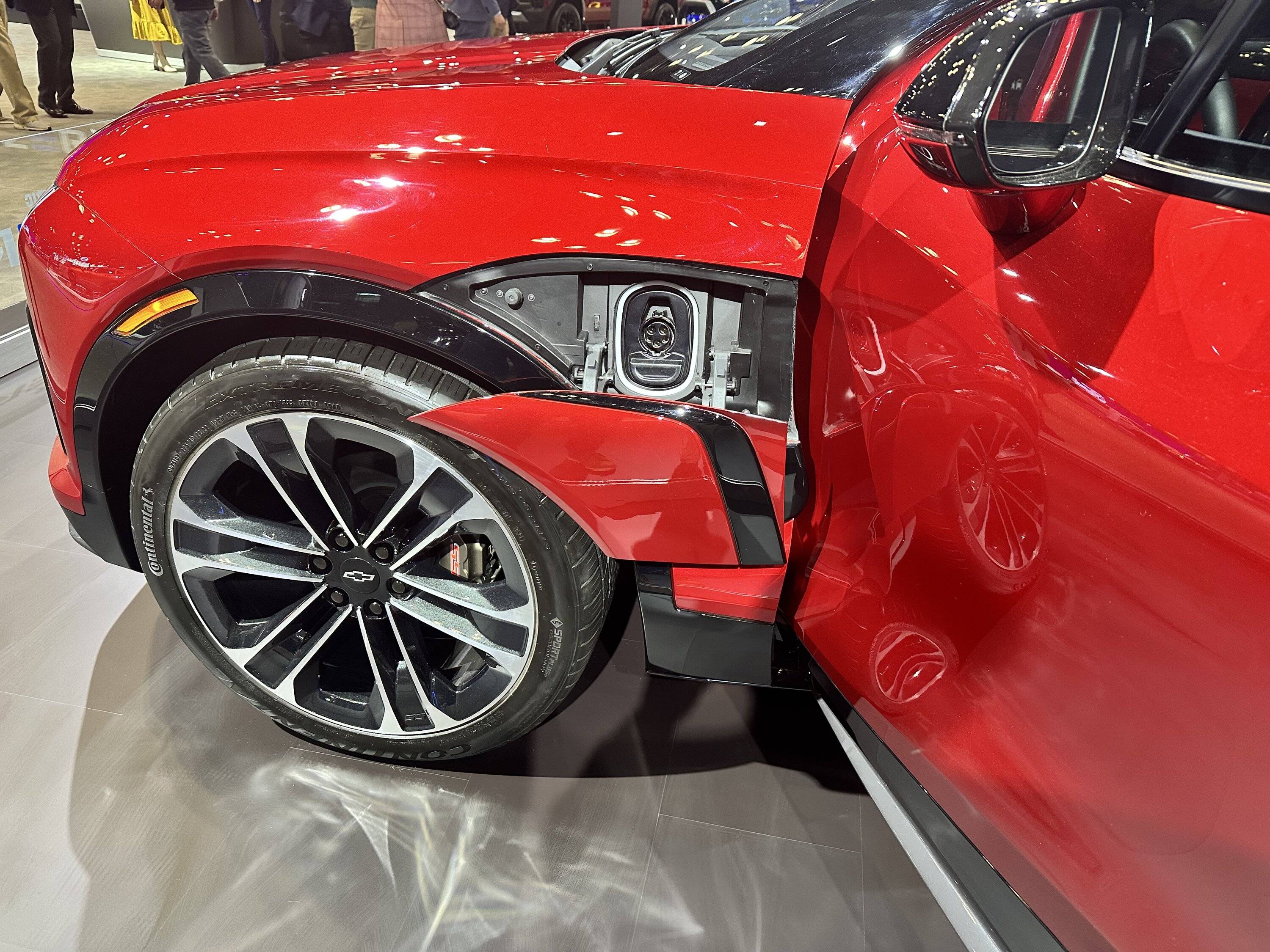
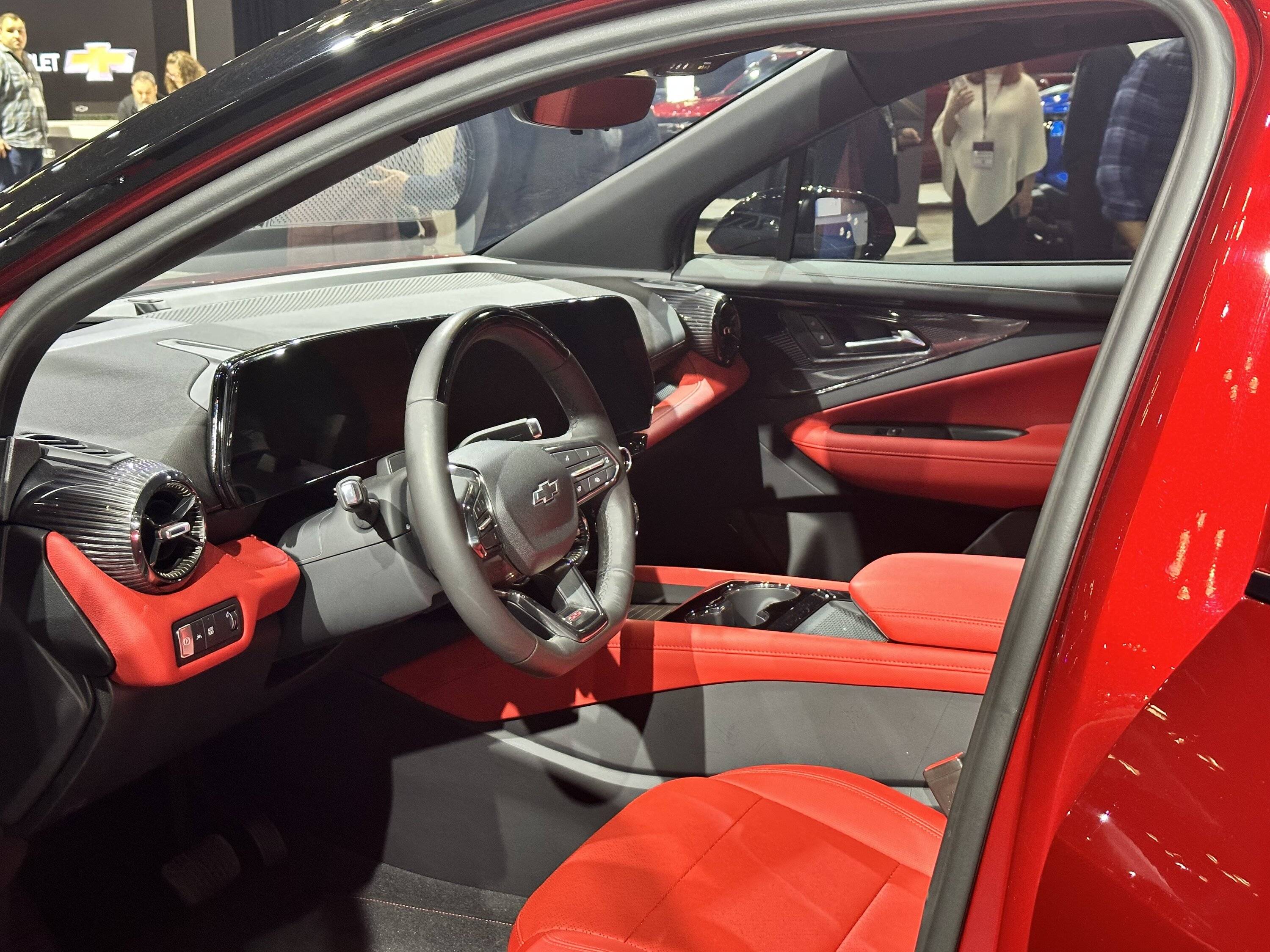
I’m attending press events at the NY International Auto Show. Here are some shots from the Chevrolet stand. Not looking like pulling back. The Silverado EV is also here. I’ll add shots of that after I’m done with the meetings and press conferences that I’m in.
0BF5871E-DA89-424D-A4A7-D9CA05D26C66.jpeg
C558F91A-EB60-48D6-A827-6F4C93EE4CB8.jpeg
E2F30CB0-CE07-4A63-A7EF-35BDFCBF1901.jpeg
9FEC8631-DF1B-474D-954C-C440F84A134E.jpeg


6E5AE33E-D986-486E-BBD1-F9862FDCA3AE.jpeg
 

Burkey

Well-Known Member
Joined
Feb 9, 2016
Threads
87
Messages
5,524
Reaction score
3,512
Location
Australia
Vehicle(s)
2016 Mustang GT
Vehicle Showcase
1
Hello; I will not pretend to be able to write code. I do not know how significant 500,000 lines of code may be. What little I was shown about code when i took some early training many years ago was that it takes a lot of bits or is it bytes to represent even simple things such as alphabet letters. The four sentences above may fill up most of a page if shown in code, I think.

I cannot support this yet but am somewhat confident that however many data points a computer model uses to make predictions, nature itself is of multitudes more data points in real life. If a model has a million inputs then natural events may have billions or even trillions of inputs. Perhaps even more than trillions.

How a computer in a car runs the fuel injection and timing might be an example. A hand full of sensors average out a large number of individual events when an engine runs. Works well enough for an ICE engine as the events are so very closely repeated over and over again.

I guess a notion called the butterfly effect might fit in here. Thing is there may be only a few Butterflys in a model, but hundreds of thousands of butterflies in nature.
But that’s the point isn’t it?
It doesn’t have to be perfect, it just needs to be accurate enough to make reliable predictions that fall within the acceptable range of uncertainty.

Predicting that it’s going to warm by say 1.0* per decade when it actually warms by say 0.8*, might well be near enough. It would be different if some models were predicting cooling of 5* while others were predicting warming of 10*. None of us would have any faith in any of it. Fortunately, there’s an abundance of different models, using slightly different inputs and they all converge on very similar results.


I don’t claim to have extensive knowledge because it’s not my field of study. Maybe that’s why we have to rely on on the experts in the respective fields. They all seem to agree that the models represent an accurate depiction of reality.
Climate Models Are Uncertain, but We Can Do Something About It - Eos

“We argue that the huge and successful effort to develop physical understanding of the Earth system needs to be complemented by greater effort to understand and reduce model uncertainty. Without such reductions in uncertainty, the science we do will not, by itself, be sufficient to provide robust information for governments, policy makers, and the public at large.”

“As British statistician George Box famously said, “all models are wrong, but some are useful.” Less known is what Box said next: “The scientist cannot obtain a ‘correct’ [model] by excessive elaboration” “

“So how much wiggle room do we have in our models, assuming we have decided what the key processes are? In a model with, conservatively, 20 important and uncertain processes, each associated with a single uncertain parameter, the model outputs can be sampled from 20-dimensional space. This is a hypercube with around a million corners.”

“This complex space remains almost entirely unexplored because limited computational resources usually force research teams to settle on one “variant” of the model arrived at through tuning.”

“Every model developer recognizes the problem of trying to find a plausible model as the “balloon-squeezing problem.” Yes, we’ve squeezed the balloon at one point to generate a plausible model when judged against particular observations, but this creates a bulge of less plausible solutions somewhere else.”

“Scientists appear to have no option but to carry on this way, despite evidence that our progress toward reducing climate model uncertainty is very slow and knowing that we are overlooking many uncertainties. Models with higher complexity will undoubtedly have greater fidelity for some problems, but it is doubtful whether such model “elaboration” will get us any closer to reducing the overall uncertainty. In fact, it may have the opposite effect [Knutti and Sedláček, 2012].”

Hello; Realized I was pulling much of the article into quotes so I stopped. Guess this one is a read for yourself.
Why would anyone who’s interested in finding out about science, go to the website of an anti-science propaganda machine?
Would you consult the flat Earth society to find out whether the Earth is flat?
You might laugh but the core tactics rely on the same principles.

EDIT:
Take note of the names at the top of this peer-reviewed paper (yes, Cato people). Then take a moment to consider that these “sceptics” (who seemingly deny the accuracy of models) then use models to demonstrate that the warming effect might be lower than predicted by the IPCC.
The lay person would surely have to then ask how they reached that conclusion….. if the models don’t work….
or do they only work when they work?
It’s also interesting that they spend no time denying that CO2 influences global temp. That’s the problem with publishing articles for peer review. You have to use actual data rather than opinions.
I’m not quite sure how the Cato institute reconciles seeding public distrust of climate models whilst employing scientists that use them. But hey, I’m sure they’ve got your best interests at heart.

https://www.int-res.com/articles/cr2003/23/c023p001.pdf
 
Last edited:

Burkey

Well-Known Member
Joined
Feb 9, 2016
Threads
87
Messages
5,524
Reaction score
3,512
Location
Australia
Vehicle(s)
2016 Mustang GT
Vehicle Showcase
1
It’s people like this why I and so many don’t really support this whole EV and green initiatives and look at it more as an agenda than anything else.

https://thedalesreport.com/trends/j...minent-domain-to-fast-track-solar-wind-farms/
Maybe try explaining that to the fossil fuel industry who’ve been doing exactly that for decades.

You’d think that the rules would be the same for all players.

https://grist.org/energy/eminent-do...ls-could-it-do-the-same-for-renewable-energy/
 

Sponsored
OP
OP
AZlb5.0

AZlb5.0

Banned
Banned
Banned
Joined
Nov 16, 2022
Threads
42
Messages
1,157
Reaction score
1,367
Location
Arizona
First Name
Carlos
Vehicle(s)
18 GT Premium
Last edited:

kz

Well-Known Member
Joined
Oct 26, 2014
Threads
62
Messages
4,596
Reaction score
2,921
Location
West Chester, OH
Vehicle(s)
Mustangs & F150
Btw - on topic (sort of ) - GM is second in electric EV sales in US - ahead of Ford (mostly because of Bolt EUV). They're totally pulling back.
 

Burkey

Well-Known Member
Joined
Feb 9, 2016
Threads
87
Messages
5,524
Reaction score
3,512
Location
Australia
Vehicle(s)
2016 Mustang GT
Vehicle Showcase
1
So two wrongs make a right. People like you and I can’t sit across a table and come to a happy medium where we can exist together. So you’re saying it’s ok then that’s what I’m gathering here.
I didn’t say that at all. My point was that you can’t oppose the idea based solely on the means of energy production.

Generally speaking I oppose it in all forms… BUT…there comes a time when it’s necessary also. Eg, building a new highway, extending an airport or hospital etc etc.

My point would be that if we’re making exceptions for fossil fuel industries, we need to extend that to renewables. Or, we stop on both counts.
 

K4fxd

Well-Known Member
Joined
Apr 2, 2020
Threads
121
Messages
13,455
Reaction score
12,262
Location
NKY
First Name
Dan
Vehicle(s)
2017 gt, 2002 FXDWG, 2008 C6,
It takes at least 500 square acres of solar panels to make 100 mega watts.

There is much better use for land in these amounts.

Solar farms in amounts needed to cover lost coal power plants will force even higher food costs and shortages.

https://www.seia.org/initiatives/land-use-solar-development
 

K4fxd

Well-Known Member
Joined
Apr 2, 2020
Threads
121
Messages
13,455
Reaction score
12,262
Location
NKY
First Name
Dan
Vehicle(s)
2017 gt, 2002 FXDWG, 2008 C6,
How many wind turbines can be put on an acre of land? One wind turbine can require up to 80 acres of land, and each turbine will generate around 2.5 MW.
In Indiana they seem to be spaced at 20 acre intervals, the mountains of California at about 2 acres.
https://landgate.com/news/2021/10/07/does-my-land-qualify-for-a-wind-lease/

Lots of wind mills and interconnecting wire to make up for lost coal generating capacity.

It's just not feasible in the time frame the zealots want.

Also not friendly to birds.

https://www1.eere.energy.gov/wind/pdfs/birds_and_bats_fact_sheet.pdf
Sponsored


Top