Sponsored

Spun rod bearing..

mustang1

Well-Known Member
Joined
Feb 12, 2016
Threads
6
Messages
1,492
Reaction score
267
Location
Dallas, TX
Vehicle(s)
2016 Mustang GT
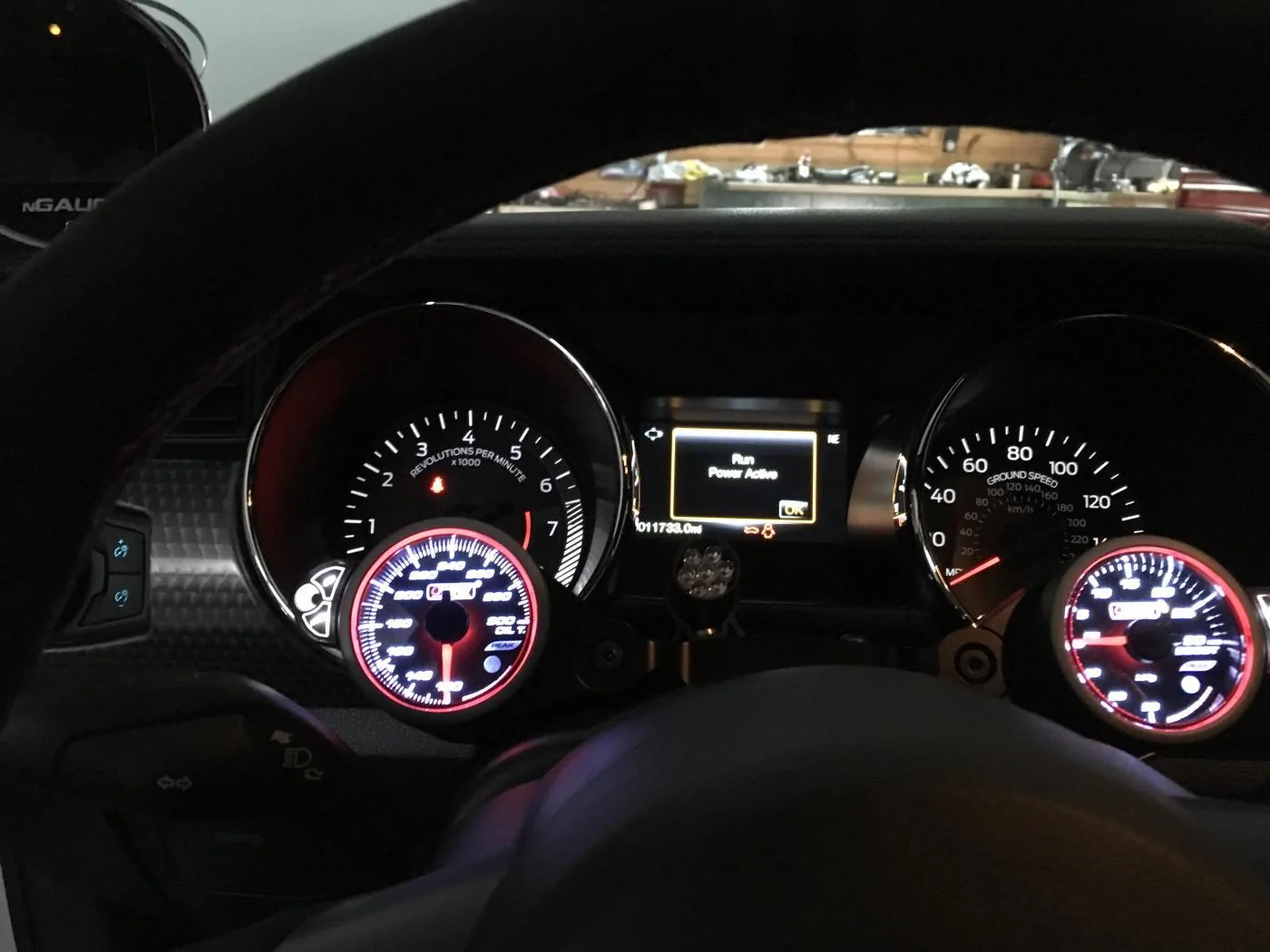
... I've installed a independent oil temp sensor and gauge on my replacement engine and notice the stock dummy gauge is way ahead of actual temps from my gauge. The stock dash gauge is extrapilated or estimated from other temp sensors like cyl and ECT, there is no sensor on the motor for oil temp on ours. I would drive at least 15 miles before hammering on it now. My new gauge shows about 170 f after 15 mils or so give or take.
what oil temp sensor and gauge did you install ?
Sponsored


Roh92cp

Well-Known Member
Joined
Jun 27, 2015
Threads
79
Messages
2,896
Reaction score
1,174
Location
Fort Kent Maine
First Name
Shawn
Vehicle(s)
OW GTPP Whipple
OP
OP

F1scamp

Well-Known Member
Joined
May 30, 2016
Threads
23
Messages
973
Reaction score
284
Location
Upstate Ny
Vehicle(s)
16 Mustang GT
That was me:headbonk:I had idled for a couple minutes then drove 4-5 miles at that time the oil temp just reached the bottom of the normal range. I then ripped it with my brother 1-3 I believe and at the top of third got the low oil warning light and looked and had 0 oil pressure and was still at 6k. I've installed a independent oil temp sensor and gauge on my replacement engine and notice the stock dummy gauge is way ahead of actual temps from my gauge. The stock dash gauge is extrapilated or estimated from other temp sensors like cyl and ECT, there is no sensor on the motor for oil temp on ours. I would drive at least 15 miles before hammering on it now. My new gauge shows about 170 f after 15 mils or so give or take.

I know its the middle of winter, but how do you like the spec clutch?
 

dubster99

Well-Known Member
Joined
Aug 12, 2014
Threads
45
Messages
2,517
Reaction score
436
Location
Nor*Cal
Vehicle(s)
2015 Ingot Silver GT PP
What was your mounting solution for those gauges there? I went with the roush vent pod for my boost gauge, but if I add a second gauge I want something like that.
 

Roh92cp

Well-Known Member
Joined
Jun 27, 2015
Threads
79
Messages
2,896
Reaction score
1,174
Location
Fort Kent Maine
First Name
Shawn
Vehicle(s)
OW GTPP Whipple
It initially had zero chatter, but as of 250 miles has a slight chatter on slipping it out. Very mild for sure, but I hate chatter on a street car. Otherwise it's pressure si slightly harder than stock and with the factory clutch spring back in it's like stock. It rated to hold a shit load of torque like 710 so itmshould hold the whipple with little effort. If I had to do it again maybe I'd try the spec 2 instead of th higher rated Spec 2 plus.
 

Sponsored

Roh92cp

Well-Known Member
Joined
Jun 27, 2015
Threads
79
Messages
2,896
Reaction score
1,174
Location
Fort Kent Maine
First Name
Shawn
Vehicle(s)
OW GTPP Whipple

mustang1

Well-Known Member
Joined
Feb 12, 2016
Threads
6
Messages
1,492
Reaction score
267
Location
Dallas, TX
Vehicle(s)
2016 Mustang GT
... I've installed a independent oil temp sensor and gauge on my replacement engine and notice the stock dummy gauge is way ahead of actual temps from my gauge. The stock dash gauge is extrapilated or estimated from other temp sensors like cyl and ECT, there is no sensor on the motor for oil temp on ours. I would drive at least 15 miles before hammering on it now. My new gauge shows about 170 f after 15 mils or so give or take.
It would be good if this was automated. Maybe have an ODB2 phone app that will alert if the driver attempts to WOT or exceed a certain RPM when the engine oil temp (or estimated temp) is either too cold or too hot.

Torque Pro appears to have alarms. I haven't bought the app so I am not sure how they work.

For aftermarket oil temp sensor, the output could connect to something like this, that connects to Torque,

https://torque-bhp.com/wiki/Arduino

or a dedicated circuit that lights LEDs and sounds an alert.
 
OP
OP

F1scamp

Well-Known Member
Joined
May 30, 2016
Threads
23
Messages
973
Reaction score
284
Location
Upstate Ny
Vehicle(s)
16 Mustang GT
Well i finally took the time to tear it all the way down. Warning, ugly pictures ahead..

My best guess is something caused cyl#5 rod bearing to fail and start flaking apart. This blocked the oil passage in the crank and starved #2, 6 bearing. #2 spun and seized. I guess thats a testament to how strong these rods are, pin still moves freely in the piston, no signs of bending of the rod. Also did not find any signs of detonation on pistons, all the rings are free, cylinder walls look good.

Number # 5 rod bearing

 
OP
OP

F1scamp

Well-Known Member
Joined
May 30, 2016
Threads
23
Messages
973
Reaction score
284
Location
Upstate Ny
Vehicle(s)
16 Mustang GT
Number 2 main cap bearing. I assume it looks so bad because of the heat and distortion the rod bearing seizing caused on the crank.


The rest of the mains and the rod bearings actually look excellent. Kinda crazy.
 

Sponsored

GT Pony

Well-Known Member
Joined
Mar 13, 2015
Threads
77
Messages
9,402
Reaction score
4,839
Location
Pacific NW
Vehicle(s)
2015 GT Premium, Black w/Saddle, 19s, NAV
Most people pick oil brands by marketing strengths and name recognition, and viscosity by popular vote. Real objective data and testing done on oils is hard to find, and when done is still doubted, becuase people want to believe in their name brand and decisions. Oils chief objective is to prevent metal to metal contact via a film or oil wedge. This has less to do with viscosity and more to do oils base stock and most important is the additive packages.

Read this independent testing data on our currrent oil market and decide for yourself. Test is conducted on a controlled devise that measure the film stenght of an oil and its ability rated in PSI as to when it breaks down causing metal to metal contact. The higher the PSI rating the better protection the oil provided.
https://540ratblog.wordpress.com/2013/06/20/motor-oil-wear-test-ranking/
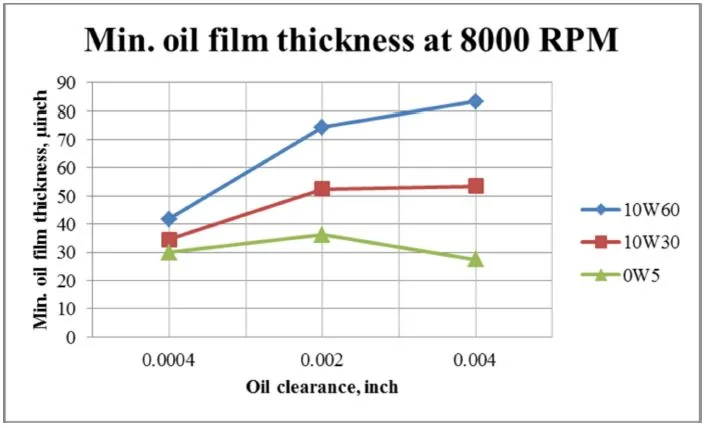
Keep in mind that rod and crankshaft bearings are riding on a minimum oil film thickness that is only microns in depth (hydrodynamic lubrication). A thicker viscosity oil will help increase that protective oil film thickness to prevent metal-to-metal contact which is what starts the whole process of damage and failure. Especially when the oil gets hotter due to pushing the engine hard because the viscosity at max temperature is what's help keeping that minimum oil thickness higher.

Oil's film strength only helps reduce wear and damage once the metal-to-metal contact starts ... but the goal is to not ever get to that point.

So there are really two factors to consider. The best way to go would be to pick an oil that ranked higher for higher film strength ("anti-wear") that is also a bit higher in viscosity, especially if it's going into a motor that's being pushed really hard that's going to raise the oil temperature quite a ways above normal driving conditions.
 
Last edited:

GT Pony

Well-Known Member
Joined
Mar 13, 2015
Threads
77
Messages
9,402
Reaction score
4,839
Location
Pacific NW
Vehicle(s)
2015 GT Premium, Black w/Saddle, 19s, NAV
So I'm going to chime in here as a non-oil expert just to repeat some things I've read after researching this a few days. You all are free to refute or reject them them, in fact I encourage you to so I learn more:

- Too many people say "thicker oil protects better" because it keeps oil pressure up. In reality, more oil pressure doesn't mean more flow, it means less. Less flow isn't something you necessarily want when you're running hotter.

Thoughts?
To clarify, that's only true if the positive displacement oil pump is in pressure relief.

That said, it's true you don't want an oil that's so thick that it makes the oil pump hit pressure relief at much lower RPM when your beating the car near redline, because that will in turn cut down the oil flow volume going to the engine at very high RPM which can be a bad thing.

There's a balance to choosing the right viscosity for the driving conditions.
 
Last edited:

GT Pony

Well-Known Member
Joined
Mar 13, 2015
Threads
77
Messages
9,402
Reaction score
4,839
Location
Pacific NW
Vehicle(s)
2015 GT Premium, Black w/Saddle, 19s, NAV
Here is a quote from the oil test about oil viscosity, pressure and its effects.

" Oil “flow” is lubrication, and using thicker oil will simply reduce critical oil flow for no good reason. Plain bearings, such as rod and main bearings, are components that are not designed to be lubricated just by an oil film, they are designed to be lubricated by a flow of liquid oil. Keep in mind that oil pressure is NOT what keeps these parts separated. Oil pressure is a measurement of resistance to flow, and the pressure only serves to supply/move the oil to the clearance between the bearings and the crankshaft journals, and of course to move oil throughout the entire engine. The crankshaft journals and its bearing shells are kept separated by an incompressible hydrodynamic liquid oil wedge that is formed as the liquid oil is pulled in between the spinning parts. All liquids are incompressible (that’s how hydraulics work, including brakes with their watery thin brake fluid), so it does NOT matter what the viscosity of any liquid is. Thick oil or thin oil will create the same incompressible liquid oil wedge "
Actually, if you really dig into journal bearing hydrodynamic testing, it's been shown that thicker oils do indeed created a thicker minimum hydrodynamic layer in the bearing. When you're talking about a layer of oil that is only 30~80 microns deep, even 20~30 microns of more protection makes a difference to help prevent metal-to-metal contact which inevitably starts the failure to start.
Bearing Oil Film Thickness vs Oil Viscosity .webp
 

Roh92cp

Well-Known Member
Joined
Jun 27, 2015
Threads
79
Messages
2,896
Reaction score
1,174
Location
Fort Kent Maine
First Name
Shawn
Vehicle(s)
OW GTPP Whipple
Keep in mind that rod and crankshaft bearings are riding on a minimum oil film thickness that is only microns in depth (hydrodynamic lubrication). A thicker viscosity oil will help increase that protective oil film thickness to prevent metal-to-metal contact which is what starts the whole process of damage and failure. Especially when the oil gets hotter due to pushing the engine hard because the viscosity at max temperature is what's help keeping that minimum oil thickness higher.

Oil's film strength only helps reduce wear and damage once the metal-to-metal contact starts ... but the goal is to not ever get to that point.

So there are really two factors to consider. The best way to go would be to pick an oil that ranked higher for higher film strength ("anti-wear") that is also a bit higher in viscosity, especially if it's going into a motor that's being pushed really hard that's going to raise the oil temperature quite a ways above normal driving conditions.
To clarify, that's only true if the positive displacement oil pump is in pressure relief.

That said, it's true you don't want an oil that's so thick that it makes the oil pump hit pressure relief at much lower RPM when your beating the car near redline, because that will in turn cut down the oil flow volume going to the engine at very high RPM which can be a bad thing.

There's a balance to choosing the right viscosity for the driving conditions.
Actually, if you really dig into journal bearing hydrodynamic testing, it's been shown that thicker oils do indeed created a thicker minimum hydrodynamic layer in the bearing. When you're talking about a layer of oil that is only 30~80 microns deep, even 20~30 microns of more protection makes a difference to help prevent metal-to-metal contact which inevitably starts the failure to start.
This could go back and forth and obviously you prefer and advocate thicker oil gives better protection, and in that camp there's plenty of information to support that. Conversely there is also information and studies that show that oil flow (not to be confused with pressure) is what keeps these very close tolerance parts and surfaces from overheating, and this fresh consistant flow oil is what promotes a oil wedge that is stable. I'm not saying if someone uses 5-30 instead of 5-20 that they will toast there motor by any means. It's when it's taken to far (thinking thicker oil always protection more) thicker viscosity oil will not give the same protection overall on a street car where most of us are driving out of Boost more than 90% of the time.
 

Roh92cp

Well-Known Member
Joined
Jun 27, 2015
Threads
79
Messages
2,896
Reaction score
1,174
Location
Fort Kent Maine
First Name
Shawn
Vehicle(s)
OW GTPP Whipple
Number 2 main cap bearing. I assume it looks so bad because of the heat and distortion the rod bearing seizing caused on the crank.


The rest of the mains and the rod bearings actually look excellent. Kinda crazy.
It looks a little worse than my rod bearing did, but very similar.
Sponsored


Top