Sponsored

Whats in a tune file

Norm Peterson

corner barstool sitter
Joined
Jul 22, 2013
Threads
11
Messages
8,852
Reaction score
4,652
Location
On a corner barstool not too far from I-95
First Name
Norm
Vehicle(s)
'08 GT #85, '19 WRX
Once you know what the various fueling and ignition arrays look like, you'll need to know what an engine needs under various operating conditions so you can correlate the two so you'll have some idea what you have to tweak (and possibly how many of the adjoining cells). Being able to visualize the arrays as 3D surface maps without actually having to construct them from the arrays every time is a big help.

What I can tell you past that is that tuning for drivability is at least an order of magnitude more involved than tuning for WOT. Even 20 years ago in Accel/DFI's speed-density heyday that was true.


Norm
Sponsored

 

airfuel

Well-Known Member
Joined
Oct 11, 2016
Threads
12
Messages
643
Reaction score
323
Location
CT
Vehicle(s)
Not a Bullitt
Most good tuners have spent time at tuning courses and years of experience.

The OP sounds like he wants to buy some medical tools and do home surgery.

Get the book from Amazon as stated by DarkestHour above to see if this is something you want to do.
 

Dirtyblueshirt

Award Winning Taste™
Joined
Jun 18, 2015
Threads
33
Messages
1,371
Reaction score
579
Location
Anaheim, CA
First Name
Aaron
Vehicle(s)
2022 Ford Ranger Lariat Tremor
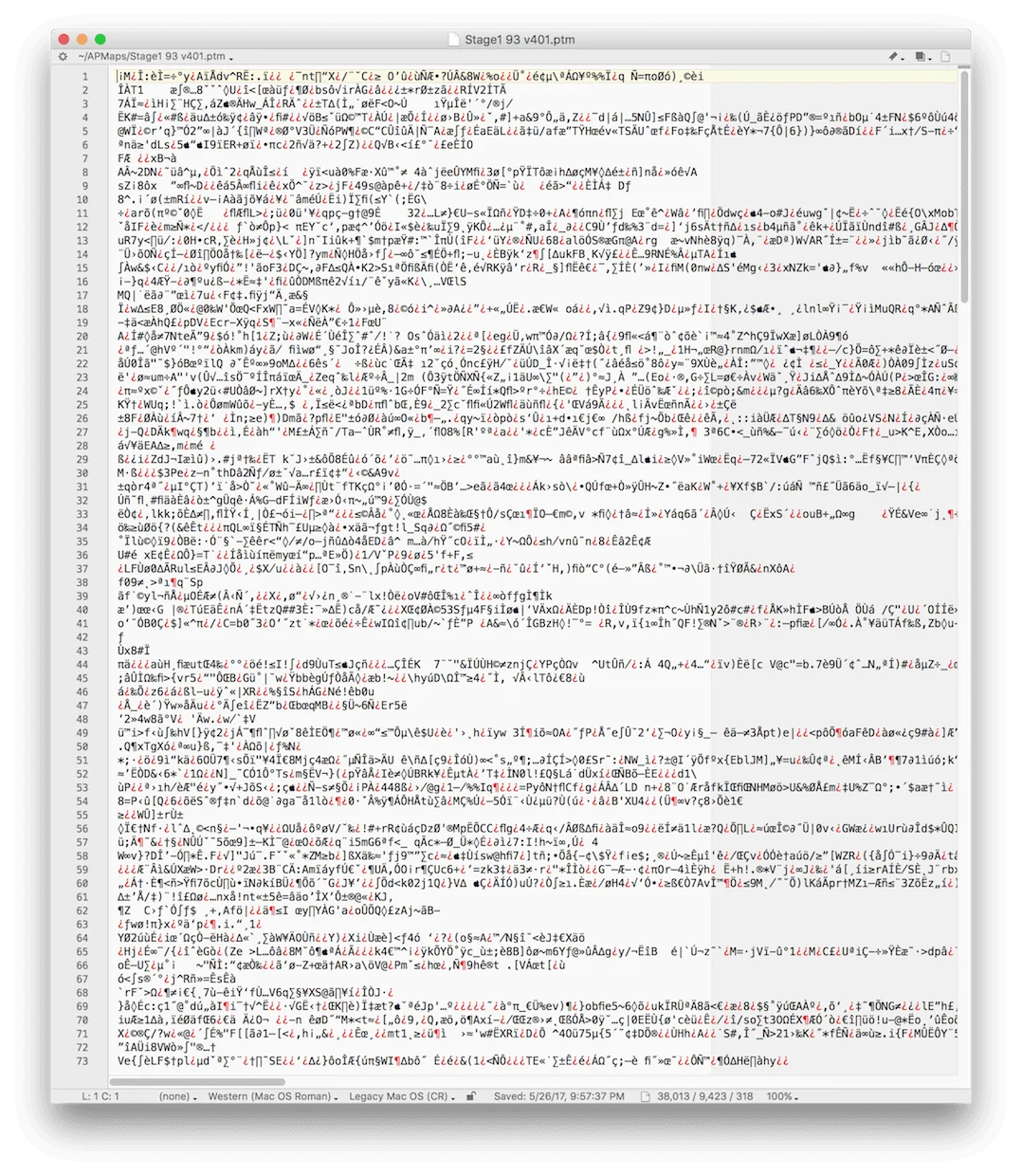
This is what's in a tune file.
Screen Shot 2017-07-01 at 12.15.42 PM.webp
 

markmurfie

Well-Known Member
Joined
Jun 6, 2015
Threads
15
Messages
1,320
Reaction score
626
Location
Hawaii
First Name
Mark
Vehicle(s)
2015 Ford Mustang GT
It's a specialized job. I'd guess they're much more engine management engineers than programmers.

Let me ask you, what is a stoichiometric rate? Don't Google the answer, don't ask another person, be honest.
From what I remember in high school chemistry/physics-
Stoichiometric is when a chemical reaction starts with amounts of all chemicals involved for a complete reaction so only products of the reaction remain.

Rate is a change in quantity compared to a variable. So it would refer to how quickly starting chemicals would need to be feed into the reaction to maintain a complete reaction for a given time.

So how much fuel and air should be going into cylinders for any engine RPM to obtain a complete burn.

Everyone things tuning engines has changed when it has not. What has changed is we no longer swap carb jets, rotate the distributor, or set the idle screw on the TB. Playing with the numbers in the tables is just having the ECU do these things for you and more. Making small adjustments and seeing how the engine reacts is quite safe. Besides now the ECU has parameters built in to prevent known unsafe conditions and with being able to log information that was never before available it's safer than ever to play with the values as you can really see what your changes are doing. I don't know why computers or the unknown intimidate some people so much. Its really way less complicated for a tuner than most think as thats a computers main job.
 

Oryx

Well-Known Member
Joined
May 14, 2017
Threads
6
Messages
143
Reaction score
74
Location
GA
Vehicle(s)
2017 GT
I think there is a difference here between what the OP is asking. I'm inclined to think he was more interested in reading and tinkering and poking around, not necessarily tuning his own engine.

The tune *data* itself is just maps. I'm not talking about the meaning of the data or the value in having a professional create it. In terms of reading and exploring that data, why would you put the guy down for mentioning he is a programmer? You are coming across as a little naĂŻve.

The engine is purely functional. Data from sensors goes in (throttle position, air flow from MAF, measurements from O2, etc..) and data comes out to drive the injectors, timing, etc...

Everything in programming essentially breaks down to input and output. There are simple functions (calculator) like add(x, y) where x and y are numbers, and then there are more complex functions (engine) like air_fuel(o2_reading, throttle_position) etc... but at the end of the day it's all simple math. I'm grossly oversimplifying things as there are dozens of various inputs, but when you compose them all together you ultimately get a set of parameters that pop out perform very simple procedures.

Sure, I would never try and tune my engine myself. I have no clue how to properly do that. I realize the OP hinted at that but cut the guy some slack.

I'd love to poke around. What would be more fun, to be honest, would be to literally diff the side-by-side products of a Lund flex fuel tune and a Livernois flex fuel tune, for example, to see the actual differences between the two. At the end of the day they are all writing data to memory in the ECU. Seeing what they are writing and manipulating would be very interesting.
Damn near wrote the same thing, but backed out of the discussion. I think it's great to dig in and learn, it's how how I learned to tune my first car (different platform). There's no harm in taking interest and learning. Poking around to understand something is different than uploading it to the vehicle - He sounds intelligent enough to understand the risks.
 

Sponsored

Oryx

Well-Known Member
Joined
May 14, 2017
Threads
6
Messages
143
Reaction score
74
Location
GA
Vehicle(s)
2017 GT

Dirtyblueshirt

Award Winning Taste™
Joined
Jun 18, 2015
Threads
33
Messages
1,371
Reaction score
579
Location
Anaheim, CA
First Name
Aaron
Vehicle(s)
2022 Ford Ranger Lariat Tremor

NoVaGT

Banned
Banned
Banned
Joined
Sep 29, 2016
Threads
115
Messages
5,621
Reaction score
4,377
Location
Northern Virginia
Vehicle(s)
2019 PP1 GT Kona
Ooooops....Ecoboost, not Coyote.
 
Last edited:

Dolsvt00

Well-Known Member
Joined
Sep 21, 2015
Threads
10
Messages
151
Reaction score
43
Location
Charleston
Vehicle(s)
15 5.0
Whats in it? Exactly what you think 0's and 1's (lol simplified) their dbase files coded to the platform IE HP, SCT, CMR. The interfaces for all of them are basically tree style very much like a registry editor for windows, in fact that's basically what they are. Hptuners is more of a tab style (you can download a demo for free) SCT advantage and CMR have security keys in order to access.

With SCT your access key serial updates via internet connection, you can buy whats called a pro racer package and tune only vehicles you own (for a fee) or if your an actual calibrator like me that works for a shop, you can buy dealer packages that allows you to access certain years and certain platforms.


HP tuners is relatively new in the ford game, the software is ok but they are missing a few things that would bake it better with their scalars, they are constantly evolving.

SCT has by far the best support, and parameter access if you have full access to the program, but anything you create belongs to SCT and they can pull your files publish them for others to use if they feel like it.

CMR, I quit messing with diablo a while back, it got to were they really only cared about mopar crap, and they would never fix the ridiculous crashes and bugs in the software.

HP and diablo CMR can pull files off a car if there not locked, this makes it easy for hack jobs to steal peoples tunes and claim it as their own. This happens more than you would think, and happens alot with roush cars. Hack jobbers will rip a roush tune which are for the most part OK but extremely weak just to get the timing tables, throttle body cal, torque tables, vct etc....


FYI, I hex edit, I modify Dbase, I write programs, and I tune Cars. I know what your asking and I hope ive given you some answers.

You dont find these discussions in the V8 worlds much because it will always be BLA BLA BLA FTW, but its only a matter of time now that theres a small liter turbo platform in ford performance cars. Somewhat educated millennials will be writing open source for calibration just like Subaru, Honda, and Mitsubishi already have with romraider evoscan and hondata. Thats a good thing, I hope it putts pressure on the big 3 tuning software developers to add some value to their products, such as better support.
 

DUNDEM

Well-Known Member
Joined
May 19, 2015
Threads
8
Messages
309
Reaction score
44
Location
Miami
Vehicle(s)
2015 Base EB PP
Whats in it? Exactly what you think 0's and 1's (lol simplified) their dbase files coded to the platform IE HP, SCT, CMR. The interfaces for all of them are basically tree style very much like a registry editor for windows, in fact that's basically what they are. Hptuners is more of a tab style (you can download a demo for free) SCT advantage and CMR have security keys in order to access.

With SCT your access key serial updates via internet connection, you can buy whats called a pro racer package and tune only vehicles you own (for a fee) or if your an actual calibrator like me that works for a shop, you can buy dealer packages that allows you to access certain years and certain platforms.


HP tuners is relatively new in the ford game, the software is ok but they are missing a few things that would bake it better with their scalars, they are constantly evolving.

SCT has by far the best support, and parameter access if you have full access to the program, but anything you create belongs to SCT and they can pull your files publish them for others to use if they feel like it.

CMR, I quit messing with diablo a while back, it got to were they really only cared about mopar crap, and they would never fix the ridiculous crashes and bugs in the software.

HP and diablo CMR can pull files off a car if there not locked, this makes it easy for hack jobs to steal peoples tunes and claim it as their own. This happens more than you would think, and happens alot with roush cars. Hack jobbers will rip a roush tune which are for the most part OK but extremely weak just to get the timing tables, throttle body cal, torque tables, vct etc....


FYI, I hex edit, I modify Dbase, I write programs, and I tune Cars. I know what your asking and I hope ive given you some answers.

You dont find these discussions in the V8 worlds much because it will always be BLA BLA BLA FTW, but its only a matter of time now that theres a small liter turbo platform in ford performance cars. Somewhat educated millennials will be writing open source for calibration just like Subaru, Honda, and Mitsubishi already have with romraider evoscan and hondata. Thats a good thing, I hope it putts pressure on the big 3 tuning software developers to add some value to their products, such as better support.
Great write up. I got the impression the OP wanted to learn and at the very least be able to decrypt to compare various tuners data/tables.
 

Sponsored

Dolsvt00

Well-Known Member
Joined
Sep 21, 2015
Threads
10
Messages
151
Reaction score
43
Location
Charleston
Vehicle(s)
15 5.0
I think there is a difference here between what the OP is asking. I'm inclined to think he was more interested in reading and tinkering and poking around, not necessarily tuning his own engine.

The tune *data* itself is just maps. I'm not talking about the meaning of the data or the value in having a professional create it. In terms of reading and exploring that data, why would you put the guy down for mentioning he is a programmer? You are coming across as a little naĂŻve.

The engine is purely functional. Data from sensors goes in (throttle position, air flow from MAF, measurements from O2, etc..) and data comes out to drive the injectors, timing, etc...

Everything in programming essentially breaks down to input and output. There are simple functions (calculator) like add(x, y) where x and y are numbers, and then there are more complex functions (engine) like air_fuel(o2_reading, throttle_position) etc... but at the end of the day it's all simple math. I'm grossly oversimplifying things as there are dozens of various inputs, but when you compose them all together you ultimately get a set of parameters that pop out perform very simple procedures.

Sure, I would never try and tune my engine myself. I have no clue how to properly do that. I realize the OP hinted at that but cut the guy some slack.

I'd love to poke around. What would be more fun, to be honest, would be to literally diff the side-by-side products of a Lund flex fuel tune and a Livernois flex fuel tune, for example, to see the actual differences between the two. At the end of the day they are all writing data to memory in the ECU. Seeing what they are writing and manipulating would be very interesting.
The difference is in the alcohol tables, they are not populated from the factory and inferred fuel is not enabled. There are also no alcohol spark tables because its not a true flex fuel vehicle so that has to be made up by the max allowed, borderline knock and knock sensor advance/retard. There are many borderline and max allowed individual tables for different events, so you really need to tune them all.

Simply put the car would run fine, if you setup base fuel alcohol and base fuel wot to the proper lambda and enabled inferred fuel. Mirror them, because alcohol table is all 1.0 from the factory which is 1.0 x 14.06= which is what Stoich is from the factory (too lean wide open), but it needs to be around .810 just like your normal fuel table under load .810 x 14.06=11.40 (somewhat rich but you have to tune it, and its best to start rich).

Then just populate the % alcohol tables for the mixes
This is what they look like.
14.06 = 10%
14.06 = 10%
14.06 = 10%
Same
Same

What you do with flex fuel
9.85 =85%
10.05=75%
14.06=10%
14.64 = 0%
Bla Bla

You also need to adjust the min/max lambda values to accommodate this range.


This is just an example but you get the drift, theirs more to tuning injectors, transmission (if auto), VCT, Maf frequency, torque tables, Throttle body's etc,etc,etc than anything else. Honestly if you want an easy Flex fuel guide, all you really have to do is open up a flex fuel ford vehicle tune file, they dont change the trees much unless a vehicle is not equipped with a certain sensor, but even then you can enable the sensor and get the table, but it wolnt work if it doesnt physically exist. Hell, there's waste gate control and Map in the 15up 5.0 pcm's all fords platforms are the same vanilla tree's its just what's enabled and whats not enabled and what wires are in the harness that goes to the pins in the pcm.
 

Maggneto

Well-Known Member
Joined
Apr 9, 2016
Threads
14
Messages
910
Reaction score
389
Location
York County, South Carolina
Vehicle(s)
2015 Turbo Premium PP/Navi/ZF(6R80) Shaker Pro
Ordered a Steeda intake yesterday and a Live Wire wireless tuner.

I've tried to do as much research as I can on these tuners - I got the wireless one just cause I like the big display that I can mount to the windshield.

Anyway - As I understand it, you get so many tunes for free (1 or 2 - I think this one comes with 1 free) - after that, you need to pay for them, right?

But what is in a tune file? How are they made? What program is used? Anyone have any info?

I'm a programmer by trade so as soon as I request the file, I'll poke and prod at it but it's likely not to be plain text.

Just hate to spend money on something in the future I could possibly make / modify myself...
Tuners are not computer programmers in the classical sense, they do not write lines of code. They configure the ecu using an existing interface/software. I am not a tuner so I may be over simplifying. It is more of a science that requires knowledge rather than code.
 

yomamma219

Well-Known Member
Joined
Feb 21, 2017
Threads
32
Messages
743
Reaction score
150
Location
Raleigh, North Carolina
Vehicle(s)
2016 Mustang EB Premium Pony Pack "4HORSEMEN"
Ordered a Steeda intake yesterday and a Live Wire wireless tuner.

I've tried to do as much research as I can on these tuners - I got the wireless one just cause I like the big display that I can mount to the windshield.

Anyway - As I understand it, you get so many tunes for free (1 or 2 - I think this one comes with 1 free) - after that, you need to pay for them, right?

But what is in a tune file? How are they made? What program is used? Anyone have any info?

I'm a programmer by trade so as soon as I request the file, I'll poke and prod at it but it's likely not to be plain text.

Just hate to spend money on something in the future I could possibly make / modify myself...
Whoa post got off topic real quick. This is also something I am interested in though. I am not sure why people are telling you, that you aren't allowed to fiddle with your own car. My personal plan was at some point in the (distant) future buy a cheap project car that is electronically tune-able so I don't have to trash a good car.

My current understand as other people have said is that the mustang tunes are basically edits of the tables. I would guess that the native format is HEX. I do think it would be cool to be able to pull the tables and the logic that correlates them though. I imagine tuners have had to do this mostly through editing values, logging feedback, and seeing what changes. That way I could better understand what variables effect what parameters.

In reality I think the tables are all pretty simple. I mean we all know what temperature, pressure, flow, etc are. I'd say the scale of the variables along with how the variables interact is what makes it difficult.

Be sure to post back if you find anything for us common-folk that allows what you are looking for.
 

arghx7

Well-Known Member
Joined
Feb 3, 2015
Threads
3
Messages
284
Reaction score
97
Location
cold
Vehicle(s)
50 years Ecoboost
OP let me give a more technical explanation rather than a "you can't handle it buddy" explanation.

The factory PCM is developed by teams of engineers both in Ford and in suppliers. The aftermarket reverse engineers (or in some cases might use leaked information, nobody knows for sure) it. All the different competing aftermarket systems are all modifying the existing controls or making ROM patches to add or change functionality.

Nowadays all the controls are model-based. Somebody decides the philosophy of the control ("we're going to have a model of the turbocharger, and it will require these elements"). Then the controls are put together in Matlab/Simulink/Stateflow, run in a hardware/software in the loop system, run in a lab test bench, and ultimately transferred from proto-code to something that can be put in a car and into mass production.

Inside the ECU are a series of scalars, 2D maps, and 3D maps that all do different things. When you buy these tuners they are reflashing the memory inside the PCM and overwriting values inside the scalars, 2D maps, or 3D maps, along with possible controls changes.

A lot of the tunes are the result of "hmm, I think changing this map might work to accomplish my goal (change air/fuel/spark), let's try this and see what it does..." Only Ford has full access to all the block diagrams of how the Simulink models work, and only Ford has full access to internal reference material on what "knobs" to turn to accomplish a particular goal. A lot of stuff is physics-based these days, so there are physical constants based on for example the displacement of the intake manifold, or the length of the exhaust manifold piping.

If you want to get a taste of what some of the stuff in the ECU does, read the Cobb Ford tuning guide:

https://cobbtuning.atlassian.net/wiki/display/PRS/Ford+Tuning+Guide
 

Juben

Well-Known Member
Joined
Jan 29, 2015
Threads
35
Messages
2,519
Reaction score
809
Location
Chattanooga, TN
First Name
Justin
Vehicle(s)
2015 EcoBoost Mustang (AT) w/PP
OP let me give a more technical explanation rather than a "you can't handle it buddy" explanation.

The factory PCM is developed by teams of engineers both in Ford and in suppliers. The aftermarket reverse engineers (or in some cases might use leaked information, nobody knows for sure) it. All the different competing aftermarket systems are all modifying the existing controls or making ROM patches to add or change functionality.

Nowadays all the controls are model-based. Somebody decides the philosophy of the control ("we're going to have a model of the turbocharger, and it will require these elements"). Then the controls are put together in Matlab/Simulink/Stateflow, run in a hardware/software in the loop system, run in a lab test bench, and ultimately transferred from proto-code to something that can be put in a car and into mass production.

Inside the ECU are a series of scalars, 2D maps, and 3D maps that all do different things. When you buy these tuners they are reflashing the memory inside the PCM and overwriting values inside the scalars, 2D maps, or 3D maps, along with possible controls changes.

A lot of the tunes are the result of "hmm, I think changing this map might work to accomplish my goal (change air/fuel/spark), let's try this and see what it does..." Only Ford has full access to all the block diagrams of how the Simulink models work, and only Ford has full access to internal reference material on what "knobs" to turn to accomplish a particular goal. A lot of stuff is physics-based these days, so there are physical constants based on for example the displacement of the intake manifold, or the length of the exhaust manifold piping.

If you want to get a taste of what some of the stuff in the ECU does, read the Cobb Ford tuning guide:

https://cobbtuning.atlassian.net/wiki/display/PRS/Ford+Tuning+Guide
Well said! Some of you guys are acting like it's rocket science to tune a car. With the OP having a background in programming, he'd probably pick up the basics pretty quickly. Is the ECU and it's functions complex? Yes, indeed. It's certainly one of the most complex out there, but that doesn't mean it's impossible to learn.

As with most software, the work comes in learning what the functions do, what the relationships are between them, and how to manipulate them to produce the desired results. The OP could grab the tuning software (to modify tunes) and take baby steps to learn.

This is one of the areas in which I think Cobb has always excelled. Although the ECU logic is complex, they've designed the Accesstuner software in a way that's intuitive and easier to learn than some of the other tuning suites out there. Even so, there are avenues that the OP could pursue to become a good tuner and gain some great knowledge to get started with.

In addition to checking out the tuning guide, which arghx7 recommended, look at some courses from The Tuning School and EFI University. The Tuning School offers courses in EcoBoost tuning for both the SCT Advantage III software and HP Tuners. I think the Tuning School produces some great curriculum for those interested in learning more about tuning, and even more specifically, the EcoBoost platform as a whole. And as recommended earlier in the thread, grab some books and read, read, read.

Even though there are unique characteristics to each platform and tuning style, most of the basics are universal across all platforms and tuning. That's where a lot of reading and studying up will prove beneficial. In any event, I hope you get to check out some of the info and software that's been mentioned and have some fun with it.
Sponsored

 
Last edited:


Top