Norm Peterson
corner barstool sitter
You need to have decently accurate co-ordinates in 3-D for all of the pivot points in order to determine where the geometric roll center is (don't forget about the strut at its top mount). After that, getting a close approximation for conventional strut geometries is not that tough. This newer approach to strut suspensions using a pair of links instead of a control arm is a slightly different story, one that I haven't even tried to write a spreadsheet for. Same goes for the integral link IRS, as I don't have any coordinates for that either.
That camber goes about half a degree more negative per inch of lowering sounds about right. Could be a little more, might be a little less.
Likewise, strut geometric roll centers typically drop twice as fast as the car is lowered or a bit faster. SLA geo-RC's about the same as the amount lowered.
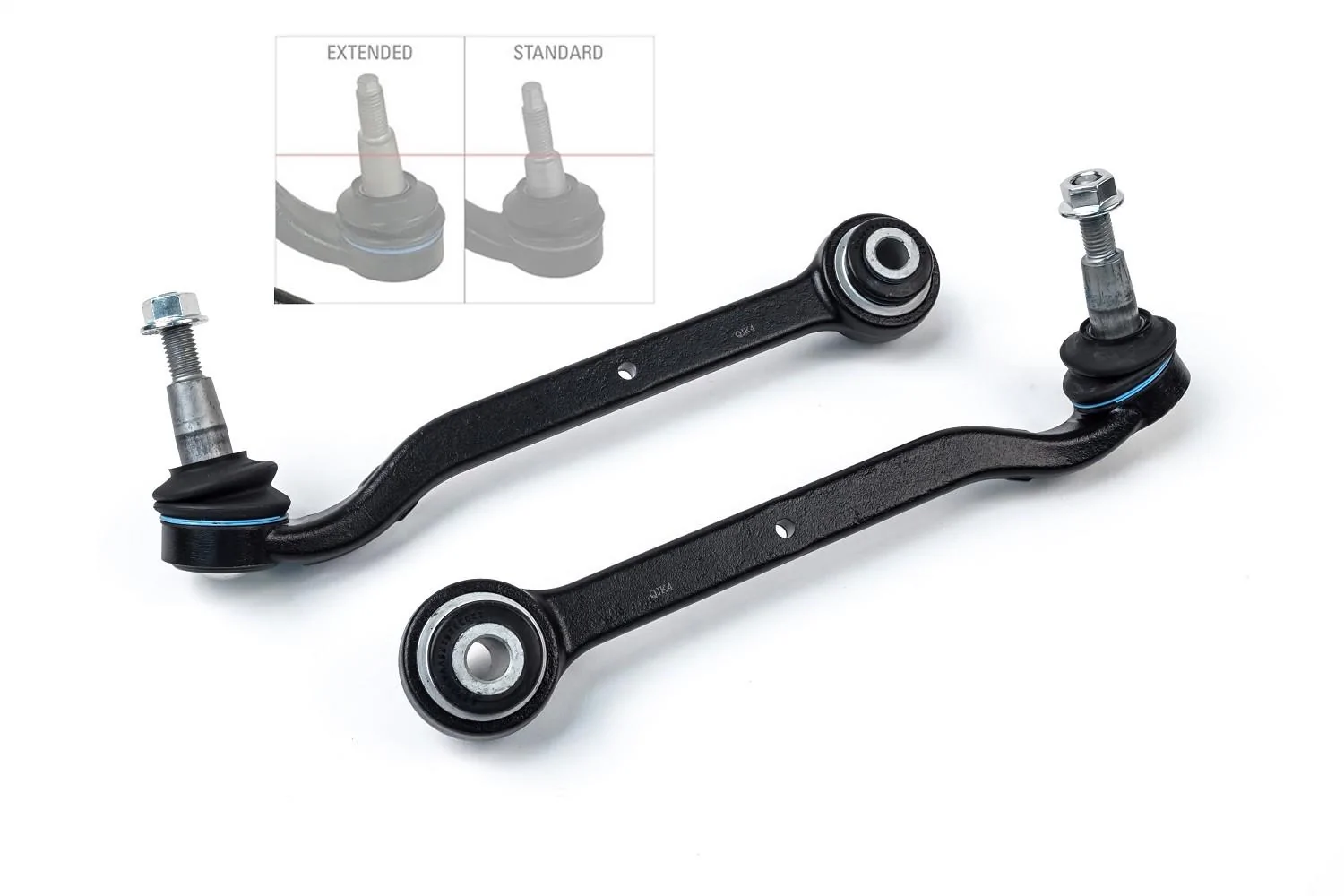
What the shape of the links themselves looks like is irrelevant geometrically. All that matters geometrically is where the centers of the end connections are. Link shape matters for link stresses, though.
(never saw this thread before)
Norm
That camber goes about half a degree more negative per inch of lowering sounds about right. Could be a little more, might be a little less.
Likewise, strut geometric roll centers typically drop twice as fast as the car is lowered or a bit faster. SLA geo-RC's about the same as the amount lowered.
What the shape of the links themselves looks like is irrelevant geometrically. All that matters geometrically is where the centers of the end connections are. Link shape matters for link stresses, though.
(never saw this thread before)
Norm
Sponsored