murick
Well-Known Member
- Joined
- Jul 5, 2021
- Threads
- 16
- Messages
- 1,055
- Reaction score
- 1,347
- Location
- Prague, Czech Rep.
- First Name
- Richard
- Vehicle(s)
- 2021 Euro Mach 1, FJG, manual
- Thread starter
- #1
I had the whole differential replaced due to a whine and clunk two months ago. It solved the whine, but not the clunk. Now, I believe, I am seeing elevated diff oil temps compared to what I was used to. So I thought I might ask here, to get a better idea.
Few things to keep in mind though:
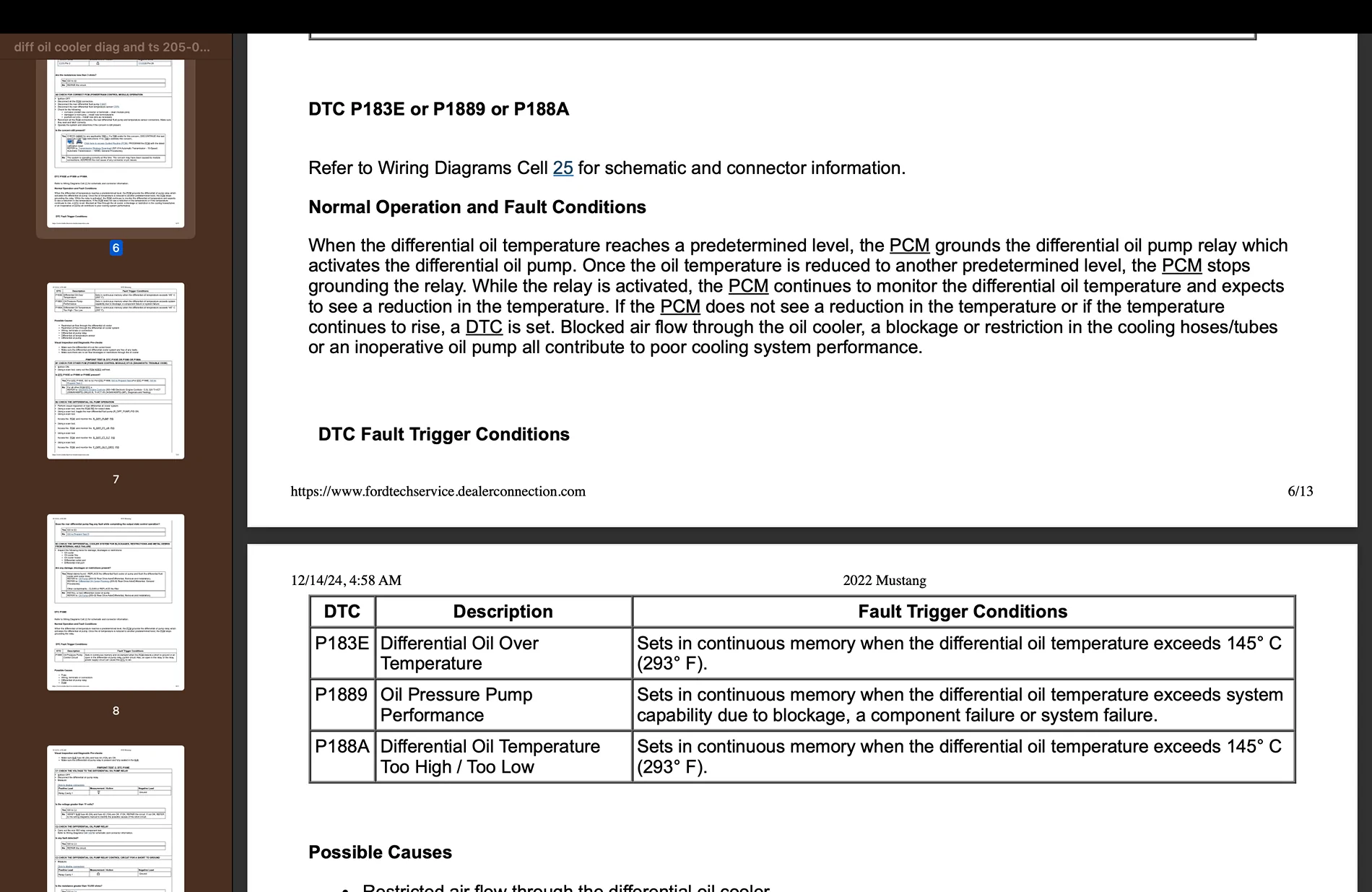
My (elevated) example: highway cruise, 150-160 km/h, (90-100 mph), ambient temp 20°C (68°F), diff oil temp 100°C (212°F)
Just to give a perspective a CHT at the same time was 80°C (176°F).
Before at the similar conditions I was used to 75°C (167°F) oil temp and a much longer time to reach that value.
Now it seems the temp is 25°C higher and also raises faster.
I wonder if the fact the diff is new may also play into that, unfortunately I do not remember what were the temps when the car was new.
The fact the this heats up so much concerns me also because it could be a defect or some additional friction on anything in the housing (could be a pinion-ring wheel, the diff itself, spline bushings, etc.)
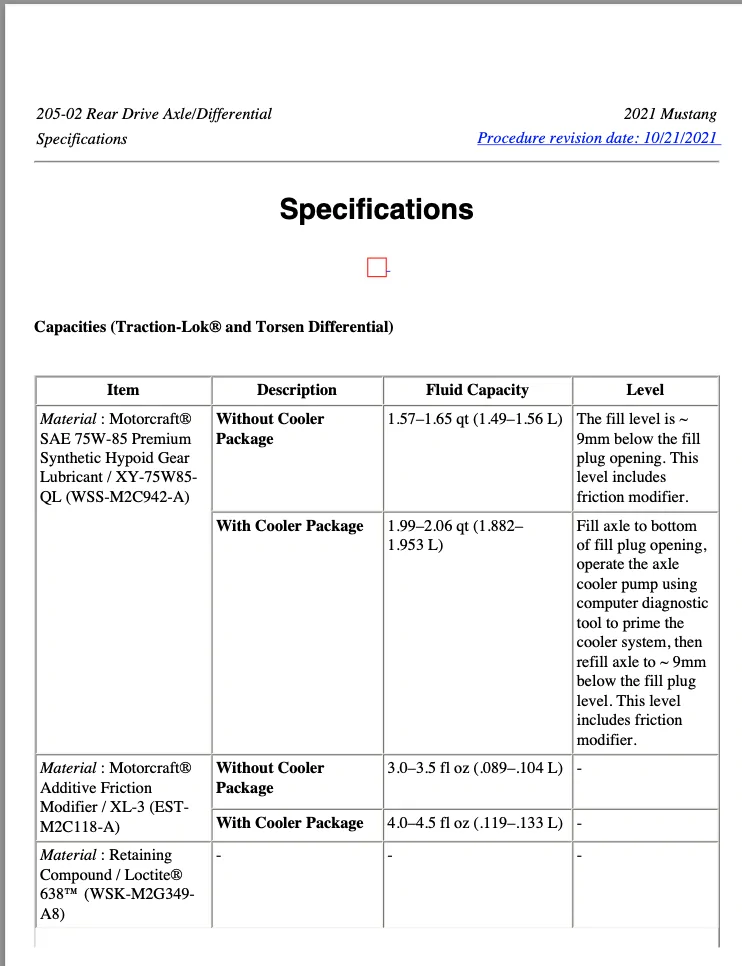
I also thought about a possibility the shop did not fill the housing with the right oil, or the right amount, etc. There is a step when filling the oil, one should run the pump for 2 minutes and then check and eventually top the fill again.
So, lot of variables and potential pitfalls, but I hope having some ballpark values could be useful anyway.
Last note: Please reply only with Mach 1 values. I believe regular GT does not have the pump and the radiator, and GT350 may be tuned differently.
Few things to keep in mind though:
- I am reading the temps on the dashboard "analogue" gauge (which can be turned on among the others). I am used to having this three there: diff oil temp, cylinder head temp, and engine oil pressure.
- The oil temp gauge is marked only at min and max values, which are 50°C and 175°C respectively here in metric world (which would correspond to 122°F and 347°F). Any other value I have to eyeball, but for some reason the "normal" values aligned quite nicely with 25°C increments which are emphasised on the gauge (75°C, 100°, 125°C and 150°C) so the eyeballing is not that hard.
- I do not know what would be the value in Fahrenheit, but I would expect it would be the same scale/temps just using a different metric.
- I expect that the ambient air temp would have an impact.
- The driving style is a factor too (spirited, street, highway, cruise).
- The (average) speed could also have an impact.
My (elevated) example: highway cruise, 150-160 km/h, (90-100 mph), ambient temp 20°C (68°F), diff oil temp 100°C (212°F)
Just to give a perspective a CHT at the same time was 80°C (176°F).
Before at the similar conditions I was used to 75°C (167°F) oil temp and a much longer time to reach that value.
Now it seems the temp is 25°C higher and also raises faster.
I wonder if the fact the diff is new may also play into that, unfortunately I do not remember what were the temps when the car was new.
The fact the this heats up so much concerns me also because it could be a defect or some additional friction on anything in the housing (could be a pinion-ring wheel, the diff itself, spline bushings, etc.)
I also thought about a possibility the shop did not fill the housing with the right oil, or the right amount, etc. There is a step when filling the oil, one should run the pump for 2 minutes and then check and eventually top the fill again.
So, lot of variables and potential pitfalls, but I hope having some ballpark values could be useful anyway.
Last note: Please reply only with Mach 1 values. I believe regular GT does not have the pump and the radiator, and GT350 may be tuned differently.
Sponsored

 .
.

 ! I will definitely look into it.