

Sponsored

Socialism good or bad?

Status
Not open for further replies.

Hack

Well-Known Member
Joined
Nov 26, 2014
Threads
86
Messages
12,869
Reaction score
8,297
Location
Minneapolis
Vehicle(s)
Mustang, Challenger
I can see you don't care about the American people. You are set in your ways and will not be convinced even when the truth is obvious. You are just bringing up different talking points to try to shift the argument around.
Sponsored

 

watisthis

Banned
Banned
Banned
Joined
Nov 30, 2018
Threads
25
Messages
1,423
Reaction score
687
Location
Odenton, MD
First Name
Justin
Vehicle(s)
2015 GT Pro-charged
I can see you don't care about the American people. You are set in your ways and will not be convinced even when the truth is obvious. You are just bringing up different talking points to try to shift the argument around.
Instead of quoting talking points you hear from far right leaning media you could provide sources with factual data. I could debunk them or agree with them as neither side is 100% wrong in their economic views, nor do I view either side as a clear 100% winner for fiscal policy.

Yes, clearly I do not care about the American people. As the quality of life and level of services that people utilize cost more than most incomes can support. Tax cuts barely make a difference for the poor or the middle class as deductions and credits already push their actual tax payment far below their bracket. Tax cuts do nothing but take money away from those services, which in the long run hurt you. If a person making 10 million a year pays 5 million of it in taxes, they don't receive 5 million in benefits directly, it funds programs like the military, medicare, medicaid, social security, etc, which besides the military (Which affects each American more or less the same), overwhelmingly help the rest of society.

Through higher taxation, incomes of the wealthy do take a hit, but incomes of the poor and middle classes rise through lower costs of living.

See: "Marginal Propensity to Spend" https://web.stanford.edu/~pista/MPC.pdf. Enjoy reading what took me 3 years to understand.
 

Hack

Well-Known Member
Joined
Nov 26, 2014
Threads
86
Messages
12,869
Reaction score
8,297
Location
Minneapolis
Vehicle(s)
Mustang, Challenger
Every time higher taxation has been tried in the past, unemployment increased. Just in the last few years, Trump cut taxes and regulations and now we have gone from record numbers of people on welfare under Obama to record low unemployment under Trump.

I already stated this, but for some reason it isn't sinking in. No matter how many times it has been shown that raising taxes causes the poor to suffer, some people are always willing to try it again.
 

watisthis

Banned
Banned
Banned
Joined
Nov 30, 2018
Threads
25
Messages
1,423
Reaction score
687
Location
Odenton, MD
First Name
Justin
Vehicle(s)
2015 GT Pro-charged
Every time higher taxation has been tried in the past, unemployment increased. Just in the last few years, Trump cut taxes and regulations and now we have gone from record numbers of people on welfare under Obama to record low unemployment under Trump.

I already stated this, but for some reason, it isn't sinking in. No matter how many times it has been shown that raising taxes causes the poor to suffer, some people are always willing to try it again.
Not entirely; in the 50s-70s the marginal tax rate for the highest income brackets was somewhere between 80-90% (that is, all dollars earned above $200,000 were taxed at some 90 percentile); this was during one of the biggest boom periods in American history, and during this period the unemployment rate was at one of its lowest points, apart from during WWII

It wasn't until the 1980s when there was an oil bust that we got above a 10% unemployment rate again; it can likely be argued that Reagan's tax cuts helped ease this, and during depressions/recessions tax cuts can be the right move for GDP growth. But the years of growth before when the marginal rate of 91% was holding strong counter the claim that higher taxation causes higher unemployment, but another point is that unemployment and GDP don't tell the whole picture of the health of the economy:

Since the late 70s, average CEO pay has grown almost 950% while average worker pay has only grown by about 12% (both adjusted for inflation) as of 2018 per an EPI report released in August 2019

This tells us that even though our GDP has grown considerably, it's a very small pool of people who are seeing any tangible benefit from this. This widening pay gap means that unemployment isn't quite the right metric, we also need to look at underemployment.

78% of American workers live paycheck-to-paycheck and can't weather a loss in income without taking on debt. Further 11.1% of employed Americans are underemployed, as defined by the Economic Policy Institute as a part-time worker who wants full-time work, and has searched for work in the past year but has given up actively searching for it and this is a fairly narrow definition that doesn't include people who are just not making enough to meet their needs. It has been admitted by the Bureau of Labor Statistics that underemployment is tricky for them to get data on and they don't have a stat to track it.

Now to be as fair as possible here: these figures are ones that weren't tracked in the 50's-70's, but something we do know is the average net worth of people who entered the workforce at certain times, and almost universally people who entered the workforce between the end of WWII and the beginning of Reagan's presidency (or the end of Carter's) own significantly more wealth than those who entered the workforce in the 80s and 90s and early 2000s, and those folks own significantly more wealth, and owned significantly more wealth at the same stage of their employment (we don't have that data for the boomers) than people who entered the workforce around the time of the housing crisis in the late 2000s and onward from there. More people from past generations of workers were able to get more wealth, were able to buy affordable housing, were able to save for retirement, than are able to at present.

Also in the interest of fairness, I will grudgingly accept that at the most basic level, having some income is better than no income, if you don't first take into consideration means testing on government safety nets; anecdotally, when I was unemployed for a few months due to taking time off at my previous job (military ETS), my unemployment was contingent on me remaining unemployed (which makes sense), but it also created an incentive to only accept job offers that would clearly beat my unemployment benefit checks, as I think almost anyone when presented the choice of "work for $X, or stay at home and get $X while you look for a job that pays more than $X" will choose the latter. I was fortunate enough that I didn't have need of things like SNAP or Medicaid, but it can be demoralizing to find work that might be good, but you end up essentially earning less for working since you are now over the threshold for some programs like that. Based on that, in some instances, I think the underemployment numbers are much more worth noting in the conversation about unemployment.

The fact that we need to face, and that tax cuts won't help, is that the economy isn't working for a vast majority of the American workforce, but it is working to prop up numbers.

Edit: Some fixes

Edit2: And this is that "envy" or "greed" you talk about: It's not actually envying or greed, it's understanding that no single human can do that much work and deserve that much wealth, so the realistic answer to "how did they get that much" is that they used a bunch of other people to do the work for them.
 
Last edited:

Weather Man

Persistance is a Bitch
Joined
Apr 4, 2016
Threads
7
Messages
1,131
Reaction score
1,027
Location
MN
Vehicle(s)
2015 I4 T Prem Auto
110-_nc_ohc-mzarcb_sfj8aqlyxlvzak0ljqb8jfvjeozxbyo5nco2no5xsxymnioydw-_nc_ht-scontent-dfw5-1-...webp
 

Sponsored

watisthis

Banned
Banned
Banned
Joined
Nov 30, 2018
Threads
25
Messages
1,423
Reaction score
687
Location
Odenton, MD
First Name
Justin
Vehicle(s)
2015 GT Pro-charged
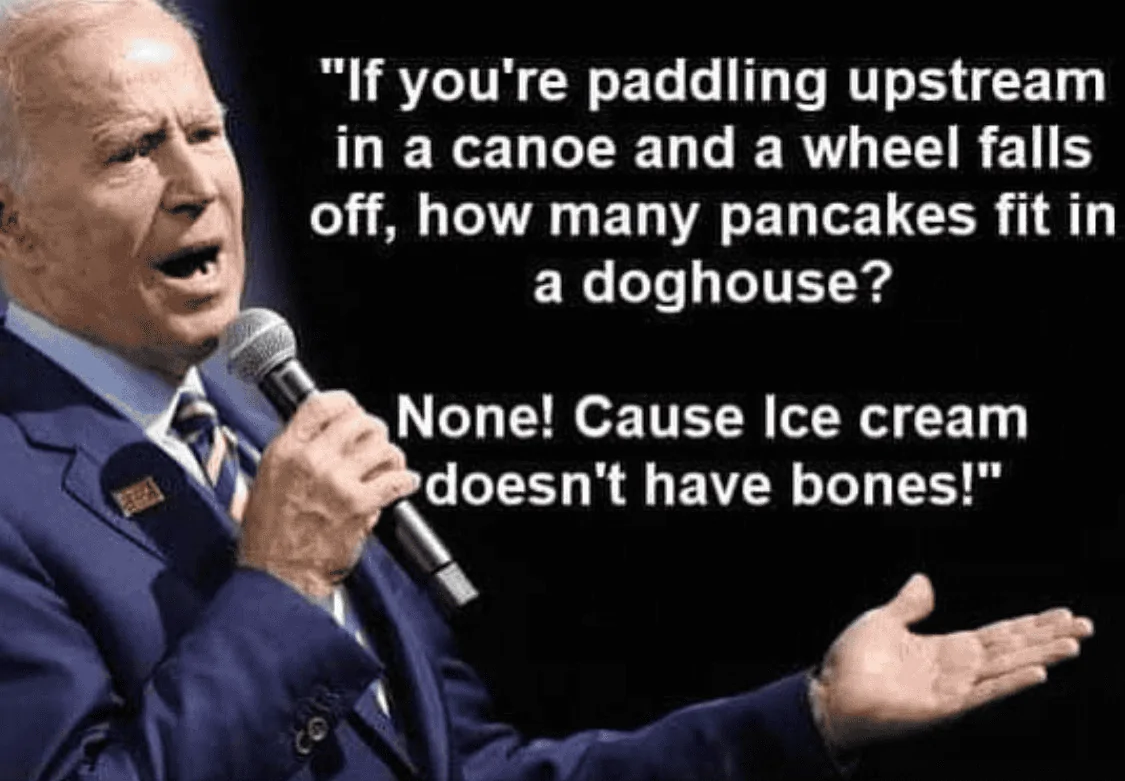
Joe bidden really is far too senile to be running. Personally, I don't know of anyone who is happy to see him running for office.
 

Weather Man

Persistance is a Bitch
Joined
Apr 4, 2016
Threads
7
Messages
1,131
Reaction score
1,027
Location
MN
Vehicle(s)
2015 I4 T Prem Auto
at=111&_nc_ohc=uY5Icr0ouuQAQkFDYv_8ezGV6RgRb0Dbl2Y9Mh9meAukp8w80YdBrTkRw&_nc_ht=scontent.fagc...webp
 

Hack

Well-Known Member
Joined
Nov 26, 2014
Threads
86
Messages
12,869
Reaction score
8,297
Location
Minneapolis
Vehicle(s)
Mustang, Challenger
Not entirely; in the 50s-70s the marginal tax rate for the highest income brackets was somewhere between 80-90% (that is, all dollars earned above $200,000 were taxed at some 90 percentile); this was during one of the biggest boom periods in American history, and during this period the unemployment rate was at one of its lowest points, apart from during WWII

It wasn't until the 1980s when there was an oil bust that we got above a 10% unemployment rate again; it can likely be argued that Reagan's tax cuts helped ease this, and during depressions/recessions tax cuts can be the right move for GDP growth. But the years of growth before when the marginal rate of 91% was holding strong counter the claim that higher taxation causes higher unemployment, but another point is that unemployment and GDP don't tell the whole picture of the health of the economy:

Since the late 70s, average CEO pay has grown almost 950% while average worker pay has only grown by about 12% (both adjusted for inflation) as of 2018 per an EPI report released in August 2019

This tells us that even though our GDP has grown considerably, it's a very small pool of people who are seeing any tangible benefit from this. This widening pay gap means that unemployment isn't quite the right metric, we also need to look at underemployment.

78% of American workers live paycheck-to-paycheck and can't weather a loss in income without taking on debt. Further 11.1% of employed Americans are underemployed, as defined by the Economic Policy Institute as a part-time worker who wants full-time work, and has searched for work in the past year but has given up actively searching for it and this is a fairly narrow definition that doesn't include people who are just not making enough to meet their needs. It has been admitted by the Bureau of Labor Statistics that underemployment is tricky for them to get data on and they don't have a stat to track it.

Now to be as fair as possible here: these figures are ones that weren't tracked in the 50's-70's, but something we do know is the average net worth of people who entered the workforce at certain times, and almost universally people who entered the workforce between the end of WWII and the beginning of Reagan's presidency (or the end of Carter's) own significantly more wealth than those who entered the workforce in the 80s and 90s and early 2000s, and those folks own significantly more wealth, and owned significantly more wealth at the same stage of their employment (we don't have that data for the boomers) than people who entered the workforce around the time of the housing crisis in the late 2000s and onward from there. More people from past generations of workers were able to get more wealth, were able to buy affordable housing, were able to save for retirement, than are able to at present.

Also in the interest of fairness, I will grudgingly accept that at the most basic level, having some income is better than no income, if you don't first take into consideration means testing on government safety nets; anecdotally, when I was unemployed for a few months due to taking time off at my previous job (military ETS), my unemployment was contingent on me remaining unemployed (which makes sense), but it also created an incentive to only accept job offers that would clearly beat my unemployment benefit checks, as I think almost anyone when presented the choice of "work for $X, or stay at home and get $X while you look for a job that pays more than $X" will choose the latter. I was fortunate enough that I didn't have need of things like SNAP or Medicaid, but it can be demoralizing to find work that might be good, but you end up essentially earning less for working since you are now over the threshold for some programs like that. Based on that, in some instances, I think the underemployment numbers are much more worth noting in the conversation about unemployment.

The fact that we need to face, and that tax cuts won't help, is that the economy isn't working for a vast majority of the American workforce, but it is working to prop up numbers.

Edit: Some fixes

Edit2: And this is that "envy" or "greed" you talk about: It's not actually envying or greed, it's understanding that no single human can do that much work and deserve that much wealth, so the realistic answer to "how did they get that much" is that they used a bunch of other people to do the work for them.
In the period from 1950-1970 we will have to disagree that the unemployment rate was low. A lot of the work force was in Korea and Vietnam during that time, and still the actual rates weren't low. And if you look at the amount of revenue that the federal government receives, typically when tax rates are cut, revenues INCREASE. (By the way, this supports my previous statements about consumer demand and jobs improving when taxes are cut.) So, if you want the federal government to have more money and to do more, it's important to keep tax rates low so that businesses will do well and lots of people have jobs. Even if you don't care about the poor and don't care if they have jobs - if your goal is solely to maximize federal government revenue, keep tax rates low!

I agree that the welfare and unemployment programs our government funds encourage and cause more people to be unemployed. And the more money available in those programs, the more people will be unemployed. I don't think those programs are terrible right now. The amount of money given away to unemployed people really isn't that much, and it's only available for a certain time period unless you have disabilities. Even though these programs increase unemployment, I'm not against them. I just don't want them expanded to do more harm. I would also like to see welfare going to US citizens only.

You keep inserting information about wealthy people as though you think someone else's money causes you a problem. None of the insults you have for wealthy people are going to change my mind and make me think that someone else having money causes you a problem. I'm focused on wanting the government to do things that help people. I don't want our federal government to hurt people. I don't think high tax rates help people. And in fact, the evidence I have says that high tax rates even hurt government revenues.
https://www.thebalance.com/current-u-s-federal-government-tax-revenue-3305762
If you look at the whole picture, it's hard to see any good reasons for raising taxes. Other than hating or being jealous of people, which in my opinion we should all try to avoid.
 

Weather Man

Persistance is a Bitch
Joined
Apr 4, 2016
Threads
7
Messages
1,131
Reaction score
1,027
Location
MN
Vehicle(s)
2015 I4 T Prem Auto
elemyhgvaaabqho-format-jpg-name-small-jpg.webp
 

watisthis

Banned
Banned
Banned
Joined
Nov 30, 2018
Threads
25
Messages
1,423
Reaction score
687
Location
Odenton, MD
First Name
Justin
Vehicle(s)
2015 GT Pro-charged
In the period from 1950-1970 we will have to disagree that the unemployment rate was low. A lot of the work force was in Korea and Vietnam during that time, and still the actual rates weren't low. And if you look at the amount of revenue that the federal government receives, typically when tax rates are cut, revenues INCREASE. (By the way, this supports my previous statements about consumer demand and jobs improving when taxes are cut.) So, if you want the federal government to have more money and to do more, it's important to keep tax rates low so that businesses will do well and lots of people have jobs. Even if you don't care about the poor and don't care if they have jobs - if your goal is solely to maximize federal government revenue, keep tax rates low!

I agree that the welfare and unemployment programs our government funds encourage and cause more people to be unemployed. And the more money available in those programs, the more people will be unemployed. I don't think those programs are terrible right now. The amount of money given away to unemployed people really isn't that much, and it's only available for a certain time period unless you have disabilities. Even though these programs increase unemployment, I'm not against them. I just don't want them expanded to do more harm. I would also like to see welfare going to US citizens only.

You keep inserting information about wealthy people as though you think someone else's money causes you a problem. None of the insults you have for wealthy people are going to change my mind and make me think that someone else having money causes you a problem. I'm focused on wanting the government to do things that help people. I don't want our federal government to hurt people. I don't think high tax rates help people. And in fact, the evidence I have says that high tax rates even hurt government revenues.
https://www.thebalance.com/current-u-s-federal-government-tax-revenue-3305762
If you look at the whole picture, it's hard to see any good reasons for raising taxes. Other than hating or being jealous of people, which in my opinion we should all try to avoid.
I literally don't have the time to explain all of this again as you still cling to the idea that this is a broad economy tax.

If you can't at least be open minded to the fact that their is income inequality and that big money does whatever they can to reduce their tax burden through vehicles such as pooled income funds, donor advised funds, 501c4, 501c3, carried interest tax loopholes, and private foundations (chances are you have no idea what any of these are and thats because you aren't mega rich), then there is nothing I can do or say to make you see differently. https://www.washingtonpost.com/busi...-lower-tax-rate-than-working-class-last-year/

You actually believe the rich are the solution to their own problem, we're more friendly to the mega rich than we are to the middle class and you think that's fine, lmao, that is some real boomer shit.

Next you're going to tell me the sacklers, the kochs, Robert Murdoch, Robert Mercer, Mark Zuckerberg, and George Soroes are all good people, made their money completely ethically, and believe that they're wealth means they're smarter and better suited to tell you how to live your life which is outlined in 'the gospel of wealth' by Andrew garnege. These people can literally by pass the state supreme court and millions of voters by just showing money at things. https://www.washingtonpost.com/news...o-defeat-a-state-supreme-court-chief-justice/. And bill gates is the best case scenario. It's awesome that they're giving money to charity but they're also shaping laws and the world we live in without anyones consent and we have no say in the matter because they have the money to do so.

If you really do care to be more mindful and see both sides more clearly than read "winners take all" or read into citizens united.
 

Sponsored

Jimmy Dean

Well-Known Member
Joined
Jul 26, 2019
Threads
34
Messages
2,149
Reaction score
2,631
Location
Gonzales / Pierre Part
First Name
Al
Vehicle(s)
71 mach 1, 82 Bronco, 86 Bronco (dd),
Not entirely; in the 50s-70s the marginal tax rate for the highest income brackets was somewhere between 80-90% (that is, all dollars earned above $200,000 were taxed at some 90 percentile); this was during one of the biggest boom periods in American history, and during this period the unemployment rate was at one of its lowest points, apart from during WWII
Using the 50s-70s as a comparison to any other time in regards to economy is cheating, and you know it. the US was the sole country with a completely function infrastructure after WW2, and we were able to use that to propel our economy to as of then never-before-seen levels that took other countries 5 decades to even begin to compare.

And yes, socialism is bad. Not horribly bad, like communism, but bad, as in worse than capitalism. On a scale of 1-10, with 1 being slavery and 10 being capitalism (and yes, I will consider slavery as an economic type, because it creates an artificially low labor cost pool, similar to feudalism and serfdom, but worse), I would put socialism somewhere around a 7.5, with nothing above it except capitalism. Problem is is that socialism can very quickly lead into communism, which would fall somewhere around a 1, whereas capitalisms most likely falls are either to socialism or dictatorship, which can range from a 1-7 depending on whether you have a Kim Jong Un or a Lee Kuan Yew.
 

watisthis

Banned
Banned
Banned
Joined
Nov 30, 2018
Threads
25
Messages
1,423
Reaction score
687
Location
Odenton, MD
First Name
Justin
Vehicle(s)
2015 GT Pro-charged
Using the 50s-70s as a comparison to any other time in regards to economy is cheating, and you know it. the US was the sole country with a completely function infrastructure after WW2, and we were able to use that to propel our economy to as of then never-before-seen levels that took other countries 5 decades to even begin to compare.

And yes, socialism is bad. Not horribly bad, like communism, but bad, as in worse than capitalism. On a scale of 1-10, with 1 being slavery and 10 being capitalism (and yes, I will consider slavery as an economic type, because it creates an artificially low labor cost pool, similar to feudalism and serfdom, but worse), I would put socialism somewhere around a 7.5, with nothing above it except capitalism. Problem is is that socialism can very quickly lead into communism, which would fall somewhere around a 1, whereas capitalisms most likely falls are either to socialism or dictatorship, which can range from a 1-7 depending on whether you have a Kim Jong Un or a Lee Kuan Yew.
I agree, however, I'm not advocating for socialism as we all know it and if you've read my posts you know that.
 

Jimmy Dean

Well-Known Member
Joined
Jul 26, 2019
Threads
34
Messages
2,149
Reaction score
2,631
Location
Gonzales / Pierre Part
First Name
Al
Vehicle(s)
71 mach 1, 82 Bronco, 86 Bronco (dd),
I agree, however, I'm not advocating for socialism as we all know it and if you've read my posts you know that.
if we rank socialism as a 1, and capitalism as a 10, you want us to be around a 2-3, when we need to remain around a 7-8. We both agree that we need to be in the middle, but stringently disagree with where in the middle we need to be.

Please point me to a country that has run a mostly socialistic society for more than a decade. I can point you to a few that have run mostly a capitalistic society for many many decades.

We also STRONGLY disagree on the current use of the military. If we pull our military out from our overseas presence, you would see the complete collapse of the world economy as we know it, and an end to the long peace we have had since WW2. And yes, I consider it a very long peace, even with Vietnam, Korea, the middle east, and all of the other small conflicts, because they are small. No two world powers have attempted to duke it out since U.S. hegemony. whereas prior to that, world powers going at each others throats was almost non-stop. I seriously doubt you can find a period of more than 10 years prior to 1955 (10 years after WW2 ended) that two world powers were not involved in major conflicts going back at least a few hundred if not a couple thousand years.

Pulling our military out from it's global presence and policing would be absolutely destructive to world stability. Do we get everything right? No, certainly not, but certainly better than anyone else can do and ever has done.
 

watisthis

Banned
Banned
Banned
Joined
Nov 30, 2018
Threads
25
Messages
1,423
Reaction score
687
Location
Odenton, MD
First Name
Justin
Vehicle(s)
2015 GT Pro-charged
if we rank socialism as a 1, and capitalism as a 10, you want us to be around a 2-3, when we need to remain around a 7-8. We both agree that we need to be in the middle, but stringently disagree with where in the middle we need to be.

Please point me to a country that has run a mostly socialistic society for more than a decade. I can point you to a few that have run mostly a capitalistic society for many many decades.

We also STRONGLY disagree on the current use of the military. If we pull our military out from our overseas presence, you would see the complete collapse of the world economy as we know it, and an end to the long peace we have had since WW2. And yes, I consider it a very long peace, even with Vietnam, Korea, the middle east, and all of the other small conflicts, because they are small. No two world powers have attempted to duke it out since U.S. hegemony. whereas prior to that, world powers going at each others throats was almost non-stop. I seriously doubt you can find a period of more than 10 years prior to 1955 (10 years after WW2 ended) that two world powers were not involved in major conflicts going back at least a few hundred if not a couple thousand years.

Pulling our military out from it's global presence and policing would be absolutely destructive to world stability. Do we get everything right? No, certainly not, but certainly better than anyone else can do and ever has done.
No, I'm unequivocally for capitalism. Also, no, I'm unequivocally for keeping military presence overseas.

If you could quote me and give context that would be helpful as I'm all over the place between this thread and the Warren wealth tax thread. Preferably, read through that thread.

Edit: I think our disconnect is everyone here is trying to redefine corporatism as capitalism.
 

Jimmy Dean

Well-Known Member
Joined
Jul 26, 2019
Threads
34
Messages
2,149
Reaction score
2,631
Location
Gonzales / Pierre Part
First Name
Al
Vehicle(s)
71 mach 1, 82 Bronco, 86 Bronco (dd),
No, I'm unequivocally for capitalism. Also, no, I'm unequivocally for keeping military presence overseas.

If you could quote me and give context that would be helpful as I'm all over the place between this thread and the Warren wealth tax thread. Preferably, read through that thread.

Edit: I think our disconnect is everyone here is trying to redefine corporatism as capitalism.
I had the wrong person written down for a comment on the military, that should have been directed towards 1mean.
Sponsored

 
Status
Not open for further replies.


Top