Sponsored

Dissection of a B&O Amplifier

Weeee

Well-Known Member
Joined
Apr 15, 2021
Threads
24
Messages
265
Reaction score
201
Location
Utah
First Name
Tom
Vehicle(s)
Mach 1, Mach E GT
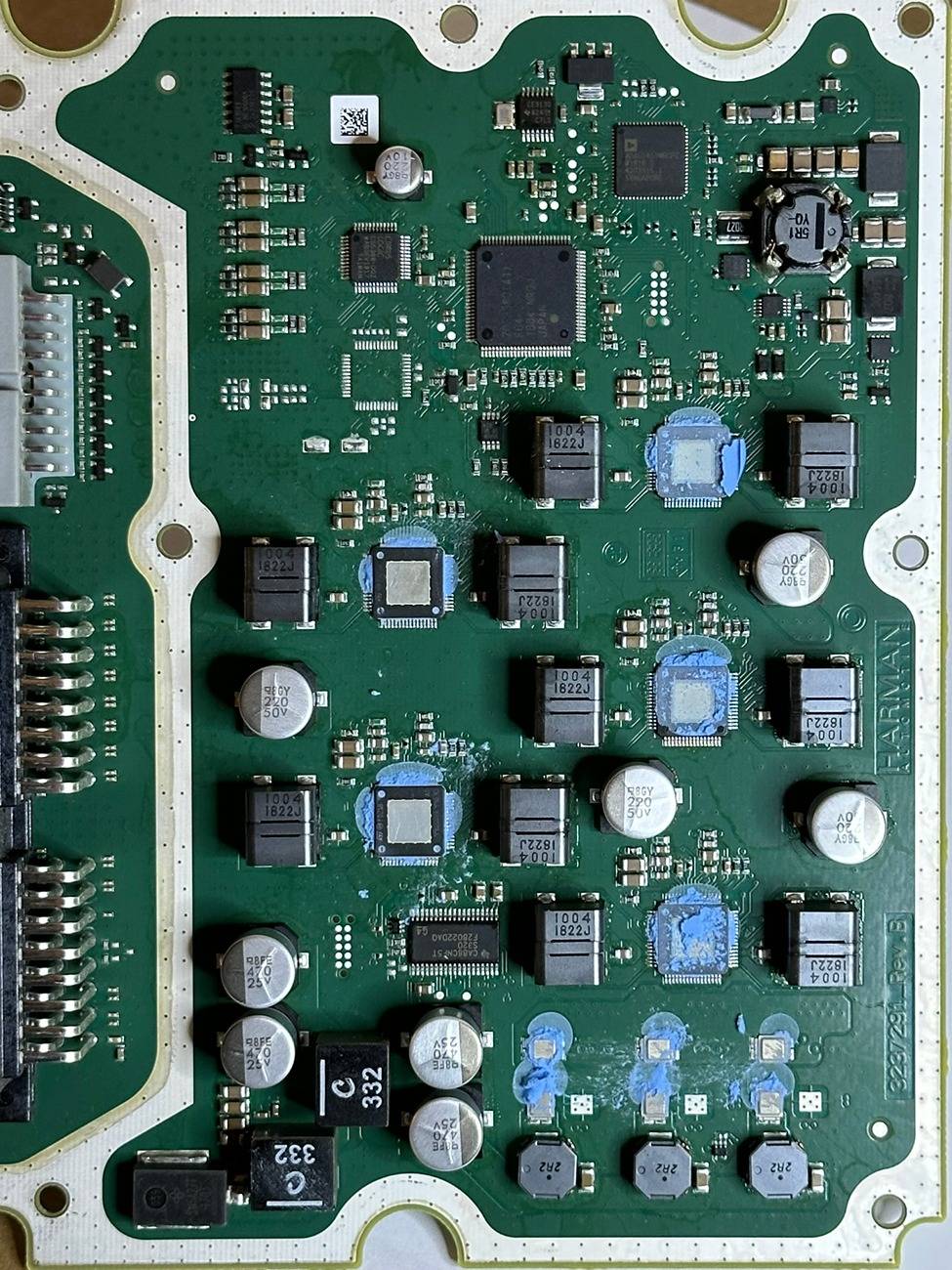
I bought a B&O amplifier from a wrecked convertible Mustang to learn more about what its hardware could support. I took these photos through a magnifying glass, so you will notice distortion along the edges. The blue stuff is a thermal paste that makes contact with the case, which is a massive heat sync.

Kudos to @omiga for the assistance in analyzing the components.

What B&O states on their website about the amplifier:
  1. 900 Watts (Ford Media states it is 1000 Watts)
  2. 10 channel Analog Amplifier
  3. Digital Signal Processing (DSP)
    • Speed Adaptive Volume
    • Surround Sound
    • Power Manager
Overall board:
IMG_3228.JPEG


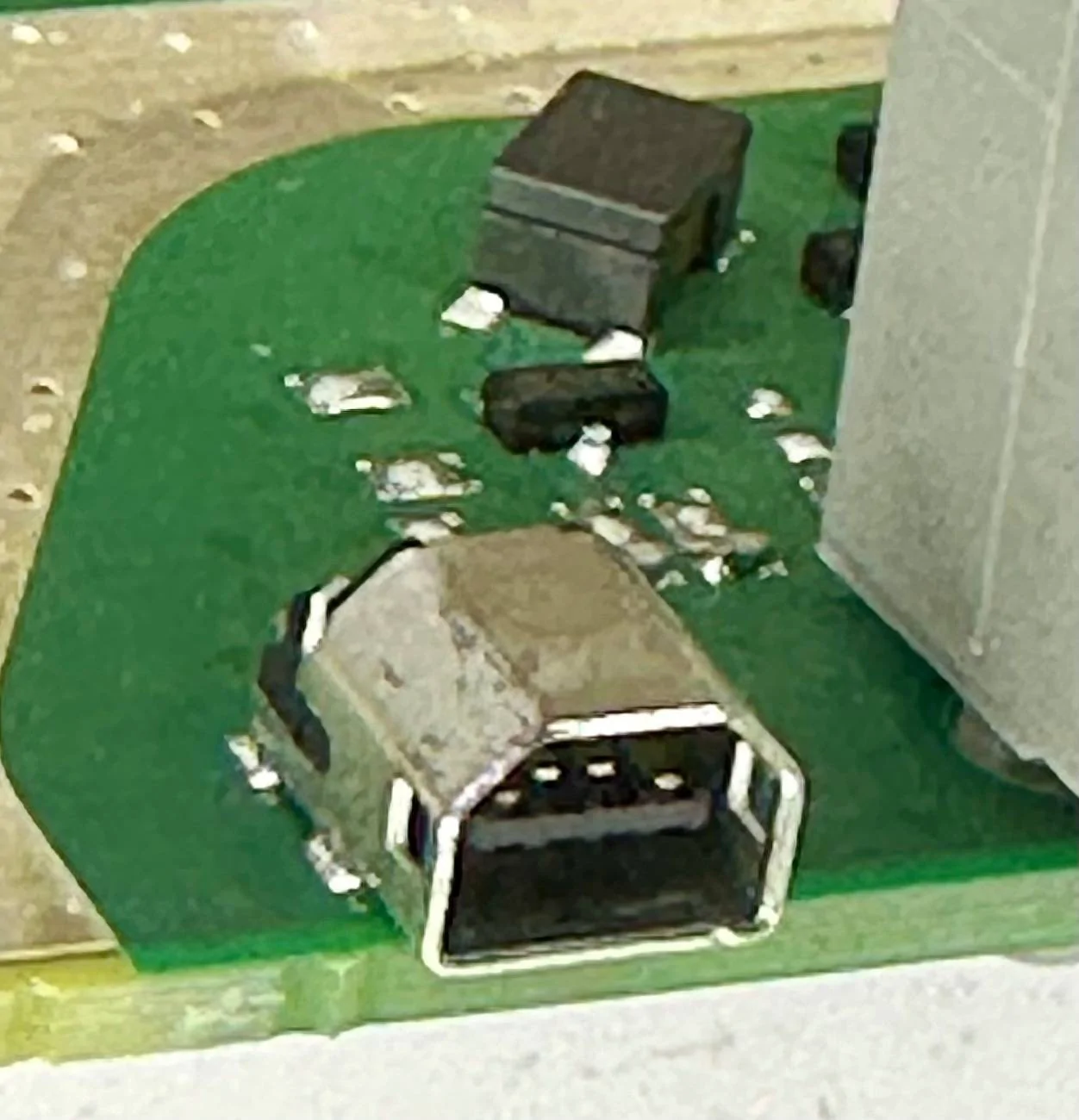
Undocumented USB port:
  • Assumed purpose - communication with the DSP chip.
  • It appears to be a proprietary four-pin USB connection. It is present on every HARMON automotive amplifier I've reviewed.
  • Do you know what this is or where to get the correct cable? Post up!
IMG_3234 (1).webp


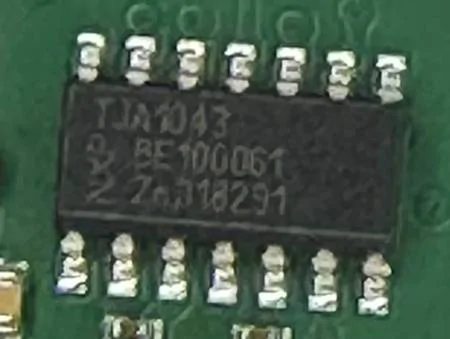
NXP TJA1043:
  • Assumed purpose - Amp communication with the CAN bus.
  • High-speed CAN transceiver interfaces between a Controller Area Network (CAN) protocol controller and the physical two-wire CAN bus.
  • Link to the datasheet
IMG_3240.JPEG


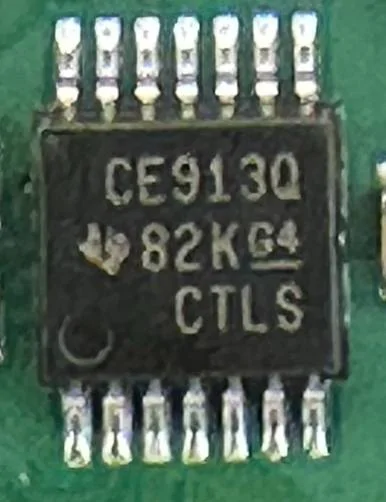
TI CDCE913:
  • Assumed purpose - Phase-locked loops (PLL) for the Analog Device DSP.
  • I2C, Integrated EEPROM, Pin programmable, Spread-spectrum clocking (SSC).
  • Link to the datasheet
82K.JPEG


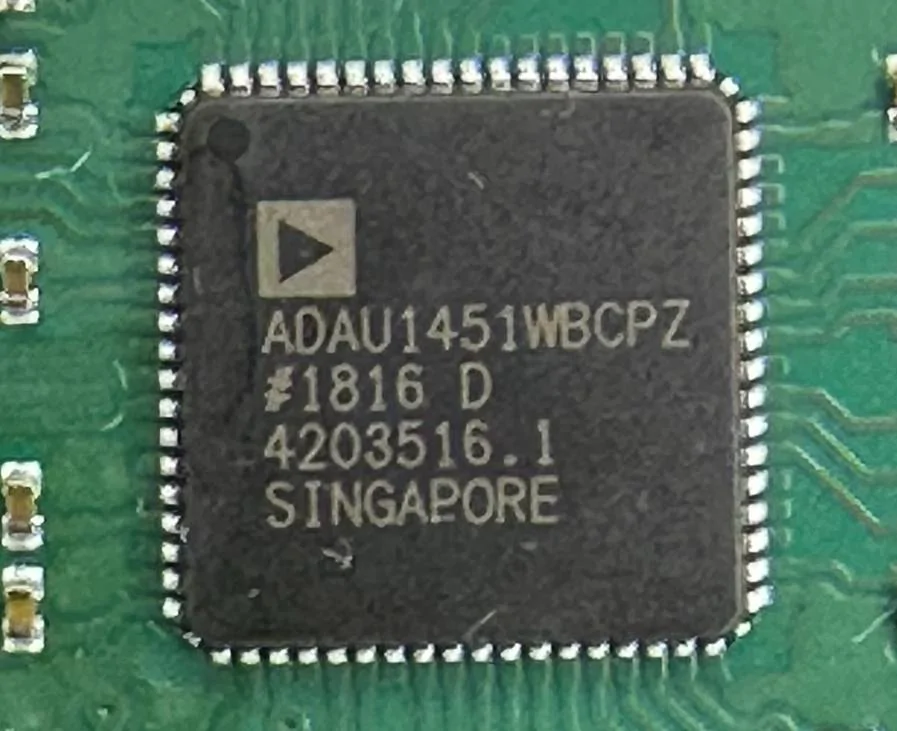
Analog Devices ADAU1451:
  • This is the digital signal processor (DSP) chip.
  • There is plenty of vendor documentation, YouTube tutorials, and freely available software to tune this chip. I believe this chip is related to the undocumented USB port found on the board.
  • Link to the datasheet
IMG_3223.JPEG


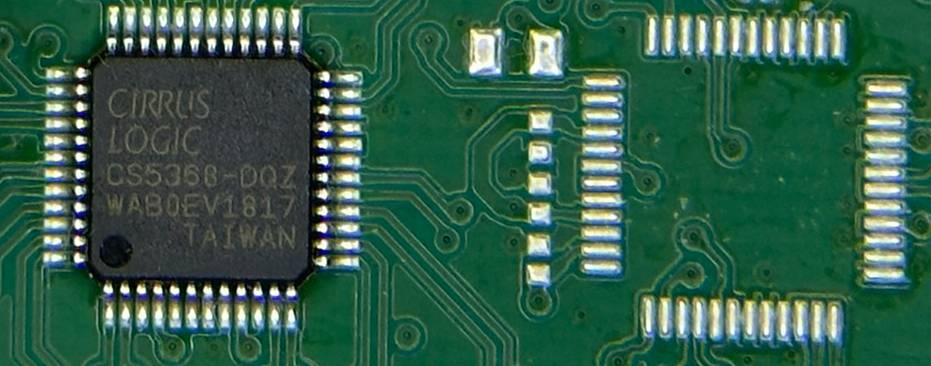
Cirrus Logic CS5368-DQZ:
  • Assumed purpose - noise cancelling.
  • 114 dB, 192 kHz, 8-Channel A/D Converter
  • The empty slot makes me curious.
  • Link to the datasheet
CS5368DQZ.JPEG


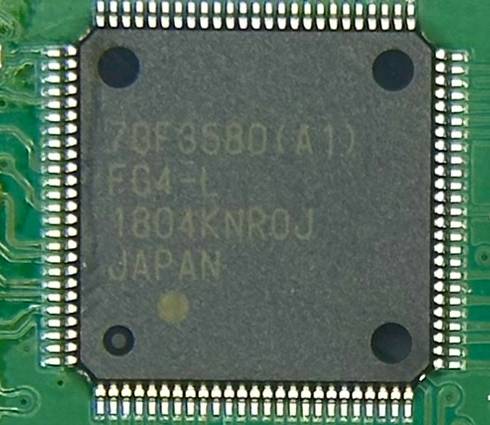
NEC 70F3580(A1):
  • Assumed purpose - CAN bus
FGL4.JPEG


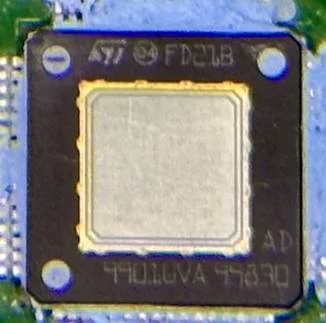
STMicroelectronics - FD21B:
  • Assumed purpose - Class D amplifier chip.
  • Unfortunately, the datasheet for this chip is unavailable. This suggests that it has been custom-made for HARMON Automotive. You can view the rest of their datasheets here if you'd like to get a rough idea of what they support.
  • All five have the same part number.
  • Each amplifier supports two channels.
IMG_3217.JPEG


Butterworth filters:
  • Each channel of the amplifier has one.
IMG_3217 (1).JPEG


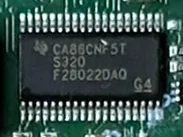
Microcontroller - Link to the details
  • Unknown purpose at this time.
TI.JPEG


No clue what is going on here yet:
IMG_3228 (1).JPEG
Sponsored

 
Last edited:

skinnyb

Well-Known Member
Joined
Jun 25, 2022
Threads
12
Messages
3,572
Reaction score
8,950
Location
Knoxville TN
First Name
Alex
Vehicle(s)
21 Mach 1. FJG, Tremec
I bought a B&O amplifier from a wrecked Mustang to learn more about what its hardware could support. I took these photos through a magnifying glass, so you will notice distortion along the edges. The blue stuff is a thermal paste that makes contact with the case, which is a massive heat sync. I'll update this post as I learn more. Feel free to contribute!

Overall board:
IMG_3228.JPEG


The DSP:
Analog Devices ADAU1451 - Link to the details
IMG_3223.JPEG


One of the five amplifiers:
STMicroelectronics - TBD - Link to the catalog if you'd like to help look . All five have the same part number.
IMG_3217.JPEG
Very interesting. Thanks for the info :)
 
OP
OP
Weeee

Weeee

Well-Known Member
Joined
Apr 15, 2021
Threads
24
Messages
265
Reaction score
201
Location
Utah
First Name
Tom
Vehicle(s)
Mach 1, Mach E GT
I’ve been updating the top post with some additional items. A thread I’m pulling on is the DSP. The amp has an undocumented access port which I believe is for the DSP and its configuration. The current challenge is the proprietary or odd ball connector. I think this connector is HARMONs way to prevent tinkering. The DSP chip itself is well documented with YouTube videos available. I may end up removing the connector and replacing it with a standard USB type B.
IMG_3234.webp
 

Mike Pfeifer

Well-Known Member
Joined
Feb 4, 2021
Threads
11
Messages
1,535
Reaction score
1,878
Location
Wesley Chapel, FL
First Name
Mike
Vehicle(s)
2019 Ruby Red Mustang GT A10
I’ve been updating the top post with some additional items. A thread I’m pulling on is the DSP. The amp has an undocumented access port which I believe is for the DSP and its configuration. The current challenge is the proprietary or odd ball connector. I think this connector is HARMONs way to prevent tinkering. The DSP chip itself is well documented with YouTube videos available. I may end up removing the connector and replacing it with a standard USB type B.
IMG_3234.jpeg
From that angle, it does look like a misshapen usb.
 
OP
OP
Weeee

Weeee

Well-Known Member
Joined
Apr 15, 2021
Threads
24
Messages
265
Reaction score
201
Location
Utah
First Name
Tom
Vehicle(s)
Mach 1, Mach E GT
I was able to ID a couple of additional components today and have updated the 1st post. Additionally, I looked at numerous other amplifiers produced by HARMON. I confirmed they all have the unusual USB port, raising my hopes that it is for the DSP chip.
 

Sponsored

omiga

Active Member
Joined
Aug 22, 2024
Threads
2
Messages
31
Reaction score
9
Location
San Diego
First Name
Dimo
Vehicle(s)
Mustang s550 GT convertible
I bought a B&O amplifier from a wrecked Mustang to learn more about what its hardware could support. I took these photos through a magnifying glass, so you will notice distortion along the edges. The blue stuff is a thermal paste that makes contact with the case, which is a massive heat sync. I'll update this post as I learn more. Feel free to contribute!

What B&O states on their website about the amplifier:
  1. 900 Watts (Ford Media states it is 1000 Watts)
  2. 10 channel Analog Amplifier
  3. Digital Signal Processing (DSP)
    • Speed Adaptive Volume
    • Surround Sound
    • Power Manager

Overall board:
IMG_3228.JPEG


NXP TJA1043 - Link to the details
  • High-speed CAN transceiver interfaces between a Controller Area Network (CAN) protocol controller and the physical two-wire CAN bus.
  • This means the amp is communicating with the car.
IMG_3240.JPEG


TI CDCE913 - Link to the details
  • I2C, Integrated EEPROM, Pin programmable, Spread-spectrum clocking (SSC)
82K.JPEG


Analog Devices ADAU1451 - Link to the details
  • This is the DSP chip. There is plenty of vendor documentation, YouTube tutorials, and freely available software to tune this chip.
IMG_3223.JPEG


Cirrus Logic CS5368-DQZ - Link to the details.
  • 114 dB, 192 kHz, 8-Channel A/D Converter
  • The empty slot makes me curious.
CS5368DQZ.JPEG


NEC 70F3580(A1) - Unknown purpose at this time
FGL4.JPEG


STMicroelectronics - exact model TBD - amplifier
  • Link to the catalog if you'd like to help look . They are an LQFP64 exposed pad-up package. Once we figure this out we'll know what each amplifier can support for speakers.
  • All five have the same part number.
  • Each amplifier supports two channels.
IMG_3217.JPEG


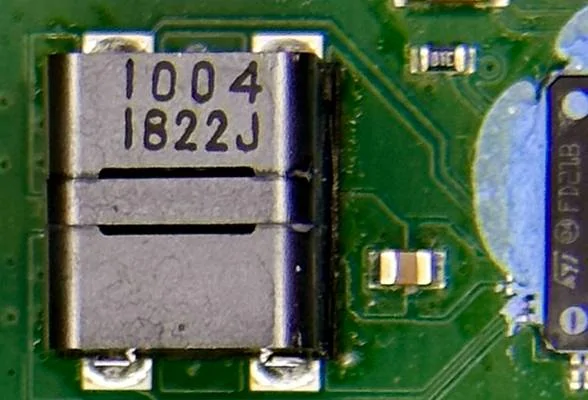
Butterworth filters:
  • Each channel of the amplifier has one.
IMG_3217 (1).JPEG


Microcontroller - Link to the details
  • Unknown purpose at this time.
TI.JPEG


No clue what is going on here yet:
IMG_3228 (1).JPEG
Thanks for the information; you nailed most of it.

I guess "TI CDCE913" is the PLL for Analog Device DSP. You can see the crystal to be soldered left of it. Why do they need that while the ADAU1451 has built-in PLL? This is also my question, but someone with experience with these DSPs and maybe the car can answer that question. Maybe they need it for spread spectrum functionality, or they didn't like the built-in PLL for another reason.

I checked Digi-key, and it turned out that there is no ST chip with 64-LQFP with exposed pads with any architecture other than Class-D, though I can't say precisely what that part is. They seem to be very conservative in sharing the data for these Amplifiers. That said, you also found that each chip comes with output filters, meaning it is Class-D.

That Renesans chip is weirdly always there. It's an old microcontroller, which I think is only there for the CAN bus. It has firmware that does something for them, and they don't want to add the same code to other MCUs that they do have on the board.

The "CS5368" is somehow related to noise-cancelling capability. That's the reason they have more wiring for B&O-enabled cars. For the empty spot, you should look to understand if versions of this hardware are sold for more noise canceling, etc...
 
OP
OP
Weeee

Weeee

Well-Known Member
Joined
Apr 15, 2021
Threads
24
Messages
265
Reaction score
201
Location
Utah
First Name
Tom
Vehicle(s)
Mach 1, Mach E GT
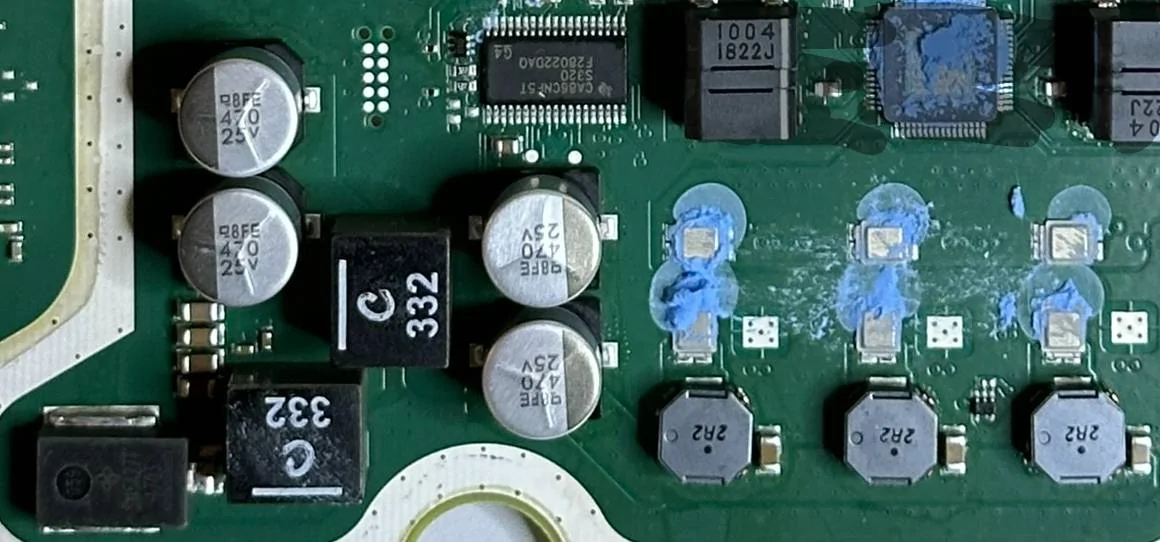
There you are @omiga! What do you think is going on here?

IMG_3216.webp
 

omiga

Active Member
Joined
Aug 22, 2024
Threads
2
Messages
31
Reaction score
9
Location
San Diego
First Name
Dimo
Vehicle(s)
Mustang s550 GT convertible
There you are @omiga! What do you think is going on here?

IMG_3216.webp
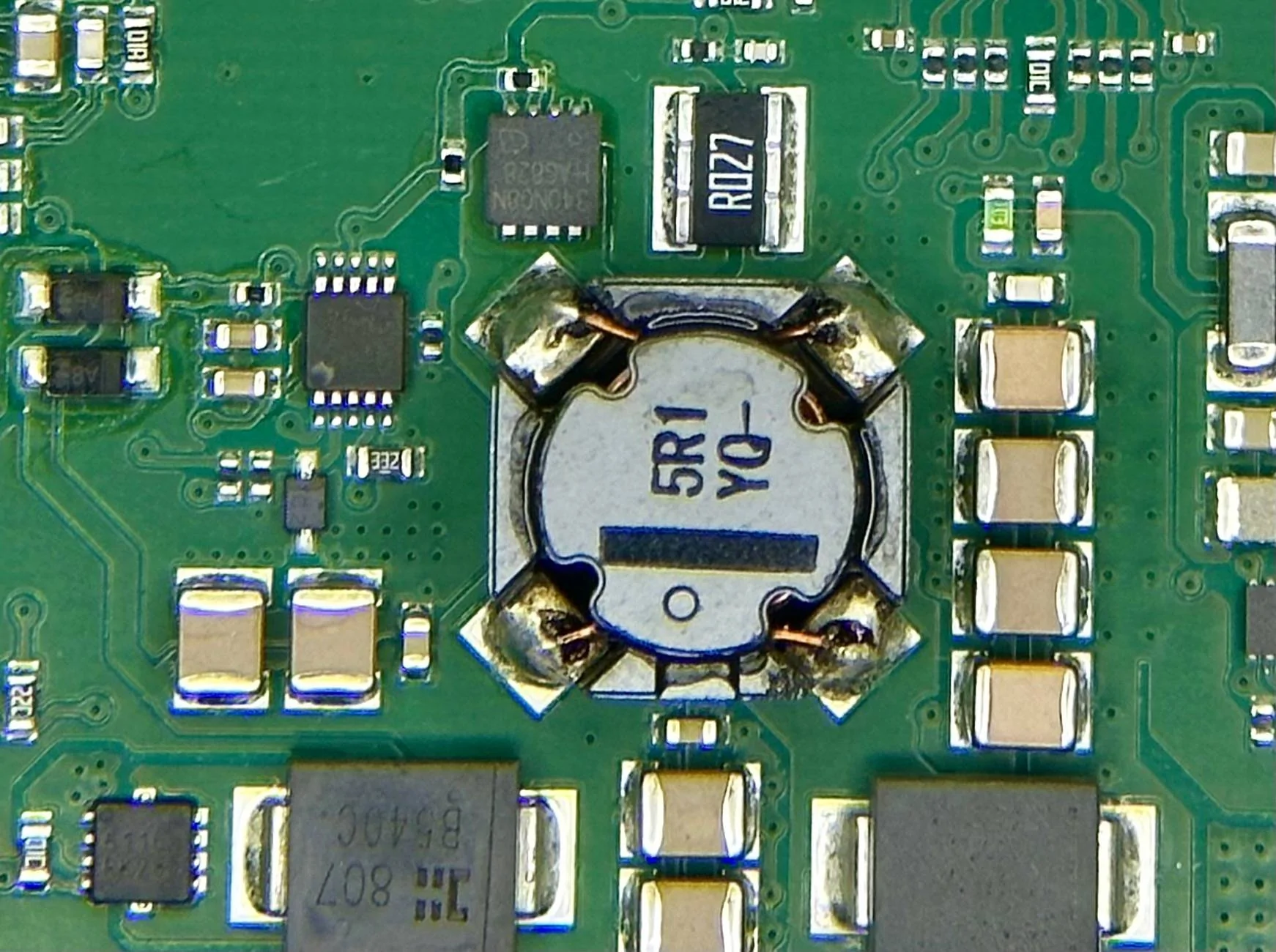
That's a shielded transformer; it should boost the power supply as the car battery is 12V. They might need a higher voltage because P=V^2/R. So, for a fixed resistance, if you need to put more power over the load, you need to increase the voltage.

Suppose you need to understand what's the actual power supply voltage. In that case, you either need to power it on and measure it or find the boost converter chip and feedback network and, based on the resistor's value, theoretically find out the output voltage (typically, it's a resistive network outside that sets the output voltage).

I don't know which chip there is the voltage booster.
Sponsored

 
Last edited:


Top