
BzevDo1
Member
- Thread starter
- #1
Dobraga Dnia!
Facts, step by step:
Intake
Underhood temps without ducts to the bumper grille hit around 80°C (176°F) in summer traffic. With the stock ducting, it’s 50–55°C (122–131°F).

For me, hot intake air means fuel trims. It’s especially annoying at drag events here in Belarus, where you sit in line like at a border crossing, creeping forward every couple of minutes. In summer it’s hell.
So the question is:
How do you run your best when you’re staging with 50–80°C intake temps?
2.
I had a Roush intake, but without ducts to the bumper. So either way, it needed work.
3.
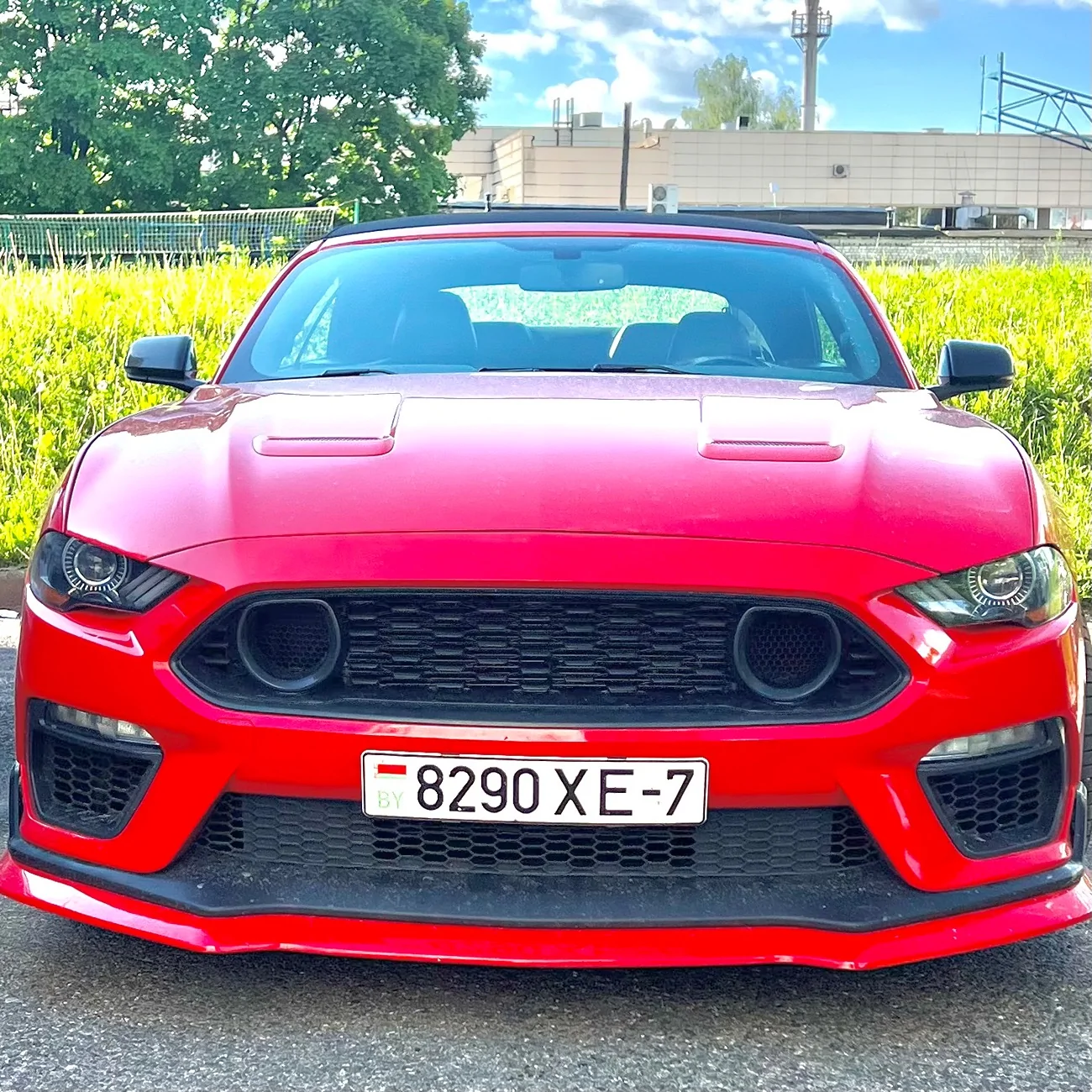
The Mach 1 bumper nostrils are completely blocked. Pure decoration, zero function. I’ve seen an American guy cut in mesh, but that’s still just cosmetic.
4.
By nature, the Coyote is big and runs hot. On top of that, the driver-side exhaust manifold is fully exposed, and the airbox sits about 30 cm away from it.
5.
Add it all up, and you get a very hot intake in summer, especially in the city.
While moving: +5–7°C over ambient.
At a traffic light: temps climb fast to 70°C, and if it’s +30°C outside, you can see 80°C. Scary stuff.
Decision
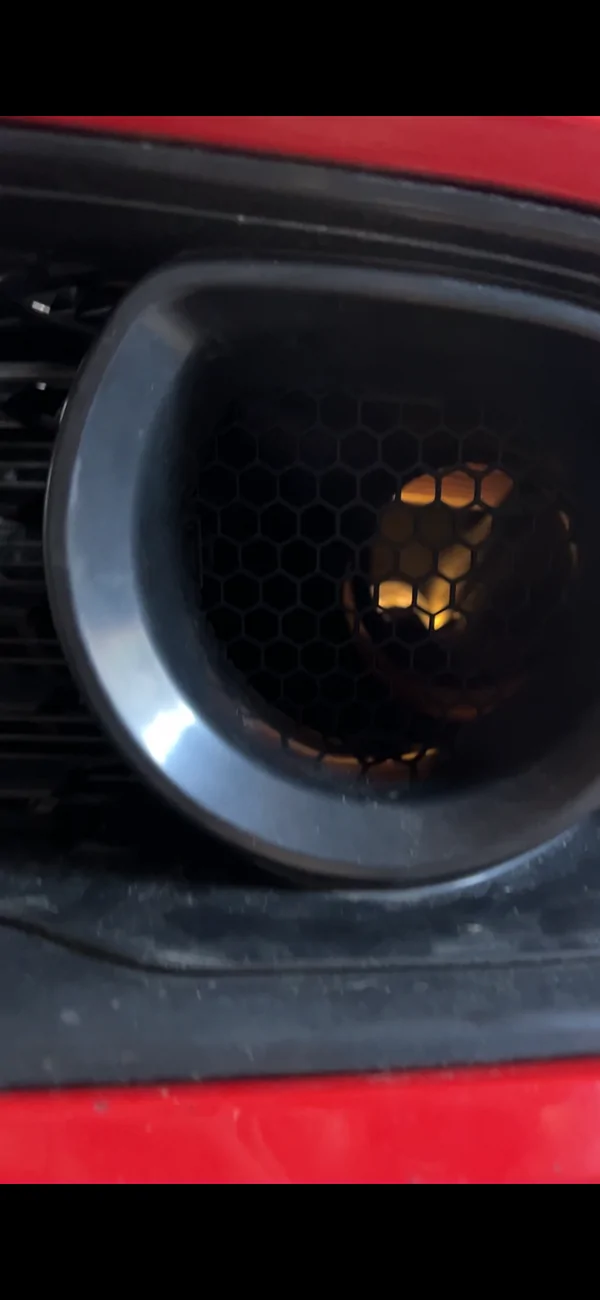
In the end, I decided to design an intake through the bumper nostril.
Measurements showed that a 120 mm diameter duct with a mesh is enough, since the MAF housing is about 100 mm in diameter.
I went for 3D scanning of the front end and the engine bay. The worst part was the stickers — spent an hour peeling them off.
The scan itself took about 30 minutes, way faster than expected. The bumper had to come off to access everything inside.

For printing, we chose polyamide as the strongest and most heat-stable material. Everything was made from it.
Fitment challenges
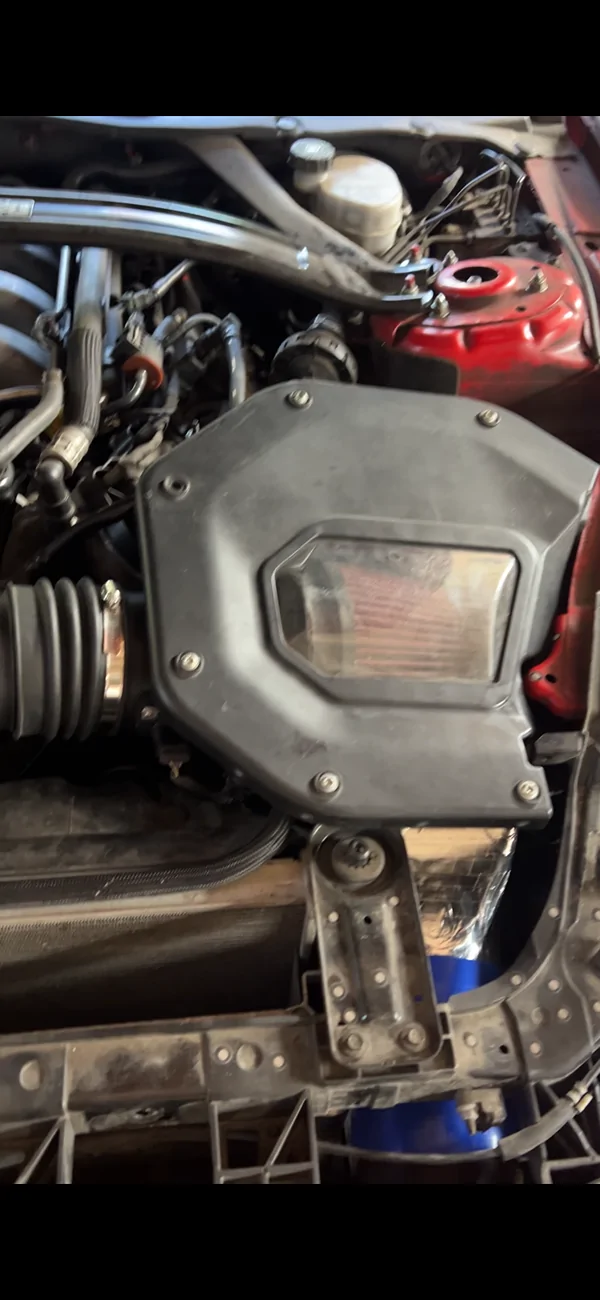
Of course, it wasn’t all smooth. Turned out the airbox is made of polypropylene, which doesn’t play nicely with polyamide (hello chemistry and physics).
The solution was to plastic-weld the flanges, making the airbox and the first duct section a single solid piece, instead of hacking it together with sealants.

I immediately wrapped the airbox in aluminum heat tape to protect it from radiant heat coming off the exhaust manifold and engine.
The hardest part was fitting everything together. Once you have all the parts in your hands and try to assemble them, you realize it’s not simple at all.
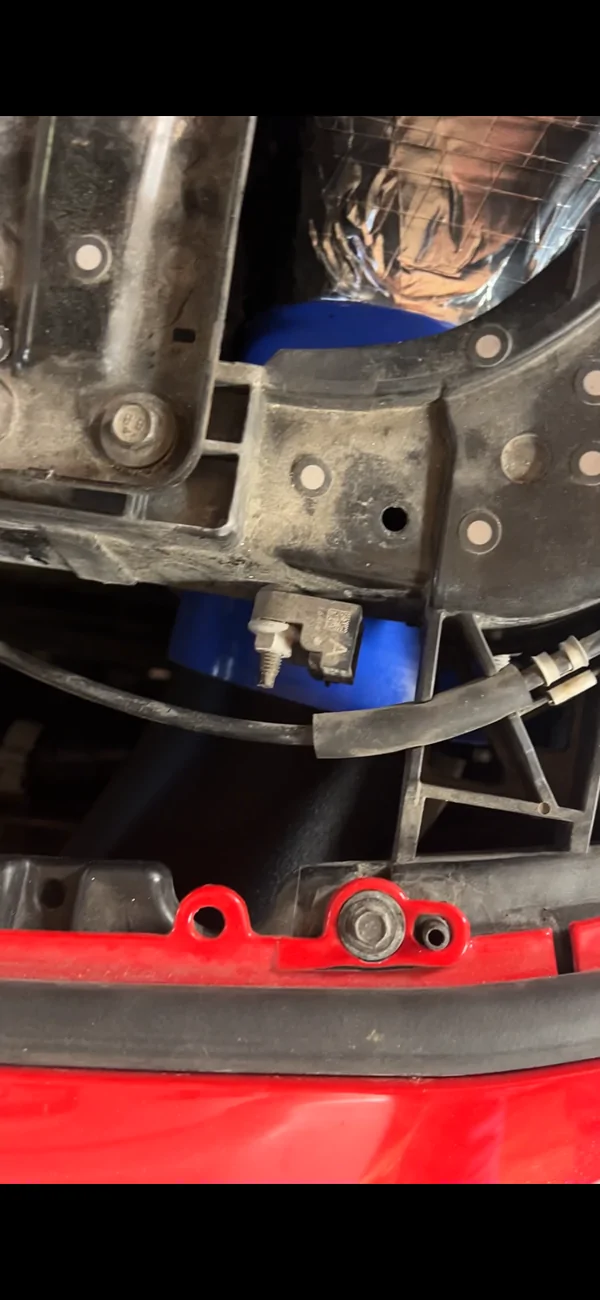
I had to trim the radiator support and part of the frame (not sure of the exact name), and also remove the active grille shutters (they were disabled anyway).
We measured and installed a silicone transition coupler to flexibly connect the airbox outlet to the nostril outlet.
And here’s the best part — the design was so on point that everything connected perfectly on the very first test fit.
I was jumping with joy (not physically — only inside. I’m a grown man after all).

Results
Right after installation, I went for a 30-minute drive, and the results were immediate:
No fuel trim corrections, no timing being pulled. And that’s without the final seal installed inside the airbox yet (it’s a two-piece design with a small gap — minor issue, I’ll fix it).
Final result
I now have a custom intake routed through the bumper nostril, with a clean, factory-correct look for the Mach 1 bumper — and, more importantly, real functionality.
Facts, step by step:
Intake
Underhood temps without ducts to the bumper grille hit around 80°C (176°F) in summer traffic. With the stock ducting, it’s 50–55°C (122–131°F).
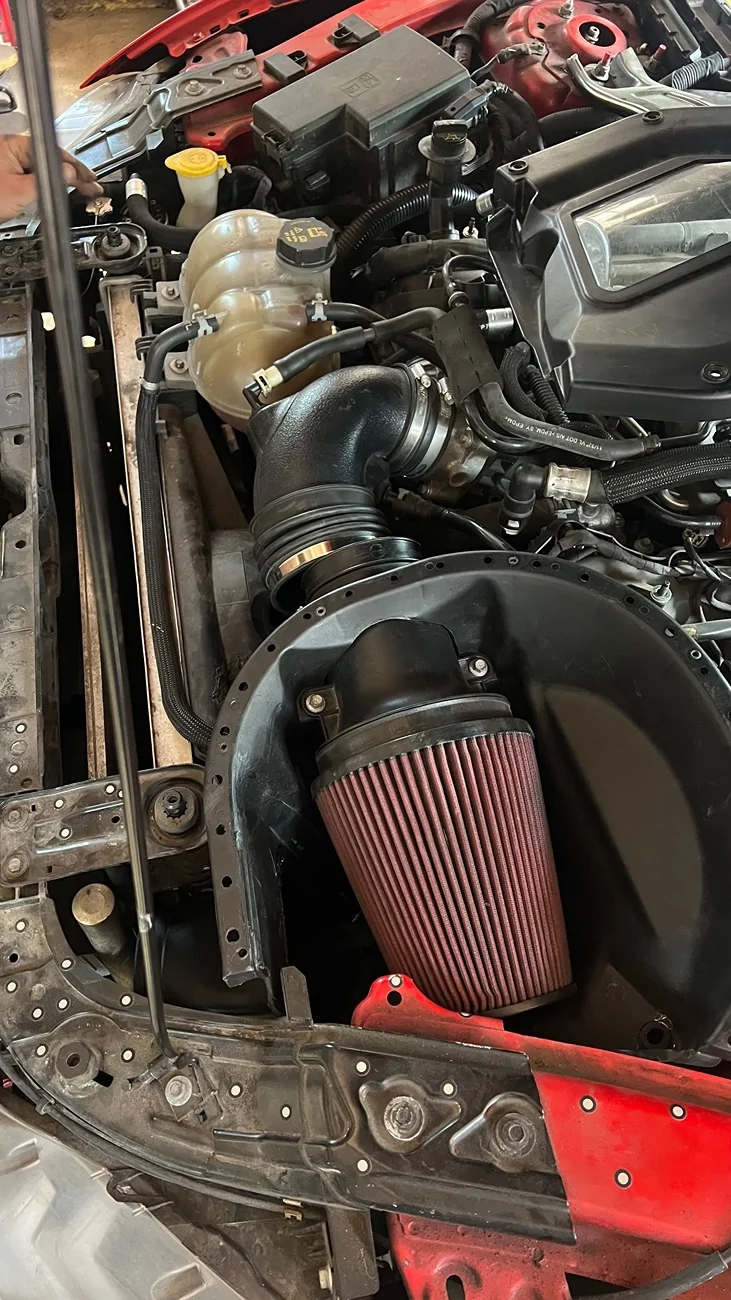
For me, hot intake air means fuel trims. It’s especially annoying at drag events here in Belarus, where you sit in line like at a border crossing, creeping forward every couple of minutes. In summer it’s hell.
So the question is:
How do you run your best when you’re staging with 50–80°C intake temps?
2.
I had a Roush intake, but without ducts to the bumper. So either way, it needed work.
3.
The Mach 1 bumper nostrils are completely blocked. Pure decoration, zero function. I’ve seen an American guy cut in mesh, but that’s still just cosmetic.
4.
By nature, the Coyote is big and runs hot. On top of that, the driver-side exhaust manifold is fully exposed, and the airbox sits about 30 cm away from it.
5.
Add it all up, and you get a very hot intake in summer, especially in the city.
While moving: +5–7°C over ambient.
At a traffic light: temps climb fast to 70°C, and if it’s +30°C outside, you can see 80°C. Scary stuff.
Decision
In the end, I decided to design an intake through the bumper nostril.
Measurements showed that a 120 mm diameter duct with a mesh is enough, since the MAF housing is about 100 mm in diameter.
I went for 3D scanning of the front end and the engine bay. The worst part was the stickers — spent an hour peeling them off.
The scan itself took about 30 minutes, way faster than expected. The bumper had to come off to access everything inside.
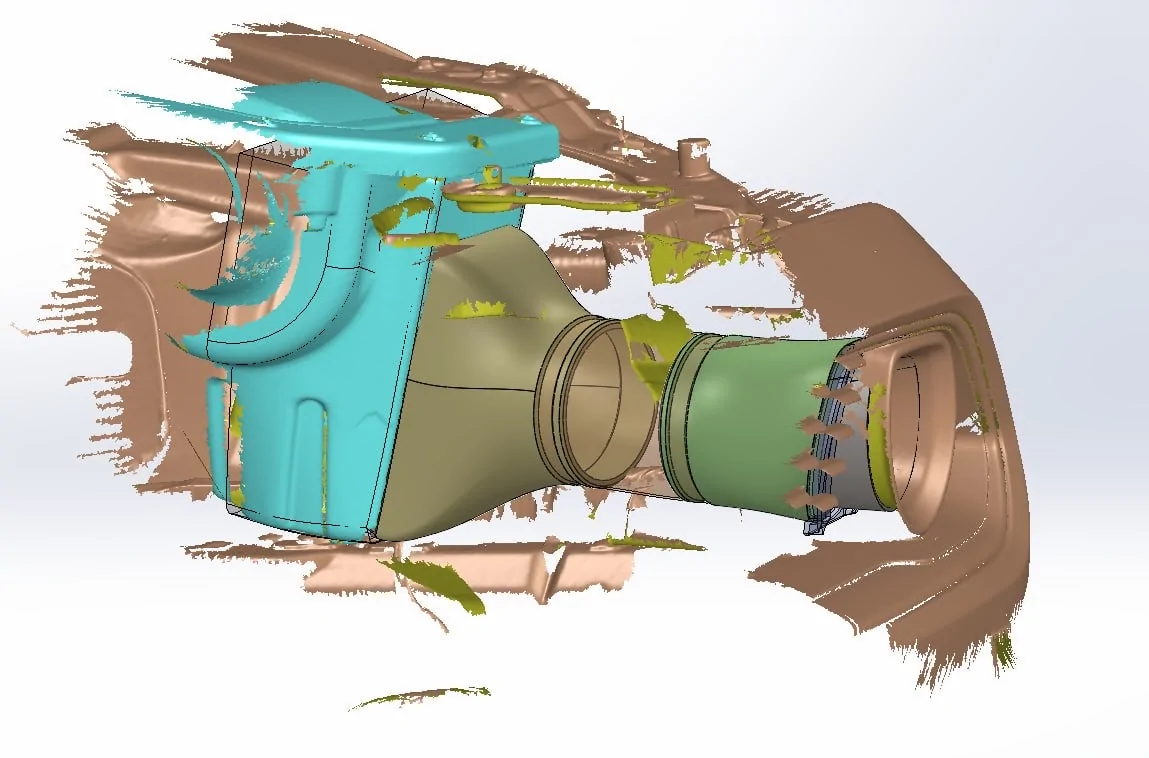
For printing, we chose polyamide as the strongest and most heat-stable material. Everything was made from it.
Fitment challenges
Of course, it wasn’t all smooth. Turned out the airbox is made of polypropylene, which doesn’t play nicely with polyamide (hello chemistry and physics).
The solution was to plastic-weld the flanges, making the airbox and the first duct section a single solid piece, instead of hacking it together with sealants.
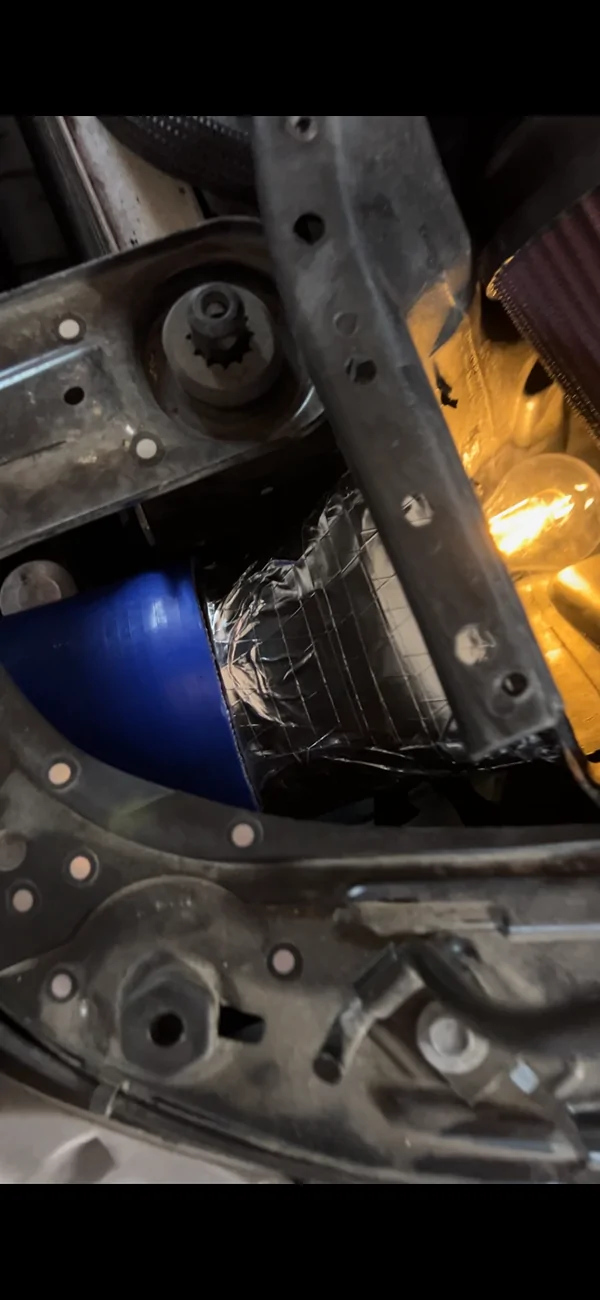
I immediately wrapped the airbox in aluminum heat tape to protect it from radiant heat coming off the exhaust manifold and engine.
The hardest part was fitting everything together. Once you have all the parts in your hands and try to assemble them, you realize it’s not simple at all.
I had to trim the radiator support and part of the frame (not sure of the exact name), and also remove the active grille shutters (they were disabled anyway).
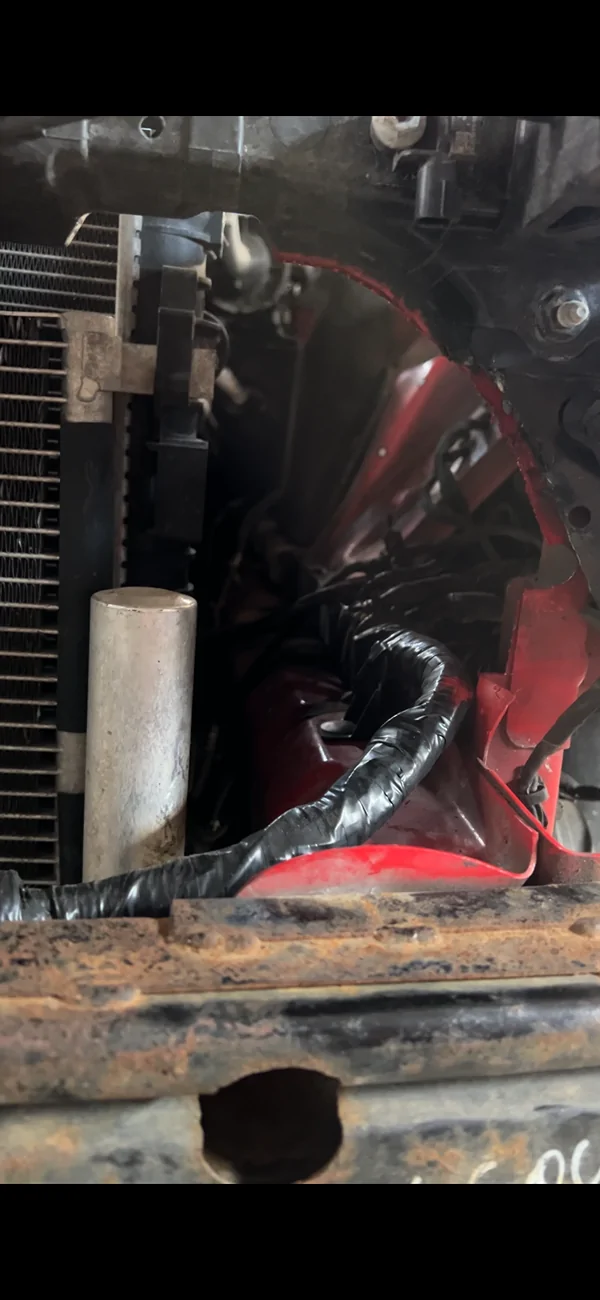
We measured and installed a silicone transition coupler to flexibly connect the airbox outlet to the nostril outlet.
And here’s the best part — the design was so on point that everything connected perfectly on the very first test fit.
I was jumping with joy (not physically — only inside. I’m a grown man after all).
Results
Right after installation, I went for a 30-minute drive, and the results were immediate:
- Ambient: 22°C
- Intake temp while driving in the city: 24°C
- Standing at a light for over a minute: max 30°C
No fuel trim corrections, no timing being pulled. And that’s without the final seal installed inside the airbox yet (it’s a two-piece design with a small gap — minor issue, I’ll fix it).
Final result
I now have a custom intake routed through the bumper nostril, with a clean, factory-correct look for the Mach 1 bumper — and, more importantly, real functionality.
Sponsored