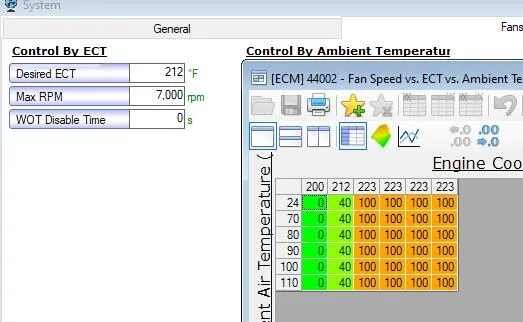
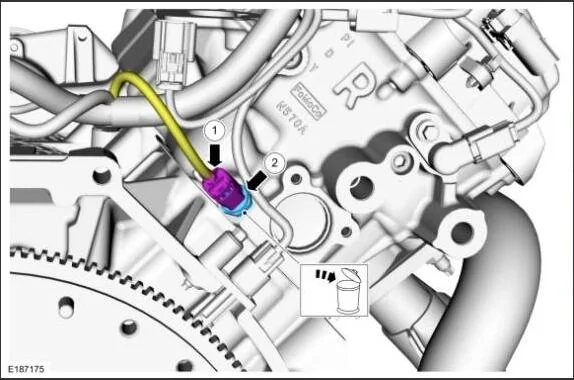
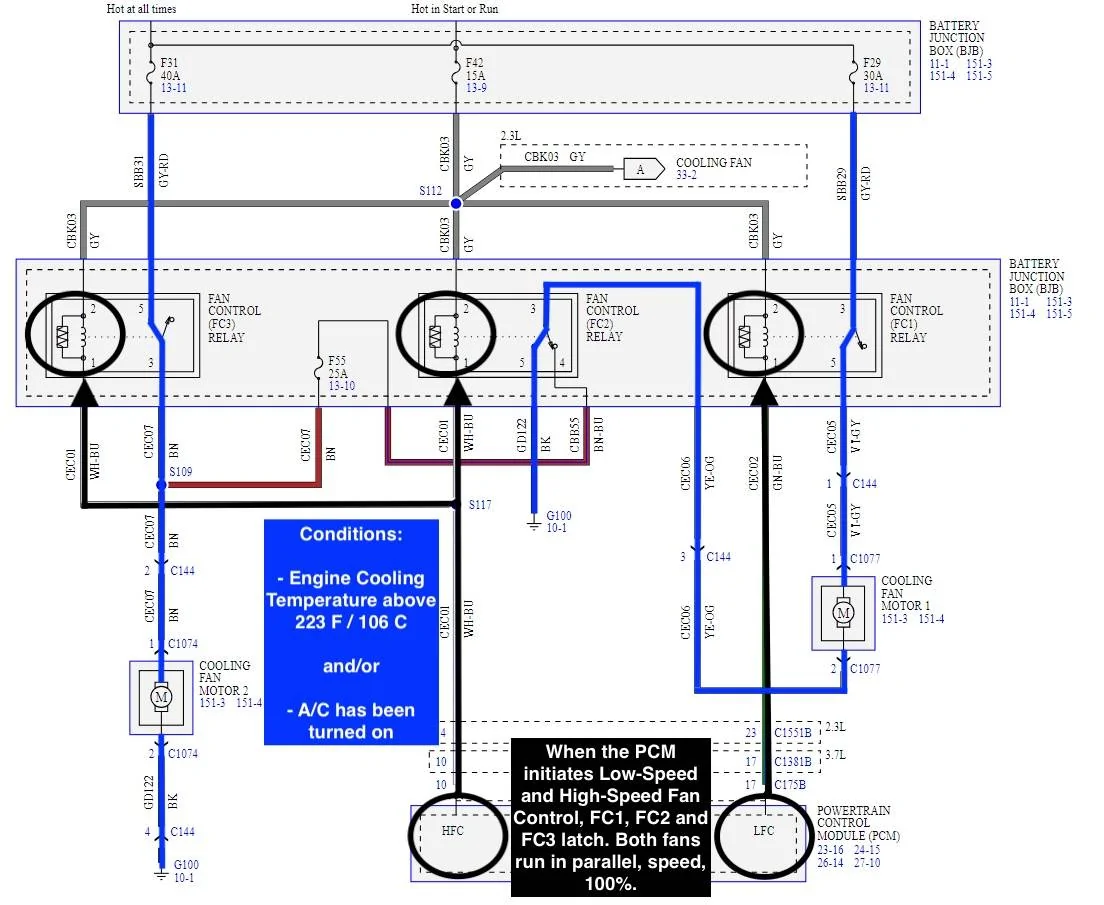
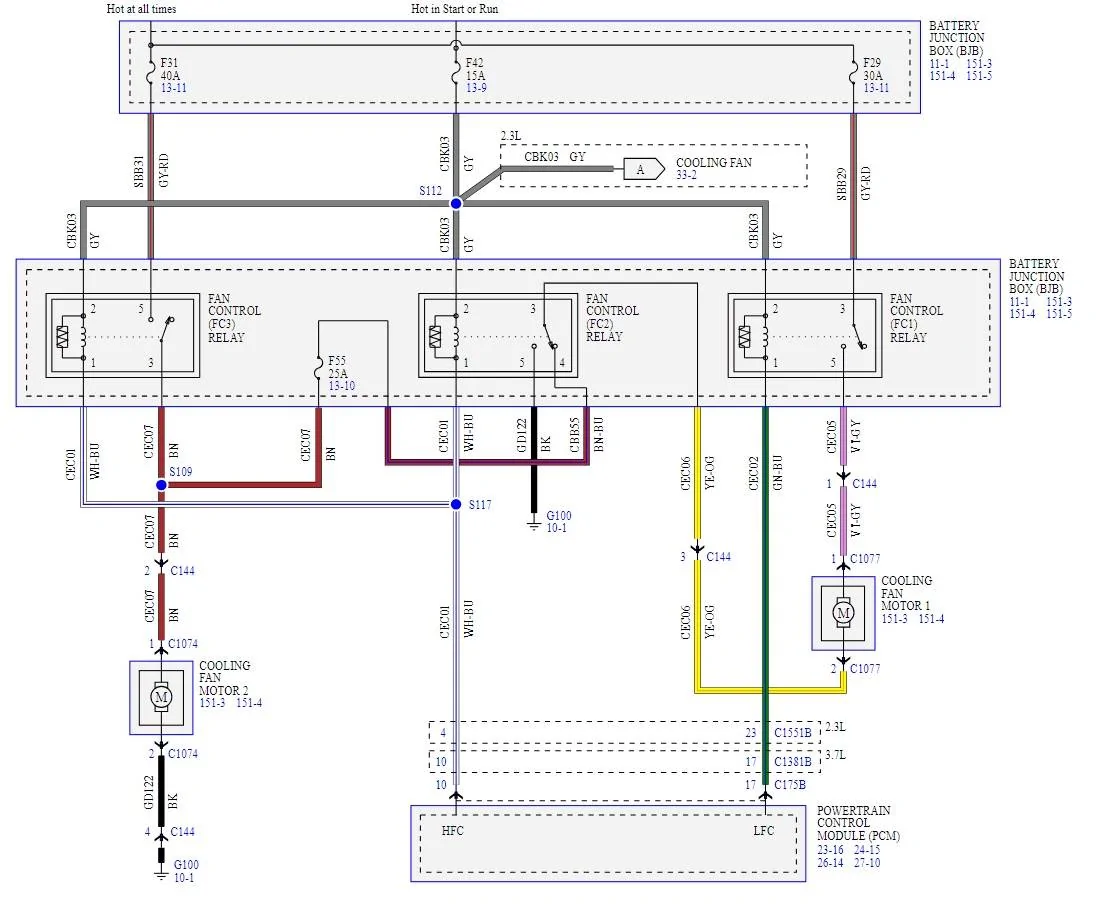
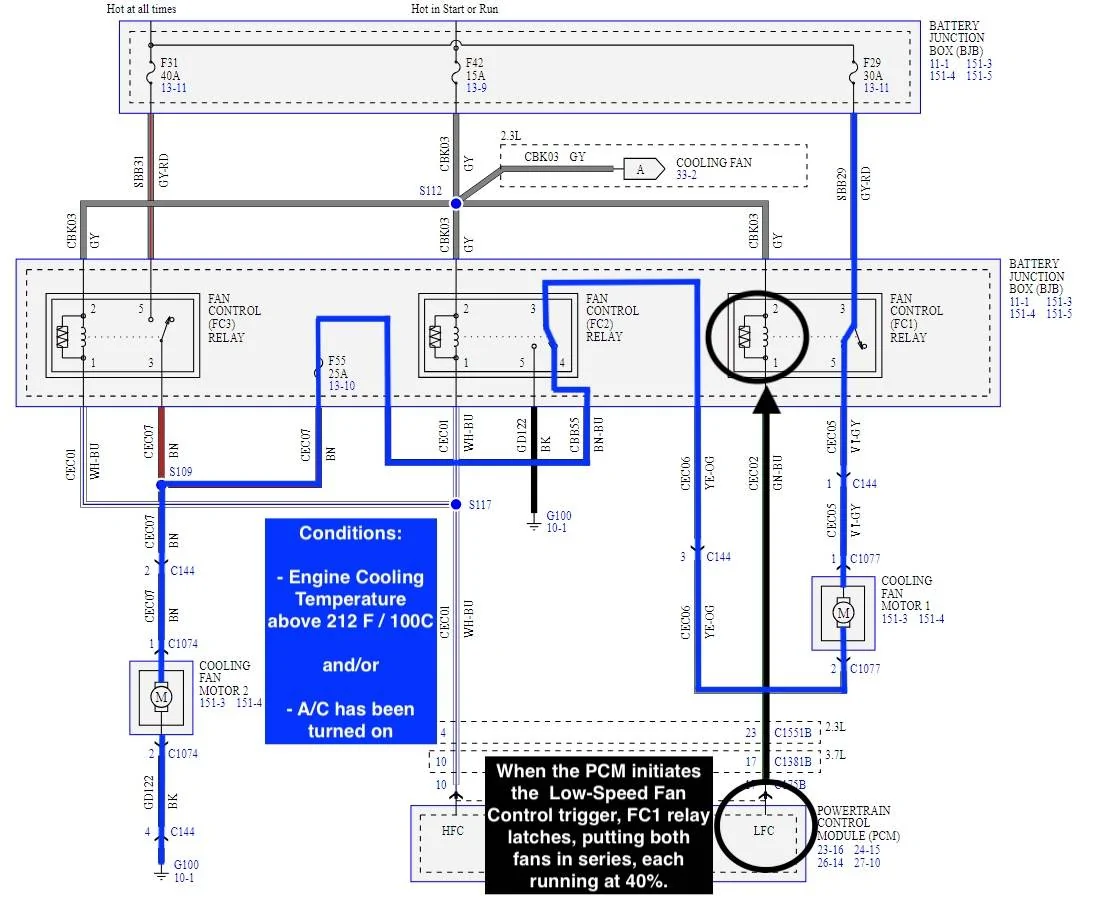
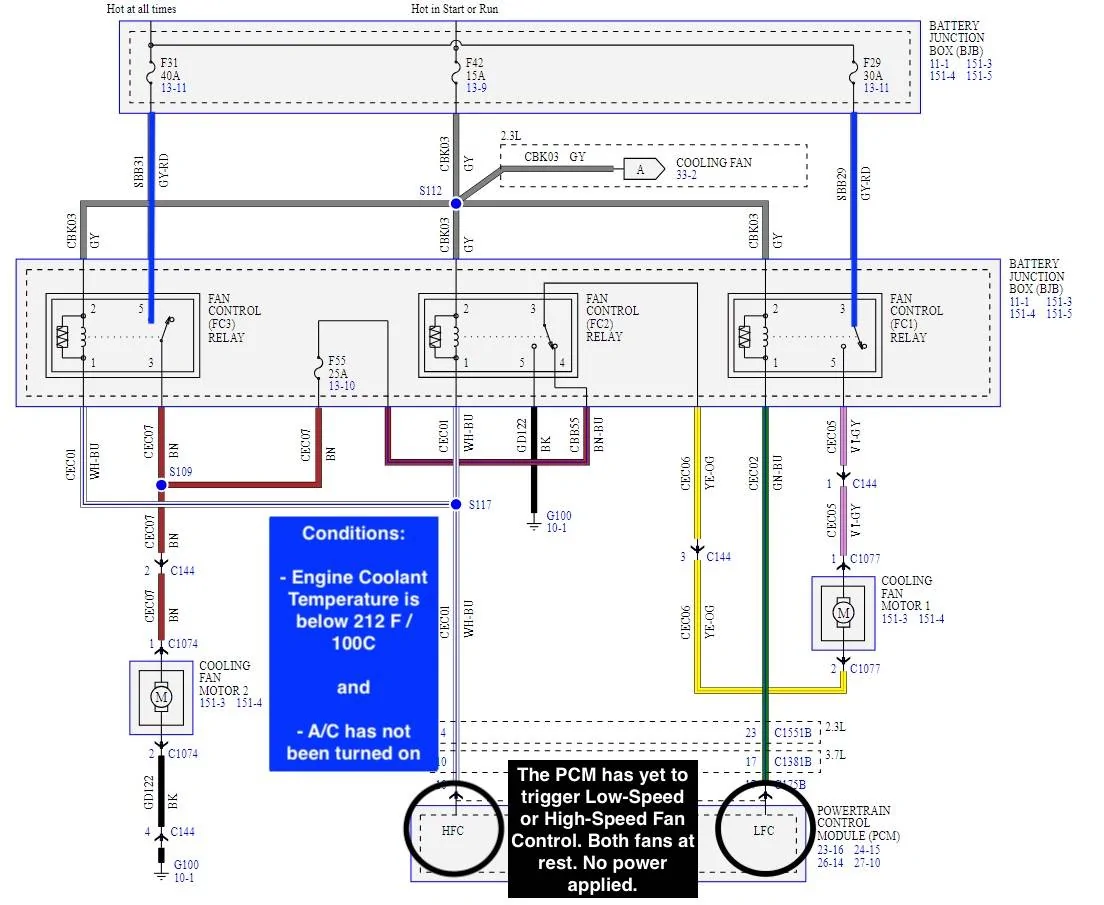
Attached is a table, picture and some schematics related to Coyote engine cooling and fans.
The Coyote has a Cylinder Head Temperature (CHT) sensor; this sensor rests in the back of the head, passenger side. The sensor itself is a thermistor. The resistance of the sensor changes with temperature, with any reference voltages then adjusting as a result. The CHT is what we see when viewing the in-dash display.
Some manufacturers will produce engines with Engine Coolant Temperature (ECT) sensors. These sensors rest in a coolant jacket and read liquid temperatures directly. The Coyote does not have an ECT sensor. In the Powertrain Control Module, software derives the ECT from the CHT. Fans are then turned on/off based on the ECT and other logic.
One can think of ECT as a raw reading at one point in time, while CHT is a measure of everything. ECT + engine load = CHT. ECT can be read with scanner/tuning tools and software. Under light loads, ECT/CHT could be pretty close to one another, while during more spirited driving, ECT/CHT could differ by as much as 10+ degrees, the ECT always being cooler.
When the fans are needed, they will both come on. There is a low-power mode and a high-power mode. The attached schematics will provide insight and might assist in t-shooting an issue.
Why two fans? Fans are to a radiator as pixels are to a photo. The smaller the fan, the greater the coverage (higher resolution).
Why run both at the same time? More uniform cooling across the face of the radiator.
Using Ford technical manual diagrams, this video identifies the location of several modules throughout the car. Best viewed in full screen mode. While watching the video, the item of interest is listed in the left side panel.
Each of the posted primer documents have had their appendices updated with this link. If you've previously downloaded one of those files, one can go back and pull it again.
Attached is an updated primer on charging systems. While the initial document was OK, it didn't have a section on Absorbed Glass Mat (AGM) batteries, a type some 6G owners have gravitated to. I've also added some new link references, cleaned up formatting, etc.
One of the links in the primer connects to a second attachment here: a reference from the Battery Council International (BCI), laying out batteries by group, size and Cold Cranking Amperage (CCA).