

- Joined
- Mar 13, 2016
- Threads
- 62
- Messages
- 1,877
- Reaction score
- 1,450
- Location
- Titusville, Florida
- Website
- www.facebook.com
- First Name
- Tommy
- Vehicle(s)
- '15 GT PP
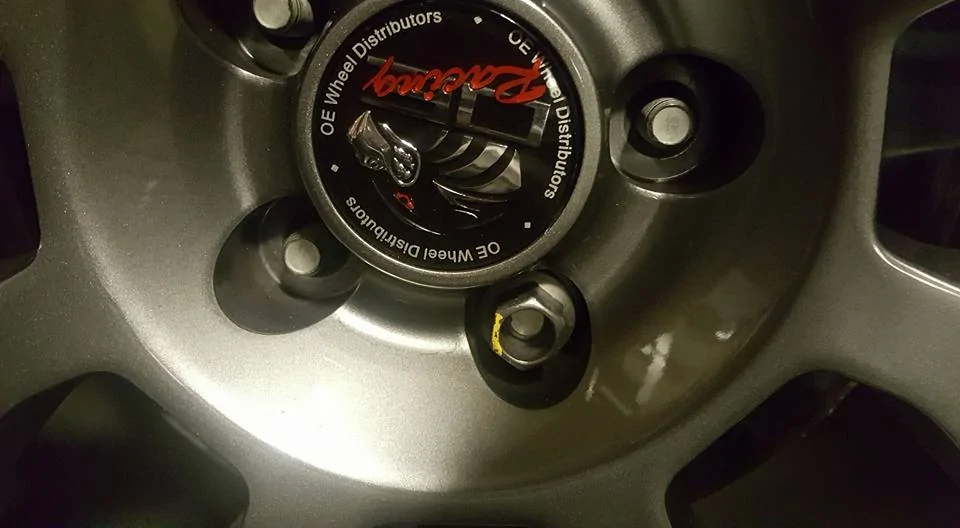
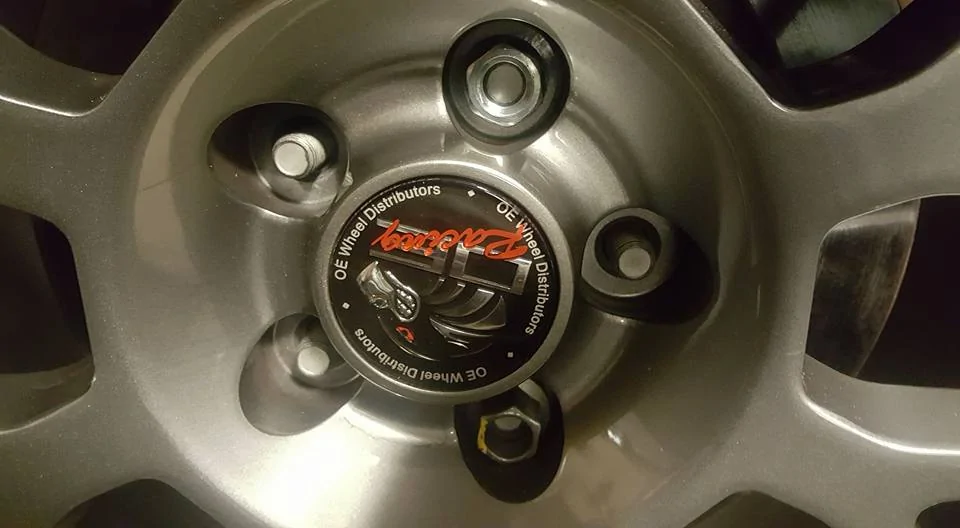
I may have not expressed my point clearly with using a lug nut with more thread engagement. It would only help if you have suitable stud length. I have attached two pictures. The nut with the yellow paint mark is an OEM lug nut with the beauty cover removed. You can see that on the factory hub with no spacer the stud only slightly protrudes beyond the threaded portion of the nut. The other nut is a fully threaded nut that the stud does not protrude from and in fact is only utilizing 1/2 of the thread.Even using the short lugs as shown in your picture several posts back. Looks like you could get an extra several mm of lug travel and turns with those lugs. Could you squeeze 10mm spacers on with those lugs?
The stock studs only protrude approx. 16.5 mm from the seat of the wheel, this would give you about 11 turns or slightly more than the diameter of the stud. This is what Ford deemed sufficient and what is accepted in the industry; 1 to 1.5 times the diameter for a bolted fastener.
If you were to add a 10mm spacer you now have only 6.5 mm of thread engagement or 4.3 turns. This provides less than 50% of accepted thread engagement.
8mm spacer on stock studs is not recommended by us for the same reason, only slightly more than 50% thread engagement. When you add in the fact that any spacer under 12mm is a flat spacer, not hub centric you are placing all wheel loads through a clamped connection with very little thread (1/2 of industry accepted) engagement so all the loads are on the end of the stud which now becomes a longer lever arm to flex the stud. You may or may not be able to reach the factory torque of 150ft/lbs to stretch the stud sufficiently to approach the proper clamp load between the wheel and hub. This lack of clamping force allows movement, movement will lead to stud failures from fatigue because you are asking the stud to perform a job in two opposing directions instead of it's intended one direction which is perpendicular to the wheel hub.
When a proper length stud is used full thread engagement is available and full torque is easily maintained allowing for designed clamping force. When you go to a hub centric spacer you also gain the radial support for the wheel which increases the safety margin.
These are our recommendations, we have a lot of studs and spacers running on race tracks globally every weekend, failures on track are unacceptable but we absolutely do not want them to happen on the street.
We do not recommend anything over 5mm on stock studs and even at that you are only getting about 11.5mm of usable thread. I am more comfortable with staying with in a 3mm window of thread engagement based on a 14mm stud.
Sponsored


