RSPEC-015
Well-Known Member
- Joined
- Mar 18, 2015
- Threads
- 5
- Messages
- 1,021
- Reaction score
- 704
- Location
- Sydney, Australia
- Vehicle(s)
- Ford Territory & Mustang GT
Are the Milltek systems available to be sent to Australia?
Sponsored

A company called Harding Performance are our main distributor in Australia who are based in Melbourne and we have a network of dealers across the rest of the country too.Are the Milltek systems available to be sent to Australia?

Can you get back to my PM please mate. Need to know the prices please [emoji12]A company called Harding Performance are our main distributor in Australia who are based in Melbourne and we have a network of dealers across the rest of the country too.
Thanks SteveP; I'll look them up after Easter.A company called Harding Performance are our main distributor in Australia who are based in Melbourne and we have a network of dealers across the rest of the country too.


hmmmmmm ..... Brexit, anyone? ....Exhaust thread so exhaust info below;
Noise
The external noise emitted by passenger cars has been controlled since 1929 when the Motor Cars (Excessive Noise) regulations were introduced. New cars are now required to meet Europe-wide noise limits. These have been progressively reduced from 82 decibels (dB (A)) in 1978 to the current limit of 74 dB (A) established in 1996. This means it would take 7 new vehicles to make the same amount of noise as one vehicle that just meets the pre-1978 limits. Information on the level of noise recorded for new models of cars at their type approval test is also listed in the data table.
When looking at this information please note that off-road vehicles are allowed to be 1dB (A) louder, as are direct-injection diesels. These allowances are cumulative, so the limit for an off-road vehicle with a direct injection diesel engine is 76 dB (A).
The noise levels quoted above are the maximum levels that are permitted for new vehicle types. Many vehicles produce lower levels of noise, and it is illegal to modify the exhaust system of a vehicle to make it noisier than the level recorded for that model at type approval.
A new EU regulation is being introduced from July 2016, Regulation (EU) No 540/2014, which will phase in tighter noise limits over 10 years, together with a revised, more representative test procedure. By 2026 the limit for most new passenger cars will be 68 dB(A).
The above was taken from here http://www.dft.gov.uk/vca/fcb/cars-and-noise.asp and I came across it because I was trying to find dB readings for the various exhausts on the market. Interestingly is the part in red.

Taking the 'letter of the law' - won't be modifying it - will be replacing itand it is illegal to modify the exhaust system of a vehicle to make it noisier than the level recorded for that model at type approval..


Exhaust thread so exhaust info below;
Noise
The external noise emitted by passenger cars has been controlled since 1929 when the Motor Cars (Excessive Noise) regulations were introduced. New cars are now required to meet Europe-wide noise limits. These have been progressively reduced from 82 decibels (dB (A)) in 1978 to the current limit of 74 dB (A) established in 1996. This means it would take 7 new vehicles to make the same amount of noise as one vehicle that just meets the pre-1978 limits. Information on the level of noise recorded for new models of cars at their type approval test is also listed in the data table.
When looking at this information please note that off-road vehicles are allowed to be 1dB (A) louder, as are direct-injection diesels. These allowances are cumulative, so the limit for an off-road vehicle with a direct injection diesel engine is 76 dB (A).
The noise levels quoted above are the maximum levels that are permitted for new vehicle types. Many vehicles produce lower levels of noise, and it is illegal to modify the exhaust system of a vehicle to make it noisier than the level recorded for that model at type approval.
A new EU regulation is being introduced from July 2016, Regulation (EU) No 540/2014, which will phase in tighter noise limits over 10 years, together with a revised, more representative test procedure. By 2026 the limit for most new passenger cars will be 68 dB(A).
The above was taken from here http://www.dft.gov.uk/vca/fcb/cars-and-noise.asp and I came across it because I was trying to find dB readings for the various exhausts on the market. Interestingly is the part in red.
A well made point, good sir.Taking the 'letter of the law' - won't be modifying it - will be replacing it
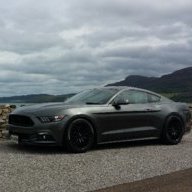
Here you go (as measured on my development car)
OE = 84.3db
EC Approved (Dual & Quad) = 87.2db
X-Pipe (Dual) = 99.2db
X-Pipe (Quad) = 99.8db
All measured at 3750rpm 1/2 meter away from the tips at 45 degree angle
I'm confused. How does this tie in with SteveP's post at the top? Not overly concerned though.Exhaust thread so exhaust info below;
Noise
The external noise emitted by passenger cars has been controlled since 1929 when the Motor Cars (Excessive Noise) regulations were introduced. New cars are now required to meet Europe-wide noise limits. These have been progressively reduced from 82 decibels (dB (A)) in 1978 to the current limit of 74 dB (A) established in 1996.