ShadowBlackR
Well-Known Member
- Thread starter
- #1


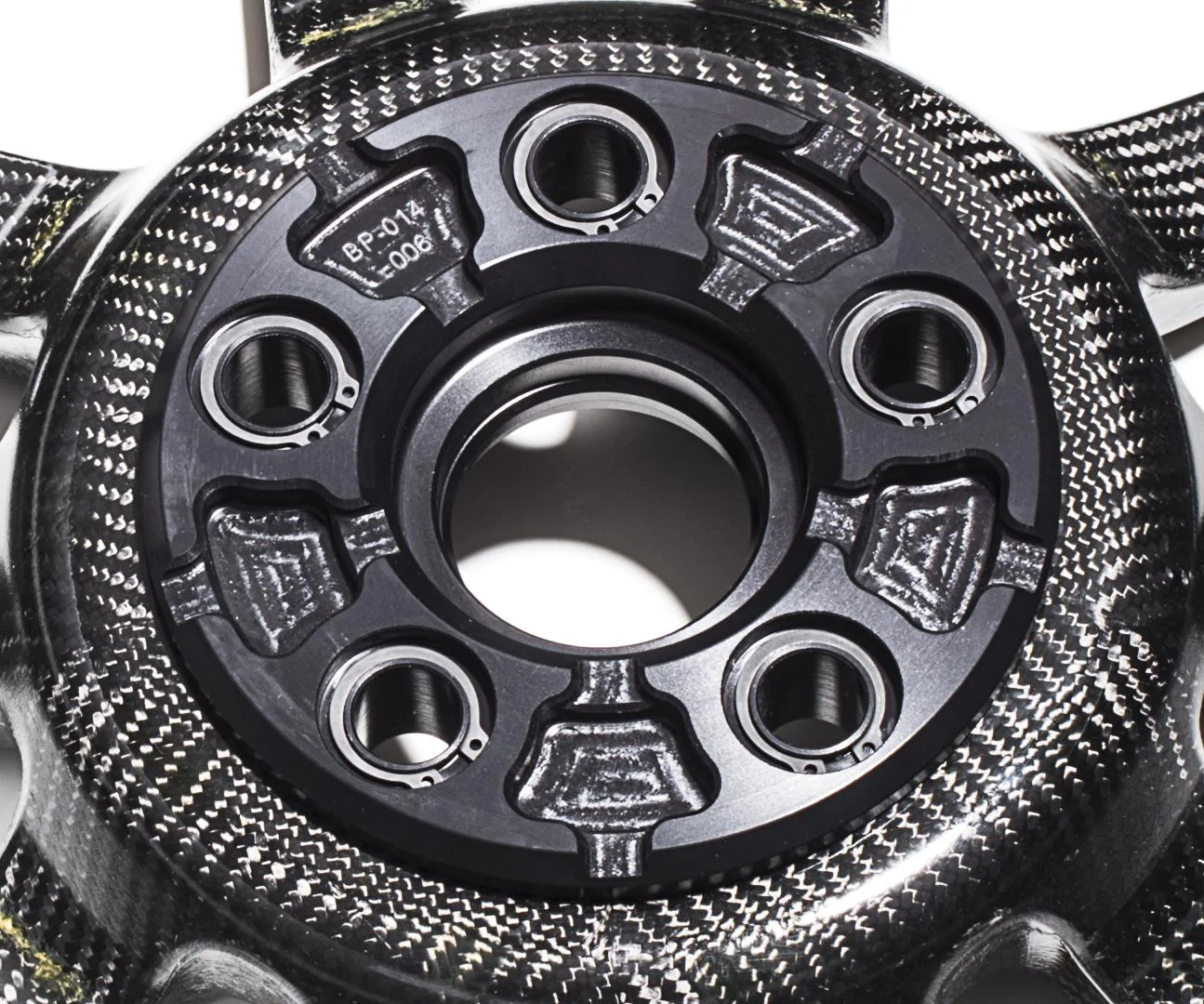
Same here. I never seen or notice it on the other carbon fiber R wheels. Are the lug inserts aluminum or steel?I just wanted say, I studied these wheels in detail when they were announced and searched everywhere for information that would help to sketch them in CAD.
I modeled the inserts by scaling photos and by looking through CR's various patent applications.
Never once did I see a photo or hear mention of a snap ring being used to retain the insert. Thanks a lot for providing the close up shots of the area.
Out of curiosity, can you rotate the inserts by hand or are they a very tight fit?
Saw my first R at a dealer yesterday and checked out the CR wheels for the first time. I saw the fronts had some kind of white coating on the innerside of the barrel that had a rough, crystalline look. Since it was only on the portion of the rim under the rotor/caliper assembly, I assumed it was some kind of heat-shield material. In your research and examination of the CR patents, did they mention this coating material? I just wondered what it was.I just wanted say, I studied these wheels in detail when they were announced and searched everywhere for information that would help to sketch them in CAD.
I modeled the inserts by scaling photos and by looking through CR's various patent applications.
Yep. It's ceramic coating to protect the carbon fiber from heat. All the R front wheels have that white coating.Saw my first R at a dealer yesterday and checked out the CR wheels for the first time. I saw the fronts had some kind of white coating on the innerside of the barrel that had a rough, crystalline look. Since it was only on the portion of the rim under the rotor/caliper assembly, I assumed it was some kind of heat-shield material. In your research and examination of the CR patents, did they mention this coating material? I just wondered what it was.
I figured it might be ceramic. Looked like it would be a b!tch to clean after a day at the track!Yep. It's ceramic coating to protect the carbon fiber from heat. All the R front wheels have that white coating.
Oh yeah.In your research and examination of the CR patents, did they mention this coating material? I just wondered what it was.
From here.FoMoCo said:During track testing the extreme performance capabilities of the braking system developed heat which required the maximum technology available in from Carbon Revolution. When brake temperature measurements were taken, it was revealed Shelby GT350R’s ultra-powerful brakes were creating rotor temperatures in excess of 900 degrees Celsius. As a result, the wheel design was elevated from a road car specification to a thermal standard more suitable for motorsports.
For decades aerospace companies have treated turbine blade materials subject to extreme heat with ceramic coatings to help improve durability. The technology is also used in top-tier open-wheel racing environments. Athermal barrier coating system developed by Carbon Revolution uses this same technology.
Created specifically for motorsport and aerospace applications where extreme temperature conditions are encountered, Carbon Revolution’s thermal barrier coating system uses a multistage, multimaterial coating cocktail that provides an excellent thermal barrier. Using a plasma arc gun to liquefy a ceramic material, the wheels are coated at critical points around the inner wheel “barrel” and on the back of the spokes. The result is an incredibly thin, nearly diamond-hard coating that reliably shields the resin from heat – reducing maximum wheel temperatures and allowing continuous track use by even the most aggressive drivers.
You can do a few things for camber adjustment on the front.I figured it might be ceramic. Looked like it would be a b!tch to clean after a day at the track!
I looked at the strut tops in the engine bay and they didn't seem to have any allowance for adjustment. I asked the salesman about stock alignment settings (specifically camber) and he drew a blank. He ran over to get a service guy and he confirmed there was no adjustment at the strut top, but "if you lower it, you'll get more negative camber." The car did seem to have quite a high ride height as it sat on the floor, but what do you need to do to get it setup well for the track? I see in youy sig file you mention camber plates, toe links, etc. So aftermarket parts are necessary to get the tires working well?
There's a very good chance that the car still had the shipping spacers installed giving it that high ride height.I figured it might be ceramic. Looked like it would be a b!tch to clean after a day at the track!
I looked at the strut tops in the engine bay and they didn't seem to have any allowance for adjustment. I asked the salesman about stock alignment settings (specifically camber) and he drew a blank. He ran over to get a service guy and he confirmed there was no adjustment at the strut top, but "if you lower it, you'll get more negative camber." The car did seem to have quite a high ride height as it sat on the floor, but what do you need to do to get it setup well for the track? I see in youy sig file you mention camber plates, toe links, etc. So aftermarket parts are necessary to get the tires working well?