
Sponsored

1/4 Mile Shift Techniques (MT-82 Owners)

TheLion

Well-Known Member
Joined
Jul 1, 2016
Threads
68
Messages
1,621
Reaction score
601
Location
US
Vehicle(s)
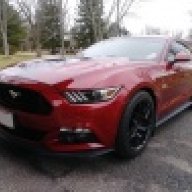
Ruby Red 2016 Mustang GT PP 6-MT
Here is something I frankly have little experience in. Sure I've been driving stick for over a decade, I can certainly shift quick, but there's more to it than just letting of the clutch as fast as you can.

Mods are in my sig. Obviously launch is probably going to be the biggest challenge with a manual and all seasons, but I think at this point the modifications are working very well togeather.

Also, I've never had issues with traction on the 235 all seasons from a rolling start (5~10mph) even if I hammer it. At most I get a nice chirp 1-2. Now with the 3.73's it doesn't even squeal in first from a rolling start where it used to with 3.31's (same engine mods). I'm guessing this is because the engine is moving out of torque band and into the power band sooner (or my tires are a little grippier now having a 7500 miles on them)

At any rate, how are you modulating the clutch and throttle in the upper gears? There's more than one way to do it, but I'm wondering what methods are used for the fastest times.

Here's some different methods I've tried on back roads:

1. Let off the clutch and onto the throttle as fast as I can without grinding the gears, aka what most newbies do when they think they are shifting fast

2. Let the clutch fully engage (very short pause), then press on throttle as fast as I can. This helps to not bog the engine down as much, but takes a bit longer for each shift.

3. Slip the clutch a bit (so i'm continually slipping it less and less as I press down on the throttle, this happens fairly quickly and almost subconsciously unlike a slow start for daily driving, but I can do it) at the start of each gear, let the engine build some boost before fully engaging. Transition is slower, but the engine seems to really respond well, it just makes smooth strong power this way, kind of how an auto feels (converter slip decreases as RPM increases).

Each has a trade off and a benefit. For those who have a lot of drag time under their belts, what have you found to work best with the stock turbo? I'm sure different methods have different values depending on the car's power and torque curve as well. What works well for a stock turbo may not be the best for a big turbo.
Sponsored


Rebellion

Well-Known Member
Joined
Aug 30, 2016
Threads
14
Messages
1,052
Reaction score
273
Location
Houston
Vehicle(s)
2016 Competition Orange GT
I'd say 3, at least for the GT. With imports 4-cyls I would do 1 all the time but for some reason, in the GT, the engine and transmission don't respond well to this...perhaps because the gearing is so close. With the GT, I find that I need to be a lot more precise with rev matching. With the EB, I speculate it's between 1 and 3.
 
OP
OP
TheLion

TheLion

Well-Known Member
Joined
Jul 1, 2016
Threads
68
Messages
1,621
Reaction score
601
Location
US
Vehicle(s)
Ruby Red 2016 Mustang GT PP 6-MT
I'd say 3, at least for the GT. With imports 4-cyls I would do 1 all the time but for some reason, in the GT, the engine and transmission don't respond well to this...perhaps because the gearing is so close. With the GT, I find that I need to be a lot more precise with rev matching. With the EB, I speculate it's between 1 and 3.
I was kind of leaning towards 3 as well. That slight slip seems to allow the engine to build up boost and power through the rest of the gear.

The car certainly "feels" faster doing that, but then again the ecoboosts don't feel as fast as they actually are due to the linear down slope of the torque curve and the gentle arch of the power curve (think electric motor torque curve).

Have you ever tracked the car to see what the 1/4 mile time differences are? I know slipping the clutch is a must during launch with a manual unless you have super wide 305 drag radials or one of those "soft engagement" clutches that actually allow a controlled amount of slip even if you "side step" the pedal. But I'm running the factory street unit so it's all up to me to slip it.
 

apx632

Well-Known Member
Joined
Jan 20, 2016
Threads
14
Messages
547
Reaction score
138
Location
The Woodlands, TX
Vehicle(s)
2016 Ecoboost Mustang Stock- 13.64@100 1/4 mile
It's hard for me to describe my technique. But basically I shift without any regard for playing it "safe" to preserve the drivetrain. I get that from my Dad. That's how he shifted, and taught me to shift during a race. Do either of yall preload the shifted before you shift? I do that, I'll start to pull on the shifter (or push if its 3rd) before I press in the clutch. It's kind of like a spring effect once the clutch releases the shifter to allow it to move.
 
OP
OP
TheLion

TheLion

Well-Known Member
Joined
Jul 1, 2016
Threads
68
Messages
1,621
Reaction score
601
Location
US
Vehicle(s)
Ruby Red 2016 Mustang GT PP 6-MT
It's hard for me to describe my technique. But basically I shift without any regard for playing it "safe" to preserve the drivetrain. I get that from my Dad. That's how he shifted, and taught me to shift during a race. Do either of yall preload the shifted before you shift? I do that, I'll start to pull on the shifter (or push if its 3rd) before I press in the clutch. It's kind of like a spring effect once the clutch releases the shifter to allow it to move.
What kind of times are you seeing with that method? I see in your sig your running a Tune+ 93 octane tune, FMIC and a few other mods. My car is pretty similar (aka stock turbo bolt on category).
 

Sponsored

Rebellion

Well-Known Member
Joined
Aug 30, 2016
Threads
14
Messages
1,052
Reaction score
273
Location
Houston
Vehicle(s)
2016 Competition Orange GT
I was kind of leaning towards 3 as well. That slight slip seems to allow the engine to build up boost and power through the rest of the gear.

The car certainly "feels" faster doing that, but then again the ecoboosts don't feel as fast as they actually are due to the linear down slope of the torque curve and the gentle arch of the power curve (think electric motor torque curve).

Have you ever tracked the car to see what the 1/4 mile time differences are? I know slipping the clutch is a must during launch with a manual unless you have super wide 305 drag radials or one of those "soft engagement" clutches that actually allow a controlled amount of slip even if you "side step" the pedal. But I'm running the factory street unit so it's all up to me to slip it.
I haven't tracked it and I'm running all stock powertrain and tires (still). I do preload the shifter a bit, in an effort to make the clutch pedal movement as quick as possible, but I do slow it down a tiny little bit just above the engagement.

It's not very scientific to say it, but whatever feels faster should be the correct way (in other words acceleration). I think that proper rev-matching is crucial, I prefer to over rev just a bit...otherwise valuable time is wasted.
 
OP
OP
TheLion

TheLion

Well-Known Member
Joined
Jul 1, 2016
Threads
68
Messages
1,621
Reaction score
601
Location
US
Vehicle(s)
Ruby Red 2016 Mustang GT PP 6-MT
I haven't tracked it and I'm running all stock powertrain and tires (still). I do preload the shifter a bit, in an effort to make the clutch pedal movement as quick as possible, but I do slow it down a tiny little bit just above the engagement.

It's not very scientific to say it, but whatever feels faster should be the correct way (in other words acceleration). I think that proper rev-matching is crucial, I prefer to over rev just a bit...otherwise valuable time is wasted.
That's kinda what I was thinking with #3 on my list of methods. A little slip going into each gear (just like launch, but not nearly as much) seems to keep the engine from bogging down. My theory is that the engine is aloud to build boost as well as fly wheel momentum (as your not fully engaging immediately), so once you fully engage the clutch, it's not fighting all 3 at once (moving a 3750 lb car (with driver), building flywheel momentum and building boost).

Turbo and even NA engines don't respond as well to shock or sudden RPM changes as an electric motor which doesn't need to build turbo momentum, flywheel and crank momentum, optimize fuel flow, afr etc. Current flow in the coils and magnetic fields can change far more rapidly than the above.

While the EB's can be surprisingly fast for what they are, they do seem to be picky on how you apply that power, more so than an equivalently powered NA engine. The advantage comes in fuel efficiency, weight or power density, handling and overall cost up to a certain point (at some point, it will be cheaper to build a super charged V8 than trying to push more power through the little 2.3L with gaint turbos, exotic fuels, exotic rods, crank, bearings, pistons etc).

The sweet spot for bolt on EB's with stock turbos seems to be in the 12 second range. Big turbos move you into the 11's if your still on pump gas. Most seem to need to use blended fuels or race gas to get into 10's and most likely a built bottom end if it's going to last.
 

Rebellion

Well-Known Member
Joined
Aug 30, 2016
Threads
14
Messages
1,052
Reaction score
273
Location
Houston
Vehicle(s)
2016 Competition Orange GT
That's kinda what I was thinking with #3 on my list of methods. A little slip going into each gear (just like launch, but not nearly as much) seems to keep the engine from bogging down. My theory is that the engine is aloud to build boost as well as fly wheel momentum (as your not fully engaging immediately), so once you fully engage the clutch, it's not fighting all 3 at once (moving a 3750 lb car (with driver), building flywheel momentum and building boost).

Turbo and even NA engines don't respond as well to shock or sudden RPM changes as an electric motor which doesn't need to build turbo momentum, flywheel and crank momentum, optimize fuel flow, afr etc. Current flow in the coils and magnetic fields can change far more rapidly than the above.

While the EB's can be surprisingly fast for what they are, they do seem to be picky on how you apply that power, more so than an equivalently powered NA engine. The advantage comes in fuel efficiency, weight or power density, handling and overall cost up to a certain point (at some point, it will be cheaper to build a super charged V8 than trying to push more power through the little 2.3L with gaint turbos, exotic fuels, exotic rods, crank, bearings, pistons etc).

The sweet spot for bolt on EB's with stock turbos seems to be in the 12 second range. Big turbos move you into the 11's if your still on pump gas. Most seem to need to use blended fuels or race gas to get into 10's and most likely a built bottom end if it's going to last.
Yeah, for some reason, even the GT does respond well to sudden RPM changes. Feels completely different from other NA engines, specially older fuel injected push rods and even more so with carburated.

I think it has to do with the low end torque, the way it's created (CMC plates) and possibly the throttle/fuel response. I don't know exactly why, there is so much technology and electronics involved there anyways, maybe it's not possible to tune for it. It definitely drives different than other powertrains, you can feel it at startup, it likes smoothness.

The only thing I can remotely think of, is to change flywheel to a lighter one, perhaps someone with more experience can chime it in this regards, maybe the actual difference is too marginal to be worth it.
 
OP
OP
TheLion

TheLion

Well-Known Member
Joined
Jul 1, 2016
Threads
68
Messages
1,621
Reaction score
601
Location
US
Vehicle(s)
Ruby Red 2016 Mustang GT PP 6-MT
I wouldn't think changing the fly wheel would help unless it's on a circuit track where RPMS and constantly varying while in gear. Remember the energy you store up can also be used, so it's a net zero gear to gear unless you dump the momentum without utilizing it.

Slipping a bit going into each gear utilizes that momentum. My number 2 method is probably the slowest as it doesn't utilize the energy but rather dissipates the rotational energy first and then rebuilds it.

It is my understanding the Ecoboost mustang at least has a 30lb flywheel, that's massive. Most car's I"ve driven, even passenger sedans, aren't heavier than 20lbs. That weight is probably tuned to help the small turbo 4 get the car moving so it doesn't bog down without relying on a lot of clutch slip. In an auto that's not necessary due to the slip of the torque converter.

The car really moves when I can shift properly, it just a nice smooth strong pull. There's a saying fire arms training I often use when pushing my speed and accuracy: Slow is Smooth and Smooth is Fast.

This may apply to a degree to drag racing as well.
 
OP
OP
TheLion

TheLion

Well-Known Member
Joined
Jul 1, 2016
Threads
68
Messages
1,621
Reaction score
601
Location
US
Vehicle(s)
Ruby Red 2016 Mustang GT PP 6-MT
Here's something interesting. I've been going back to messing around with the clutch spring. First mod I tried was the no-assist / return spring (it's dual action actually, it assists in pressing the pedal down past 30% travel by decompressing. At 30% it's fully compressed. Less than 30% and it decompresses again but is pushing the pedal back out to full extended, hence why it creates such a horrible pressure curve that's more numb than a domineering macho house wife...).

There are some issues that need to be worked out to make the no spring mod reliable, namely getting the pedal to return. But with the much better feedback, I can modulate the clutch far more accurately. Boy did it make a difference in driving, I can rev match almost perfectly without even trying, it's night over even the steeda spring which I had been using since before I even hit 1k miles.

I can also control slip much more accurately and smoothly. I think one really big key in the manual is getting that feedback and precision of engagement which the stock system is completely devoid of. That's one of the things I loved about my old mazda MX-5 I had back in high school / college, the clutch had such great feedback compared to most other cars of the time.

In a manual, a good shifter and excellent clutch feedback is paramount, otherwise you'll always be second fiddle to the autos on the drag strip...
Sponsored


Top