
Sponsored

Drivers side tensioner installed wrong from Ford?

Roh92cp

Well-Known Member
Joined
Jun 27, 2015
Threads
79
Messages
2,896
Reaction score
1,174
Location
Fort Kent Maine
First Name
Shawn
Vehicle(s)
OW GTPP Whipple

MikeD1

Well-Known Member
Joined
Sep 26, 2015
Threads
18
Messages
1,170
Reaction score
295
Location
Central FL
Vehicle(s)
2016 Challenger Hellcat
Hmm, seems odd to me Ford would continue to build the engine incorrectly once they became aware there was an issue. Especially since the 'fix' doesn't involve any extra parts or labor, just a process change.

Perhaps it's not really an issue unless you are "building" the engine with the intent of making a race car out of it. Let's face it, Roush is cranking out 1000's of Stage 3 cars, warranting them for 3/36 and not tearing the thing apart to correct the chain.

And, while we're at it - if you have the thing torn that far down why add some part to compensate for the error, why not just pull the chain & reverse it ??
 
OP
OP
Roh92cp

Roh92cp

Well-Known Member
Joined
Jun 27, 2015
Threads
79
Messages
2,896
Reaction score
1,174
Location
Fort Kent Maine
First Name
Shawn
Vehicle(s)
OW GTPP Whipple
Hmm, seems odd to me Ford would continue to build the engine incorrectly once they became aware there was an issue. Especially since the 'fix' doesn't involve any extra parts or labor, just a process change.

Perhaps it's not really an issue unless you are "building" the engine with the intent of making a race car out of it. Let's face it, Roush is cranking out 1000's of Stage 3 cars, warranting them for 3/36 and not tearing the thing apart to correct the chain.

And, while we're at it - if you have the thing torn that far down why add some part to compensate for the error, why not just pull the chain & reverse it ??
Right!!
 
Last edited:
OP
OP
Roh92cp

Roh92cp

Well-Known Member
Joined
Jun 27, 2015
Threads
79
Messages
2,896
Reaction score
1,174
Location
Fort Kent Maine
First Name
Shawn
Vehicle(s)
OW GTPP Whipple
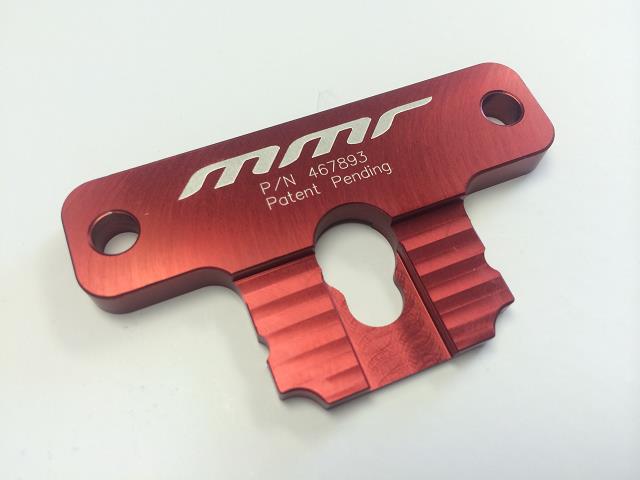
Here is a great new part that MMR spent most of last year testing. Ford is notorious for tensioning chains on the wrong side and the coyote was no different. Long story short the chains should always be tensioned on the "slack" or loose side. Unfortunately Ford missed the boat again so to speak, and the driver side cylinder head on all coyote 5.0 engines are tensioned on the wrong side. Many will ask "what does it do?", the answer is it allows for a large sweep of uncontrolled timing and racheting of the cam which is very hard on timing chains and allows for erratic cam timing, for those that have ever degreed a modular engine some will notice that it is very hard to make the cams repeat after a few revolutions, this is one reason. This new part from MMR fixes the problem by essentially flipping the tensioner upside down with a simple billet bracket. The kits includes the MMR billet bracket and ARP hardware. The Cam sprockets must be removed for installation, otherwise it is a very easy install and should be considered for any serious build. Production versions are red Anodized (prototype shown) and available now!

Order here: 2011-2017 5.0 Coyote MMR Billet Secondary Tensioner Bracket [467893] - $59.99 : Modular Motorsports, Home of the Worlds Fastest Modular Engines


Here is the quotes from MMR advertising this problem same thing as the link above.
 

65ffr

Well-Known Member
Joined
Nov 12, 2014
Threads
3
Messages
115
Reaction score
30
Location
Texas
Vehicle(s)
'04 Ram 1500, '65 FFR Cobra
the secondary chain on driver side should be tensioned on the bottom. Is it not from factory?
 

Sponsored

jasonstang

Well-Known Member
Joined
Oct 23, 2015
Threads
23
Messages
5,571
Reaction score
1,307
Location
Denver, CO
Vehicle(s)
2017 GB GT/CS 6MT
How is it different if its tensioned from top vs from bottom?
 

65ffr

Well-Known Member
Joined
Nov 12, 2014
Threads
3
Messages
115
Reaction score
30
Location
Texas
Vehicle(s)
'04 Ram 1500, '65 FFR Cobra
you want the tensioner to take up slack on the 'loose' side. on driver side head, the main chain turns the right side cam (looking at it from the front). The r side cam in turn pulls the left side cam via the secondary chain from the top (it's turning clockwise). So the loose side is the bottom.
 
OP
OP
Roh92cp

Roh92cp

Well-Known Member
Joined
Jun 27, 2015
Threads
79
Messages
2,896
Reaction score
1,174
Location
Fort Kent Maine
First Name
Shawn
Vehicle(s)
OW GTPP Whipple
So what then, Ford engineering missed this? I'm also curious if there has been any ill effects of this supposed design flaw that has caused engine failures?
 

Ultrakla$$ic

Whoflung Poo
Joined
Jul 8, 2015
Threads
51
Messages
1,590
Reaction score
701
Location
Louisiana
First Name
Darren
Vehicle(s)
2016 Mustang GT Ingot Silver Premium
So for illustrative purposes????


65ffr

Well-Known Member
Joined
Nov 12, 2014
Threads
3
Messages
115
Reaction score
30
Location
Texas
Vehicle(s)
'04 Ram 1500, '65 FFR Cobra
my guess (an educated guess, but a guess none the less) is that when the engine is running, the chain pulls taught, which pushes the tensioner down so the chain is flat. It may be that this doesn't hurt the engine other than maybe wearing out the tensioner quicker.
On the other hand if the pressure from the tensioner is sufficient that it can actually deflect the chain while the engine is running (and change the amout of deflection depending on load), I could see that possibly causing a cam timing problem.
I'm not saying Ford got this wrong, but if they did and they know about it, I suspect that they've determined it will last past the warranty period and decided to not fix it.
Of course they may have a perfectly legit reason to design it that way. But, you'll notice that the passenger side secondary, and both primaries, have the tensioner on the 'loose' side.
 

Sponsored
OP
OP
Roh92cp

Roh92cp

Well-Known Member
Joined
Jun 27, 2015
Threads
79
Messages
2,896
Reaction score
1,174
Location
Fort Kent Maine
First Name
Shawn
Vehicle(s)
OW GTPP Whipple
Take a look at the coyote secondary chains, one is tensioned on the loose side, the other is tensioned on the tight side. Things like this are done by manufactures to streamline assembly and cut costs. There is no doubt that it makes little or no difference on a stock engine, but we dont run stock engines and neither do our customers. Our coyote engine make 6 times more power and are revved 3000 RPM Higher using valve springs that exert twice the pressure, these loads are transmitted through the chains and into the tensioners. Data logging using racepak software and factory sensors shows 3-4 degrees of unwanted deviation on the driver side cylinder head, with our bracket and the tensioner inverted the datalogging matched the driver side with little to no deviation, bottom line, the tensioner bracket does EXACTLY what we say it does and we welcome anyone to post facts or data to show the contrary. And please, dont forget, the 4.6 DOHC had the same exact problem, which Roush corrected with a inverted tensioner.

MMR responded to this in the other thread as you can see above.
 

jasonstang

Well-Known Member
Joined
Oct 23, 2015
Threads
23
Messages
5,571
Reaction score
1,307
Location
Denver, CO
Vehicle(s)
2017 GB GT/CS 6MT
Well that makes more sense I guess. When your cams are pushing down more force and spinning faster, the tensioner can't provide enough force on the tight side so it wants to compress causing the timing to be inaccurate.
 

MikeD1

Well-Known Member
Joined
Sep 26, 2015
Threads
18
Messages
1,170
Reaction score
295
Location
Central FL
Vehicle(s)
2016 Challenger Hellcat
So basically, if you're out to make a full blown race car out of your 'stang, could be an issue.

Those of us using it as a DD, weekend track/drag, street warriors etc. - not likely an issue.
 

sigintel

Well-Known Member
Joined
Nov 24, 2015
Threads
62
Messages
2,052
Reaction score
1,080
Location
Republic of Texas, God's Country
First Name
Ray
Vehicle(s)
2018 GT
Interesting thread!

Is it possible that the factory bank 1 to 2 indexing production spec is set at 0.8-1.6 degrees offset? <crickets>
Whats the bank index offset spec on a stock production motor? 0.0?
Just go index your stock motor to find out?

During engine braking and fast RPM decreases, is crank driving valve train or valve train inertia driving back toward the crank?
ie, which side is under tension?

So big picture we have a system of chains that move power.
What roll do tensioners play in taking shock load off the chains if there is any lash stack up from all those links?
If power can go either way in the system, then which side is the slack side?

To avoid harmonics in a mechanical system, it is often ideal to introduce some asymmetry. You got two sets of physical structures that have same harmonics ie bank 1 and 2 camshafts, sprockets, chains.

Take two identical tuning forks. Clamp them both side by side in a vice with a little space. Play with damping them symmetrically or asymmetrically using bits of bubble gum on the tines. Try rubber bands pulling back towards bench or vice or just wrapped around tines.
or watch video?
[ame="[MEDIA=youtube]vNuDxc9tZMk[/MEDIA]"]

My money is on Ford not botching this...

Regarding the underlying MMR conspiracy theme.
If you are setting up a 2000HP motor you have put $$$ money into and run into indexing errors and are about to lose your freakn shiz trying to figure out how far valves are from hitting pistons, then hell yea that MMR bracket would be worth every penny. Keep in mind they are likely running a crank damper and completely different weight chains and tensioners etc.... so that tensioner in their case is less of an issue for damping, and more an issue with knowing where your expensive engine parts are in relation to smacking each other...

No one is getting paid to statistically destroy a dozen motors and determine how cheaply you can get a reliable 600,700,800,900,1000hp to the ground and what needs to be changed out at what point. (Actually, the racing community is pretty much doing this at a lose, and the non racers or street guys share plenty of info here with the community on this site. Check out the recent thread on the cam errors...)

Their will be some variability in Ford stock parts as well. Some guys may not spend money on extra parts and make 900rwhp all day. Others may spend the bank and window the block at 760 because of some piston ring land mfg variability. You have to read, make decisions to make your own luck. No one can say for sure what you need unless you buy a Roush FI setup and pay for drive train insurance. They seem to have stopped at 670 rwhp and there is likely a reason for that.

Check out Yellow Bullet to read threads where people openly agonize about these decisions about motors that have been around since the 90s. lol.
hp vs cost vs risk: 4.6, 5.0, b heads, c heads, 3V, 4V, Romeo, Windsor, Intech, Teksid

Keep in mind the 2015 Coyote motors have not been around for that long.

+1 MMR
+1 Ford
 
OP
OP
Roh92cp

Roh92cp

Well-Known Member
Joined
Jun 27, 2015
Threads
79
Messages
2,896
Reaction score
1,174
Location
Fort Kent Maine
First Name
Shawn
Vehicle(s)
OW GTPP Whipple
Again please MMR, can you answer is this mod really designed for high hp high reving race cars? Seems your talking about 1000 whp 8k rpm high tension valve spring setups here.
Certainly , and sorry for the late reply, we are not always online. This product is designed for everything from street use to full race use, it will benefit everyone. Obviously the more modifications such as cams, valves springs and power adders the more critical something like this becomes, or it is for the guy that simply wants the tensioning system to work the correct way, regardless of HP or modification.
Response from MMR form the other thread to my question.
Sponsored


Top