
Sponsored

GT Procharged vs M4

Mikeg4572

Well-Known Member
Joined
Dec 9, 2014
Threads
27
Messages
633
Reaction score
155
Location
Scottsdale, Arizona
First Name
Mike
Vehicle(s)
2015 Magnetic GTPP
We switched cars for a little while. The M4 is all torq and the 7sp transmission shifts VERY fast!
Sponsored


 

Todd15Fastback

Well-Known Member
Joined
Dec 10, 2013
Threads
80
Messages
10,523
Reaction score
3,883
Location
Atlanta, GA
First Name
Todd
Vehicle(s)
2015 Mustang GT PP Fastback
We switched cars for a little while. The M4 is all torq and the 7sp transmission shifts VERY fast!
I soooooooooo want a badass DCT in the Mustang.
 

socalsnake

Well-Known Member
Joined
Apr 26, 2015
Threads
18
Messages
880
Reaction score
213
Location
Earth
Vehicle(s)
'15 5.0 GT PP
Its net torque that wins races. Peak numbers should always be ignored.
Net torque as in torque under the curve, yes?

Always wondered why people put so much emphasis on peak numbers i.e. on a dynograph. Its the power under the curve that counts / is usable.
 

mustang_guy

Well-Known Member
Joined
Jun 29, 2015
Threads
12
Messages
5,721
Reaction score
1,329
Location
United States
Vehicle(s)
it has an engine!
Net torque as in torque under the curve, yes?

Always wondered why people put so much emphasis on peak numbers i.e. on a dynograph. Its the power under the curve that counts / is usable.
I will get a quote from myself from another thread for you. Give me a moment.
 

Sponsored

mustang_guy

Well-Known Member
Joined
Jun 29, 2015
Threads
12
Messages
5,721
Reaction score
1,329
Location
United States
Vehicle(s)
it has an engine!
Here you are.
I like how everyone has ignored the most obvious answer. Net torque. The peak numbers mean nothing, i see some people hung up on in this thread. . Ill give an example that i gave before on a couple other forums.

Car A has 300 WTQ, revs to only 5K, has a 3.55 final gear and a 1.28 3rd gear
Car B has 150 WTQ, revs to 10K, has a 4.88 final gear and a 1.86 3rd gear

With the gearing, both cars shift into 4th at the same mph and Car B has double the torque multiplication... they'll pull even all the way through that gear.

Another example

Car A

160 ft-lbs of torque from 2K to 8K (it just makes it simple that way

Car B

215 ft-lbs of torque from 2K to 6K (again, keeping it simple)

Car A's first gear ratio: 3.7
Car A's final drive ratio: 4.1
Car B's first gear ratio: 3.3
Car B's final drive ratio: 3.4

They both redline first gear at the same speed (Car A being at 8K, Car B being at 6K)

But due to the gear ratio's...
160 * 3.7 * 4.1 = 2427 net torque
215 * 3.3 * 3.4 = 2412 net torque

All the way through first gear, car A pulled harder than car B despite having less torque.

Also, HP wise, both cars are almost exactly the same. The car with less TQ kept up throughout the entire power band though due to gearing.

Don't get caught up in ENGINE torque so much as you do net torque due to gearing. If you don't make a lot of torque, but you maintain that torque to a high rpm and make a comparable amount of HP to another car and have aggressive gears, you shouldn't have to worry about engine torque.

If you want to determine how relevant torque is or area under the curve, first consider the redline as a car with a higher redline can use a more aggressive gear to switch into the next gear at the same mph as another car thus getting more torque multiplication

Also average acceleration doesn't make a difference.. in straight line racing the only thing that matters is DISTANCE TRAVELED. Two cars can have the same average acceleration for X seconds and one car be 15 car lengths ahead. Two cars having the same average acceleration means they're only going the same MPH after a certain amount of time, but that doesn't mean one car isn't WAY ahead of the other. Acceleration is the derivative of velocity and velocity is the derivative of distance. Average acceleration gives you the final distance, but you need the whole velocity curve mapped over time and not just what the velocity is at the end of the graph.

If you want to know how hard a car is pulling @ N MPH...

Take Torque @ current RPM.... we'll call that T
Current Gear ratio: G
Final Gear Ratio: F
Tire diameter in inches: D
Weight: W

((T x G x F) / D) / W

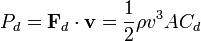
Take that and subtract the power required to overcome the wind resistance at the MPH which is...


If you want to know what all those symbols mean
http://en.wikipedia.org/wiki/Drag_(physics)

Now if you want a general rule for low speeds.. ignore the wind resistance as it doesn't matter much below 80 MPH

Now compare the number you get for both cars and you'll see which one is pulling faster at that speed.

Im a drag racing nut. I hail from yellowbullet forums. Dont mind me.
 

socalsnake

Well-Known Member
Joined
Apr 26, 2015
Threads
18
Messages
880
Reaction score
213
Location
Earth
Vehicle(s)
'15 5.0 GT PP
Last edited:
OP
OP
ven377

ven377

Well-Known Member
Joined
May 26, 2015
Threads
50
Messages
299
Reaction score
163
Location
San Diego
Vehicle(s)
2015 GT
Thank you guys alot with for the info.
I should be taking my car to the dyno this weeked and hopefully puts out good power and gives me some piece of mind that my car is running like its supposed to.
 

Ninjak

Posting from the Shadows
Joined
Aug 19, 2013
Threads
14
Messages
1,596
Reaction score
921
Location
The Shadows
First Name
David
Vehicle(s)
2024 Dark Horse Supercharged 2024 Bronco Raptor 1968 GTA Mustang
I have a good friend with a 15 M4 that's modded. The car is faster than most believe and it put down some good dyno numbers, better than I thought. Also these cars can change maps on the fly, so they can use different maps for different results.

Now if you were running with three people in your car, there is your difference. Running with that much weight makes a difference, much more than you think. Depending on what your making in power, and how you drive(important), the M4 could take you.

As for my buddies with his bolt ons and tune, he runs about 11.3~11.5 @ 125~126 in the 1/4. Heh but he is still playing catch up. The last time out, I put 2 cars on him. But then again, I clock 130~131 in 1/4.
Sponsored


Top